

Fort Dodge Broadcasting: A History · Chapter 4 of 9
On this page
KWMT 540 AM and KKEZ 94.5 FM
KWMT, Fort Dodge's second AM station, signed on in April 1956 as KEOK. Soon after, the owners of WMT in Cedar Rapids bought it and renamed it after their flagship. Its spot at 540, the bottom of the dial, carries a long way: 5,000 watts by day, with power cut back at night to protect clear-channel stations in Canada and Mexico.
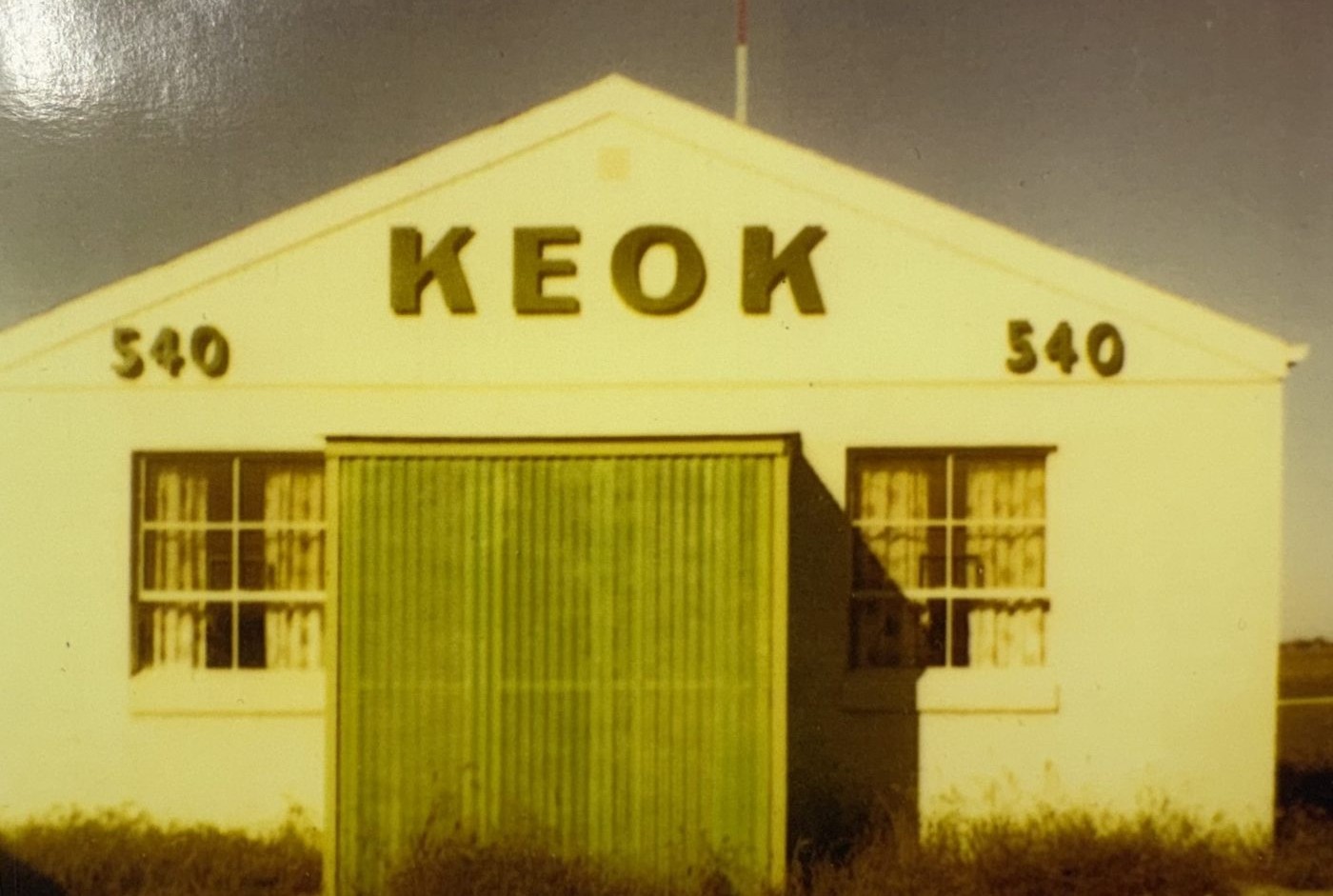
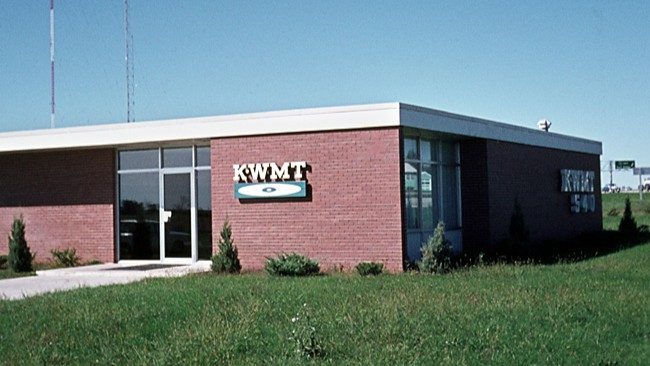
The early years. Under manager Burns Nugent, KWMT built a new $75,000 studio building beside its transmitter at 540 A Street, and in 1956 Nugent hired Don Rose as program director; Rose brought in the Top 40 format while the station was still running 1,000 watts. Later, under General Manager James W. Maurer, KWMT billed itself as "Iowa's largest daytime coverage" and opened what it called the newest and most advanced studios in the Midwest, completed about 1961, to the public with an open house.
Its 1961 air staff was Paul Brown in the morning, who coined the line "54, that's easy to remember," Phil Robbins from 9 to noon, Roy Chase afternoons and evenings, and Peter McLane, with Tom Danaher as news director. Danaher, who lived in Fort Dodge from 1958 to 1967, was remembered by The Messenger as "an enterprising and able competitor" who "had his share of scoops"; off the air, he made the first contacts that led to the gift of land for Rogers Park, and he left radio for public relations work with the Iowa Department of Public Safety.
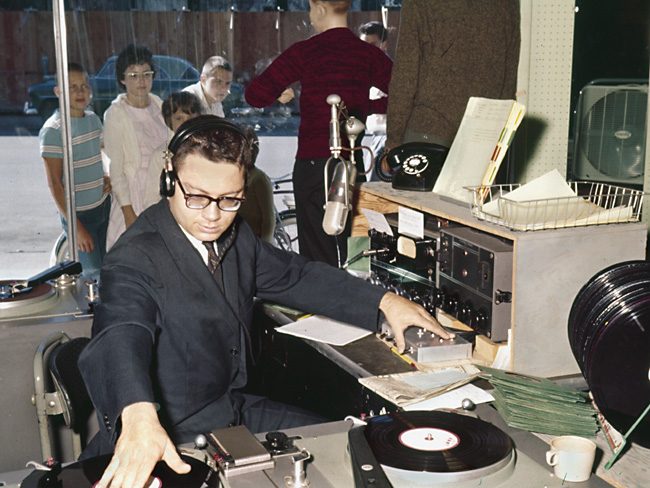
Farm Director Bob Nance led a two-hour daily Farm Hour with Bill Alford and Jerry Brady, and Roy Chase called lucky listeners five times a day as the Gus Glaser Money Man. Chase, a Brown Institute graduate, had joined the station in 1957 as a disc jockey and chief engineer; he later hosted mornings as "The Chase Is On" and spent weekends spinning records at teen sock hops. His wife, Ann, also worked at KWMT in those years.
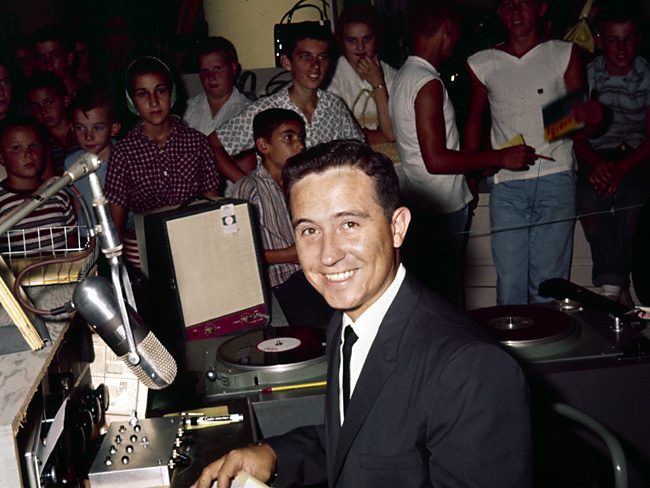
The Winter Dance Party. KWMT's disc jockeys hosted sock hops across Iowa and as far away as Wisconsin, and on January 30, 1959, the station sponsored the Winter Dance Party at Fort Dodge's Laramar Ballroom, with Buddy Holly, three nights before his last show at the Surf Ballroom in Clear Lake. In 2001 the Iowa Rock 'n Roll Music Association inducted KWMT into its Hall of Fame as one of the first Iowa stations to make the move to rock and roll.
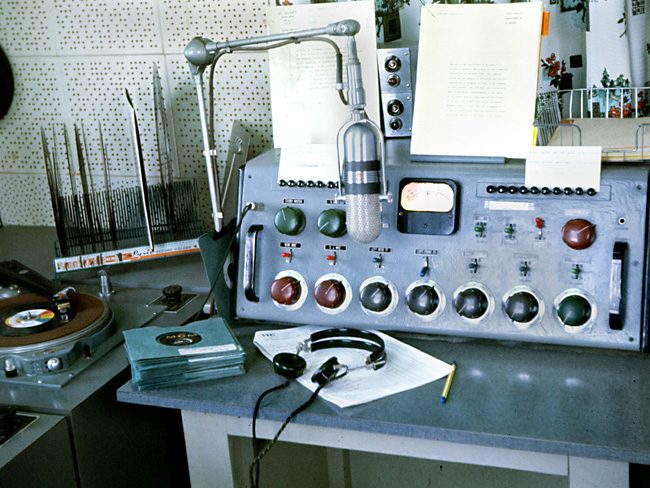
A Top 40 training ground. In the late 1950s and the 1960s KWMT played Top 40, and several of its disc jockeys went on to national careers. "Dr." Don Rose auditioned in 1956. He left to program KTUL in Tulsa, came back to KWMT's air staff when that didn't work out, and then programmed sister station WEBC in Duluth before going on to WQXI Atlanta, WFIL Philadelphia and KFRC San Francisco; he was Billboard's Disc Jockey of the Year for 1973 and entered the Bay Area Radio Hall of Fame in 2006. Deane Johnson, who succeeded Rose as program director, left KWMT in 1962 for Storz Broadcasting as program director of KOMA in Oklahoma City and later of WTIX in New Orleans.
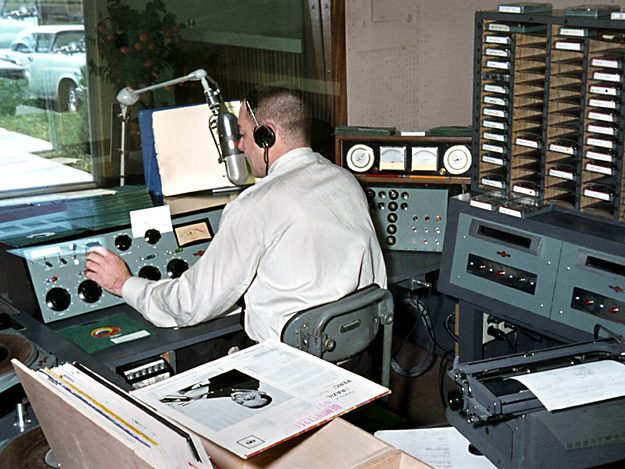
Peter "Rabbit" McLane programmed KWMT before moving to KIOA in Des Moines in 1963. As program director there he led the "Good Guys" era, the longest run of success in KIOA's history, through 1977, and he entered the Iowa Broadcasters Association Hall of Fame in 2000.
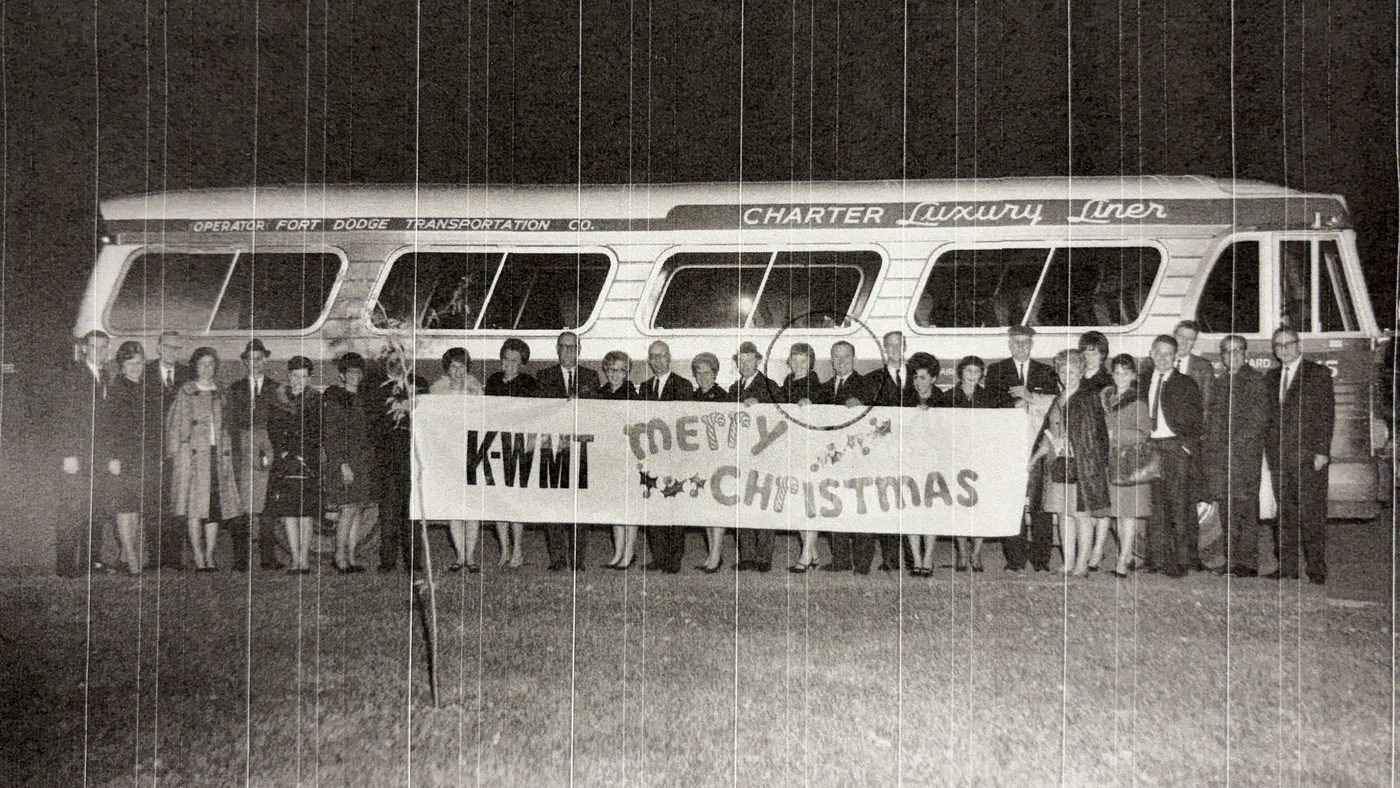
Country and farm (from 1970). KWMT, a rock-and-roll station since 1957, switched to country in 1970, a move Roy Chase and Jerry Sheeder pushed for, and became one of the region's most respected farm stations; Duane Murley, hired in 1985 as a high school senior, got his start when Farm Director Doug Cooper asked him to fill in on the market reports; Murley later became farm director himself and, more than three decades later, left for WHO-AM in Des Moines. Dale Eichor, DJ and music director from 1972, was the Country Music Association's small-market DJ of the Year in 1974 and Billboard's small-market Program Director of the Year in 1989, and was inducted into the Country Music DJ Hall of Fame in 2001.
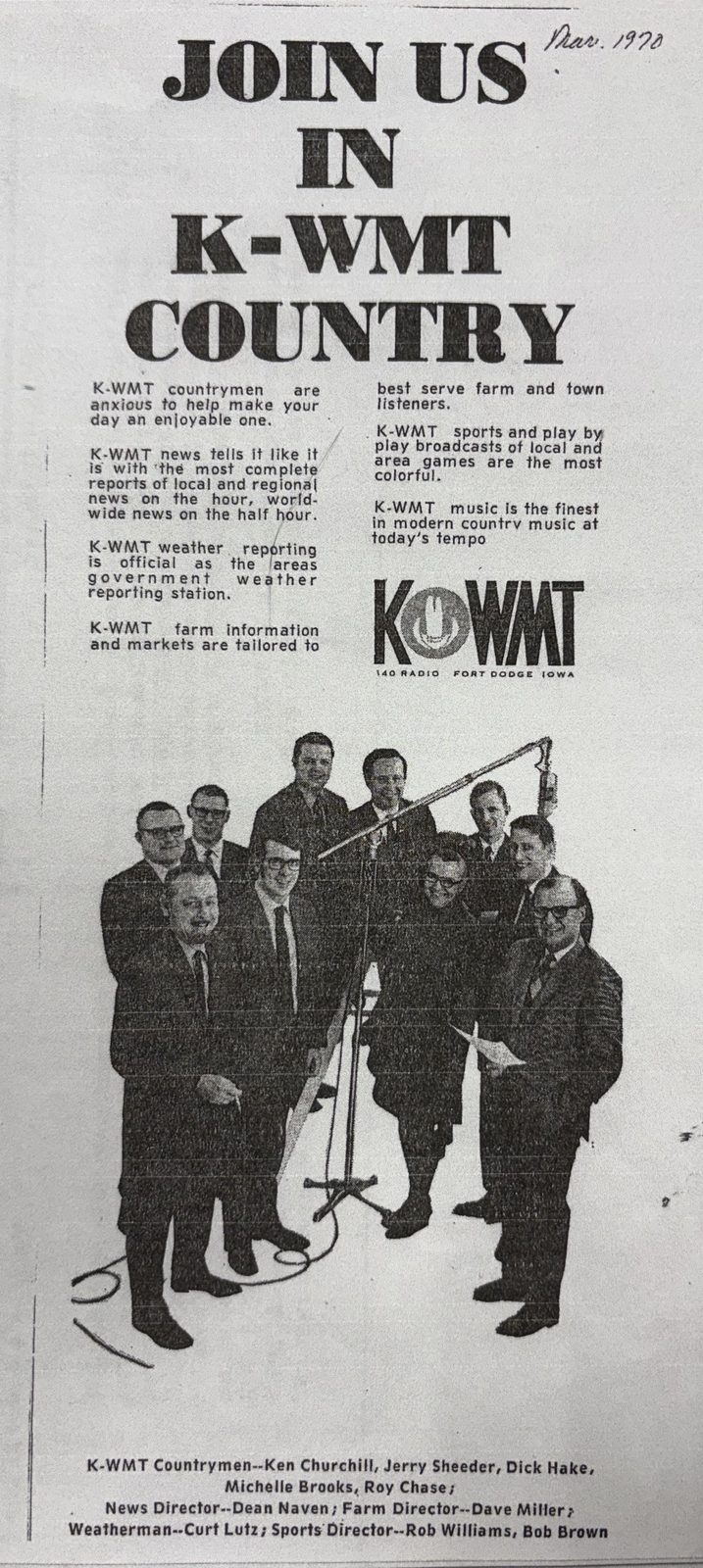
KWMT's March 1970 "K-WMT Country" lineup featured Ken Churchill, Jerry Sheeder, Dick Hake, Michelle Brooks and Roy Chase, with Dean Naven as news director, Dave Miller as farm director, Curt Lutz on weather, and Rob Williams and Bob Brown on sports. Hake, a Brown Institute graduate, spent his weekends spinning records at Teen Hops around the Midwest and later served as Humboldt's city clerk from 1971 to 1991. The station later hired Mike Hoyer from WHO in Des Moines, where he had presented Country Music U.S.A. for six years and had just been named Billboard's top country DJ of the year.
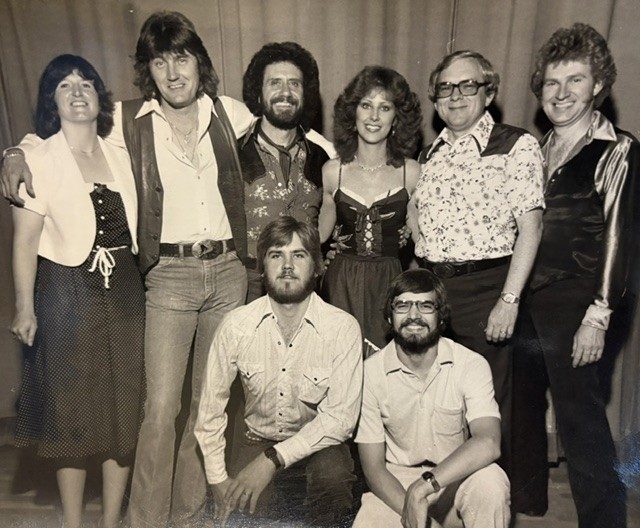
The news voice. For more than three decades, news on KWMT and KKEZ meant Jerry Sheeder. A native of Guthrie Center, he first came to KWMT in 1967 as an afternoon disc jockey and became its program director and then its news director. He later left Iowa to be the afternoon news anchor at WTAE in Pittsburgh in the mid-1970s, on the air as Jerry Shane, and hosted the Steelers' halftime and postgame shows during their 1974 and 1975 Super Bowl seasons. In 1976 he moved to WRC in Washington. He married, came home to Iowa and returned to KWMT in 1979 as news director, delivering his newscasts live, with no edits. He died at his home in Fort Dodge on September 6, 2013, at 67.
Early in the KKEZ years the newsroom also had Sue Shyzis, whom Libbie remembers as "amazing," and Patty Pershing who later moved back to Des Moines.
Big Red. Carl Lemon, on the air as "Big Red," was, in Libbie's words, "one of a kind." "He cared little for rules but such a hit on the radio," Libbie says. He thinks he fired Lemon "maybe twice," but listeners loved him and he was perfect for KWMT, so the station hired him back each time. After KWMT, listeners recall, he worked briefly at a Fort Dodge car dealership before going home to Ohio.
Video
"Big Red," KWMT's half of a pair of 1985 television commercials, one for each station, promoting "America's music on Country 54" (YouTube)
Owners. In July 1968 KWMT was bought by KWMT Inc., with WMT's longtime head William B. Quarton as chairman and James W. Maurer as president and general manager; Maurer was IBA president in 1969. In 1993 Maurer sold to the Jenkins family's KWMT Radio Inc., with John P. Jenkins as CEO and Jon W. Jenkins running the stations. The Jenkinses sold to Clear Channel in 1999. Three Eagles Communications bought KWMT and KKEZ in 2007, as part of a $25 million purchase of 13 Clear Channel stations in Iowa and Minnesota. Three Eagles moved them out of their longtime home at 540 A Street, which was left empty, and into the Dowd Building, where all of the group's Fort Dodge stations broadcast today. The stations passed to Digity in 2014, then to Alpha Media, and in 2025 to Connoisseur Media.
KKEZ 94.5. The FM signed on in 1966 as KWMT-FM, simulcasting the AM. Around 1970 it became KKEZ, an automated easy-listening station running on four-deck reel-to-reel machines. In 1979 it flipped to Top 40, becoming "Fort Dodge's Favorite FM 94.5," and went up against KTGA, with KWMT's resources behind it. It became "Z94" on September 1, 1986.
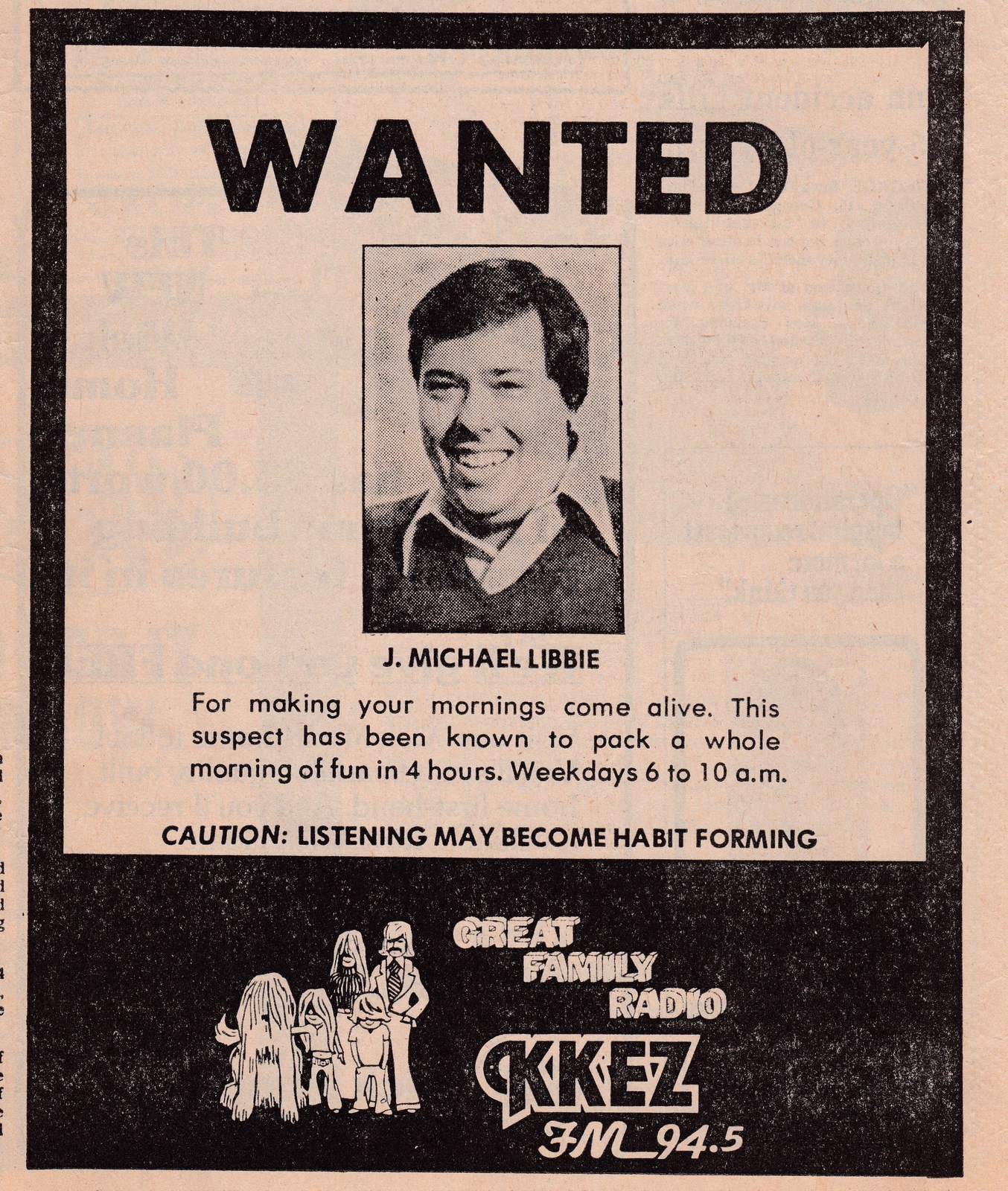
On the air. KKEZ went live as a Top 40 station in the spring of 1979. News Director Jerry Sheeder hired J. Michael Libbie, who had programmed WKSI in southern Illinois, as program director and morning host, weekdays 6 to 10 a.m. Libbie, who arrived in April, believes the change was a financial one: the automated "Great Family Radio" service from Utah was hard to sell to local Fort Dodge advertisers.
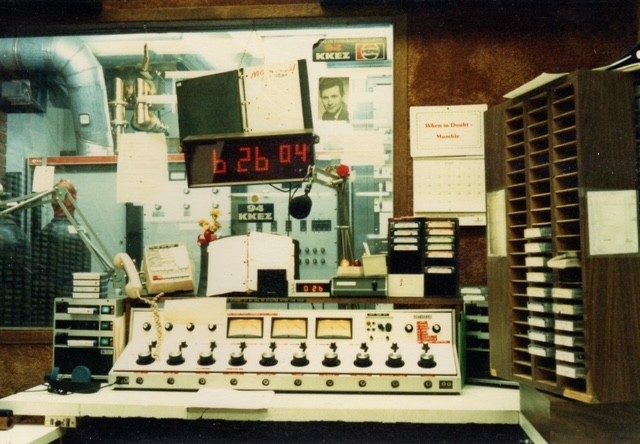
The studio had no turntable, so engineer Barry Walsh took one from the production room, and on launch day the station ran on that single turntable and Libbie's own records. The first air staff included Grant Williams, who came over from KOEL in Oelwein, Dory Rose from KTGA, Don Roberts and Don Stevenson. Charlie Chase came over from KRIT in 1980, and Jane E. Morgan, Cal Bierman and Dave Haldin joined later. Morgan had been hired at KWMT for the office; once Libbie heard her talk, he asked to put her on the air, and she stayed on 94.5 for four decades before moving to KWMT, where she voice-tracks middays.
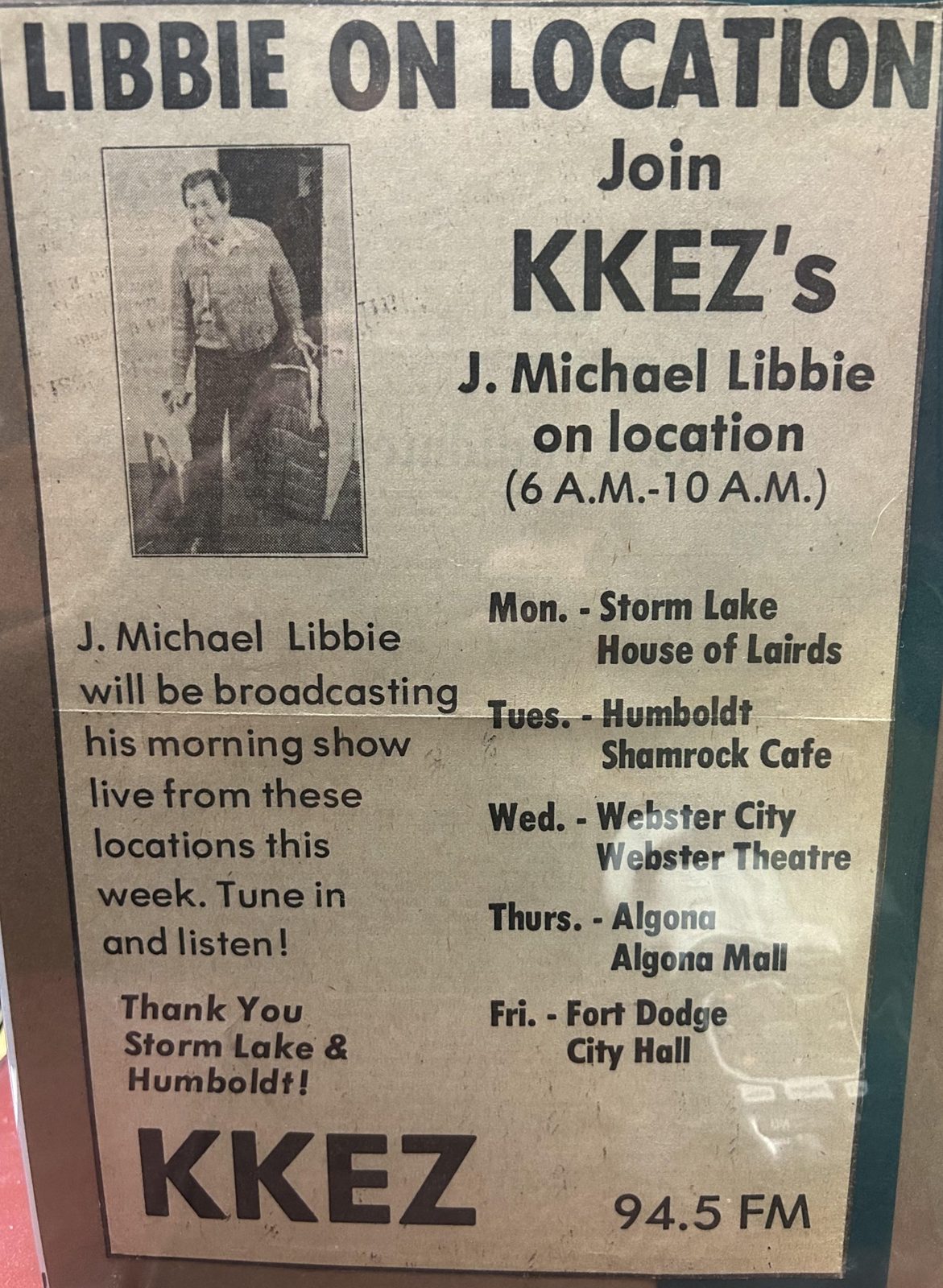
"We paid better than anybody else," Libbie says, "so going after great people was pretty easy." By that summer "Great Family Radio" had given way to "Fort Dodge's Favorite FM 94.5" and "100,000 Watts of Energy for the 80's!"
The kidnapping. That August the new KKEZ made the UPI wire. On August 15, 1980, UPI reported that Libbie had been blindfolded and taken from the station by three "mobsters" in playful retaliation for a week of ethnic jokes, in a prank set up by Frank Gargano. An onlooker took it for a real kidnapping and called police, and four squad cars and two unmarked cars were sent to a warehouse on the southeast side of the city to rescue him.
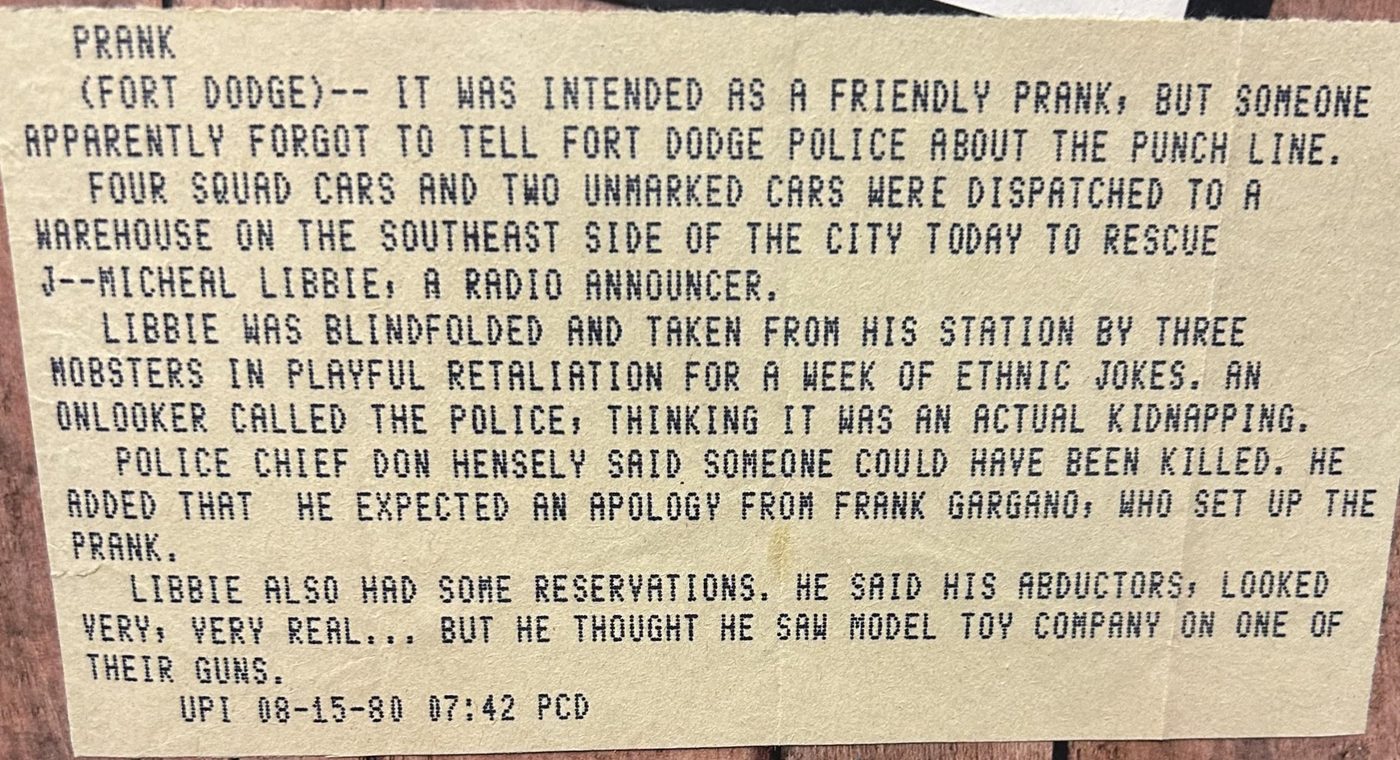
Police Chief Don Hensley told UPI that someone could have been killed and that he expected an apology from Gargano. Libbie had his own reservations: his abductors, he told UPI, looked "very, very real," though he thought he saw "Model Toy Company" on one of their guns.
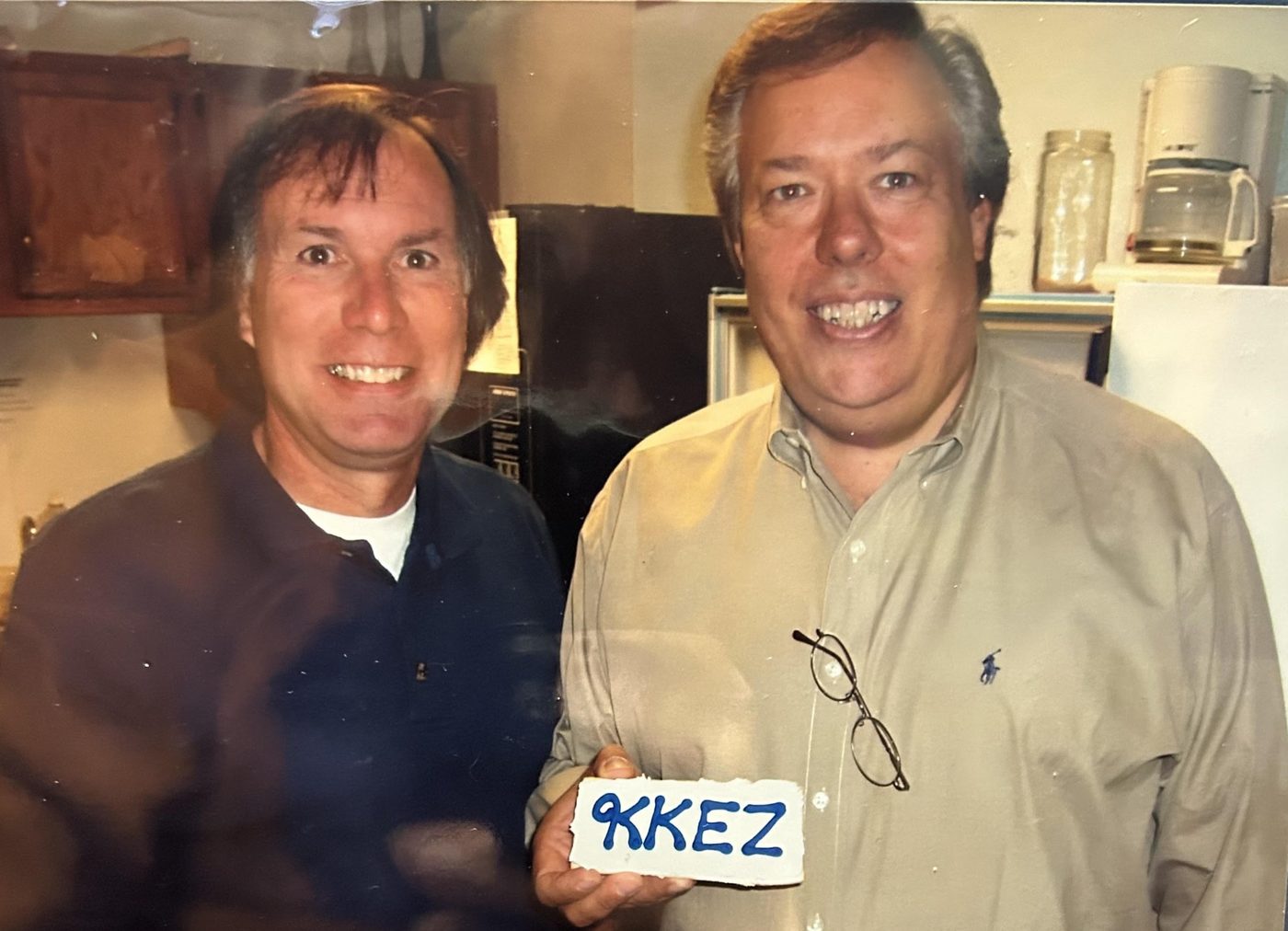
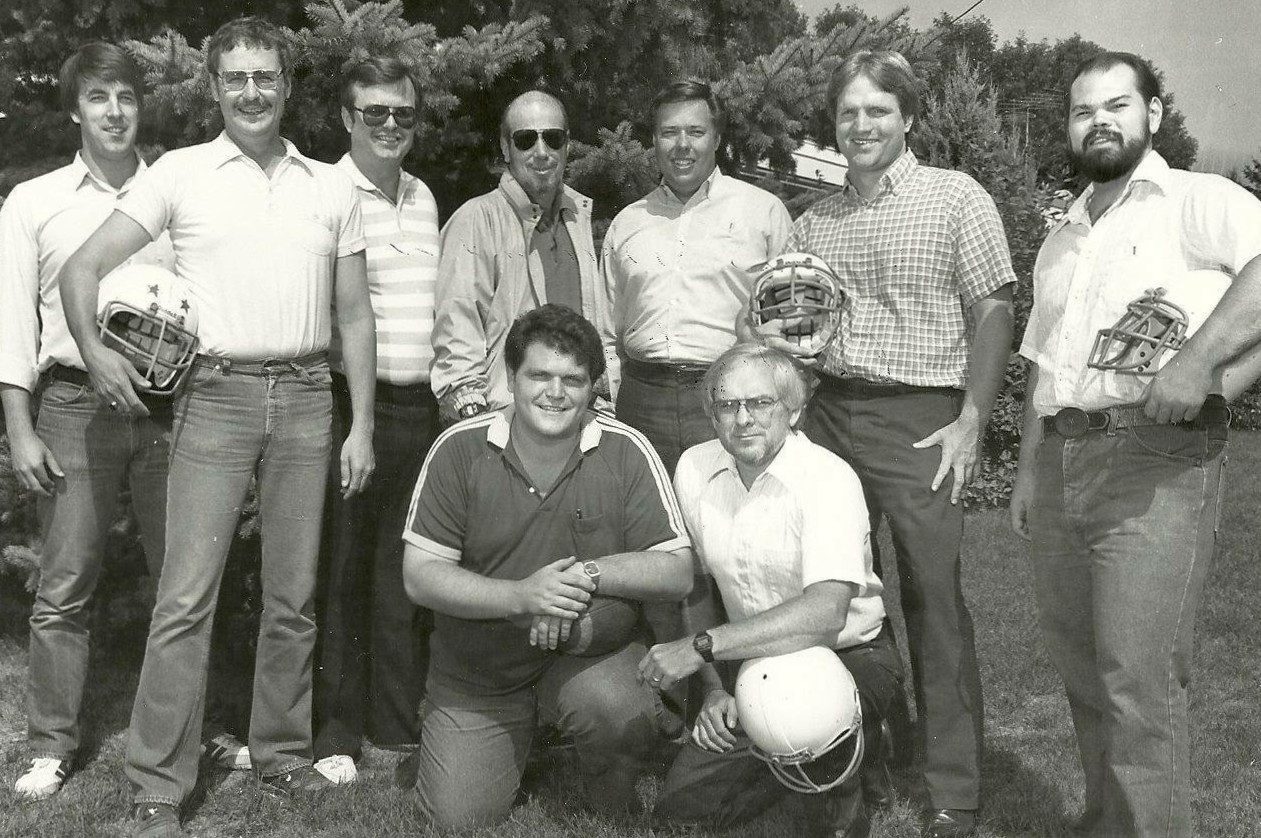
Promotions. Each week Libbie asked the sales staff what they needed from programming. "I think that was the secret sauce," he says. Sales lined up sponsors in towns around central Iowa and the morning show went out live from each one, the staff volleyball team played its way across the region, and weekly "Top Thirty" surveys were handed out all over Fort Dodge. One night the staff blew up 99 red balloons and tied them around town for a "99 Red Balloons" giveaway.
KKEZ interviewed Dan Aykroyd in Webster City and Clayton Moore, TV's Lone Ranger, live by phone, and Libbie broadcast Midnight Mass from Sacred Heart. By his account, the station billed about $200,000 the year before the change and nearly $1 million in its first 13 months as a Top 40 station.
Jim Maurer later had Libbie oversee KWMT as well. Libbie stayed until the fall of 1986, when he left radio for Friendship Haven in Fort Dodge and later became its president and CEO. That same year KKEZ brought in Jim Davis from Des Moines as program director, a KIOA alumnus who had also worked at KOIL in Omaha. It was a big-market hire for a Fort Dodge station. Davis produced the imaging for the "Z94" relaunch before leaving in March 1987 for WLLR-FM in the Quad Cities.
Video
"94 KKEZ, Good Time Radio": KKEZ's half of the pair of 1985 television commercials made for the two sister stations. "Anybody can play the hits, but when you join your friends at 94 KKEZ you know you're going to have fun" (YouTube)
The Z94 launch. Drew Durigan, then working at a station in Colorado, remembers Davis starting in early August 1986 and calling him the second week of that month to offer him the 6-to-midnight shift; Durigan started Monday, August 18.
Davis's arrival also shook up the staff. By Durigan's account, Cal Bierman left for KEZT in Ames, Mike Devine left, Dave Haldin went to FM 108 in Waterloo, and Charlie Chase moved from the air to sales.
Audio
The legal ID that relaunched KKEZ as "Z94" on September 1, 1986, produced by Jim Davis (0:37). It opens, "Fort Dodge was one of the birthplaces of rock and roll in Iowa. Our roots go back to 1957," and closes, "Now we're Z-94, all the radio you'll ever need. Z-94 is KKEZ Fort Dodge." The 1957 date reaches back to the station's AM sister, KWMT. Courtesy of Drew Durigan.
KKEZ flipped to "Z94" on Monday, September 1, Labor Day, the same day Kelly Burnham, on the air as Kelly O'Shea, started. Durigan lists the launch air staff as Davis from 6 to 10 a.m., Jane E. Morgan from 10 to 2, O'Shea from 2 to 6, himself from 6 to midnight and Denny Lind overnight, with Duane Murley, Phil Jaye and Mike Fellers, then on the air as Stu Stevens.
When Davis left in March 1987, Doug McKinnon replaced him as program director. McKinnon wanted fewer phone calls and less talk on the air, Durigan says, and let him go. That May Durigan joined Super 97 as it went on the air from Fort Dodge, and the radio war between the two stations was on.
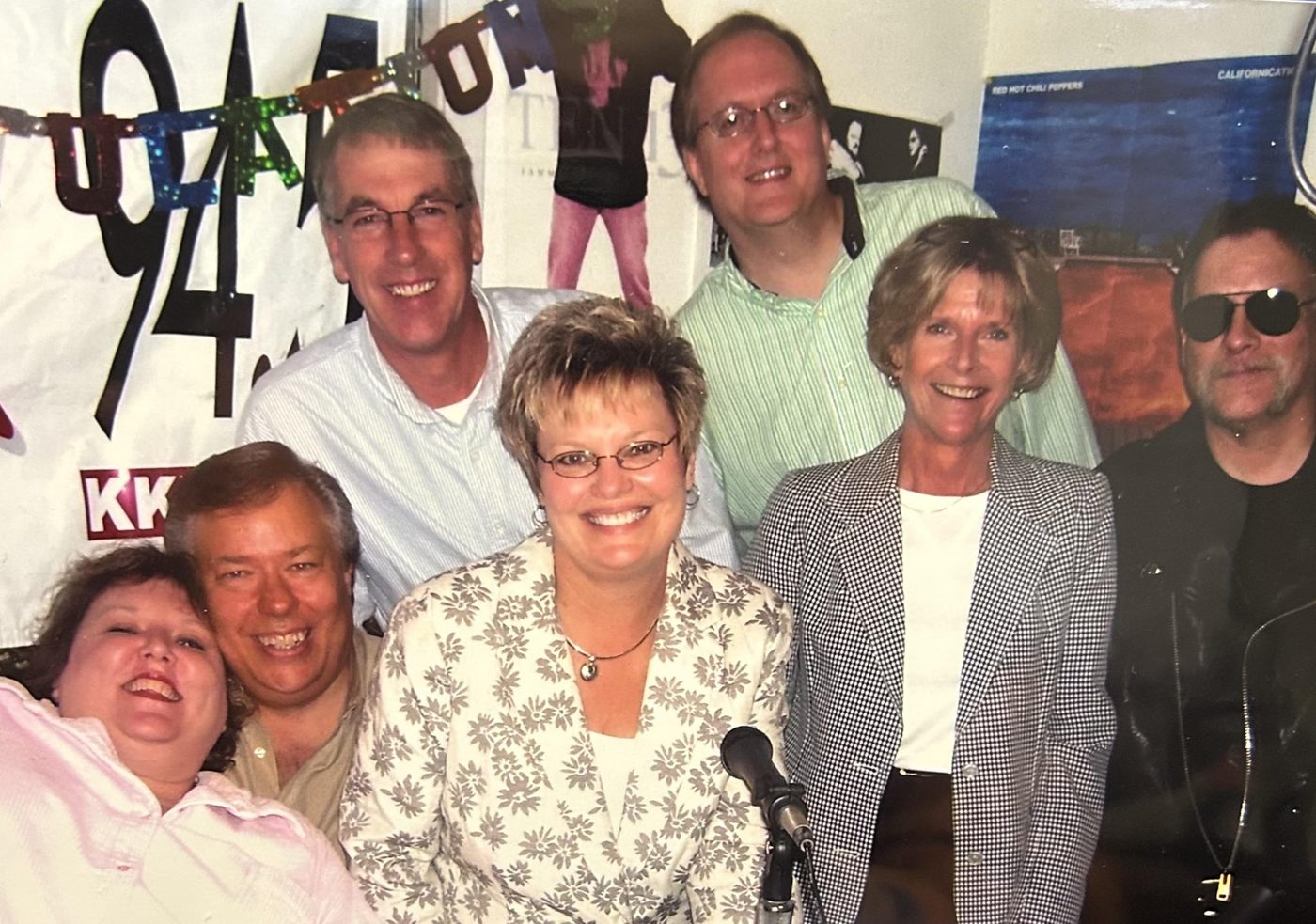
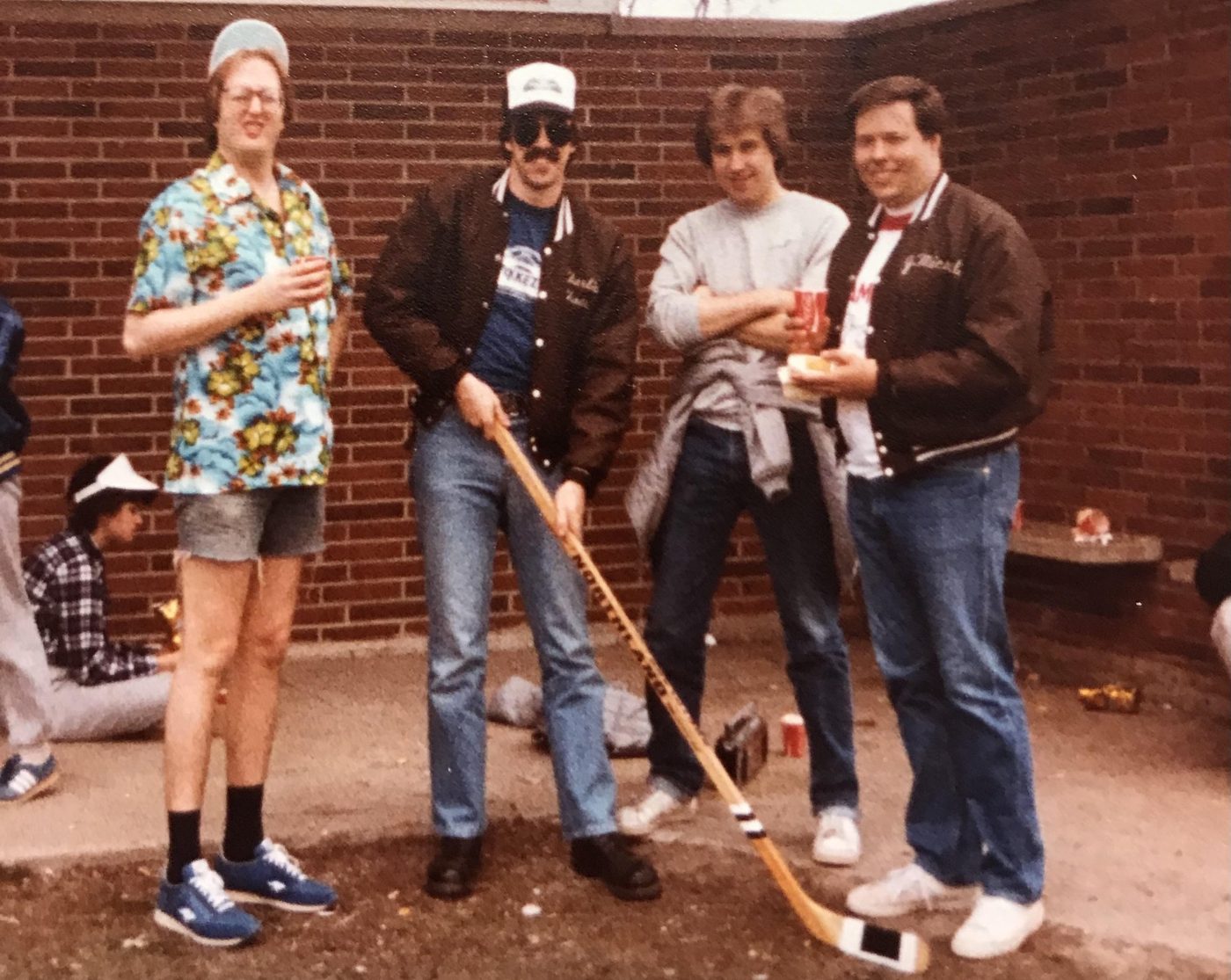
Charlie Chase. Tim Bohlke started working overnights on KKEZ as Charlie Chase, a name he came up with himself. "The name Charlie Chase was all Tim," Libbie says. "He created it." Libbie, then president of the Iowa Junior Chamber and traveling much of the time, was often late for his 6 a.m. start, so he left Chase a couple of carts with his own voice and a song to play at 6; it became a running joke at the station.
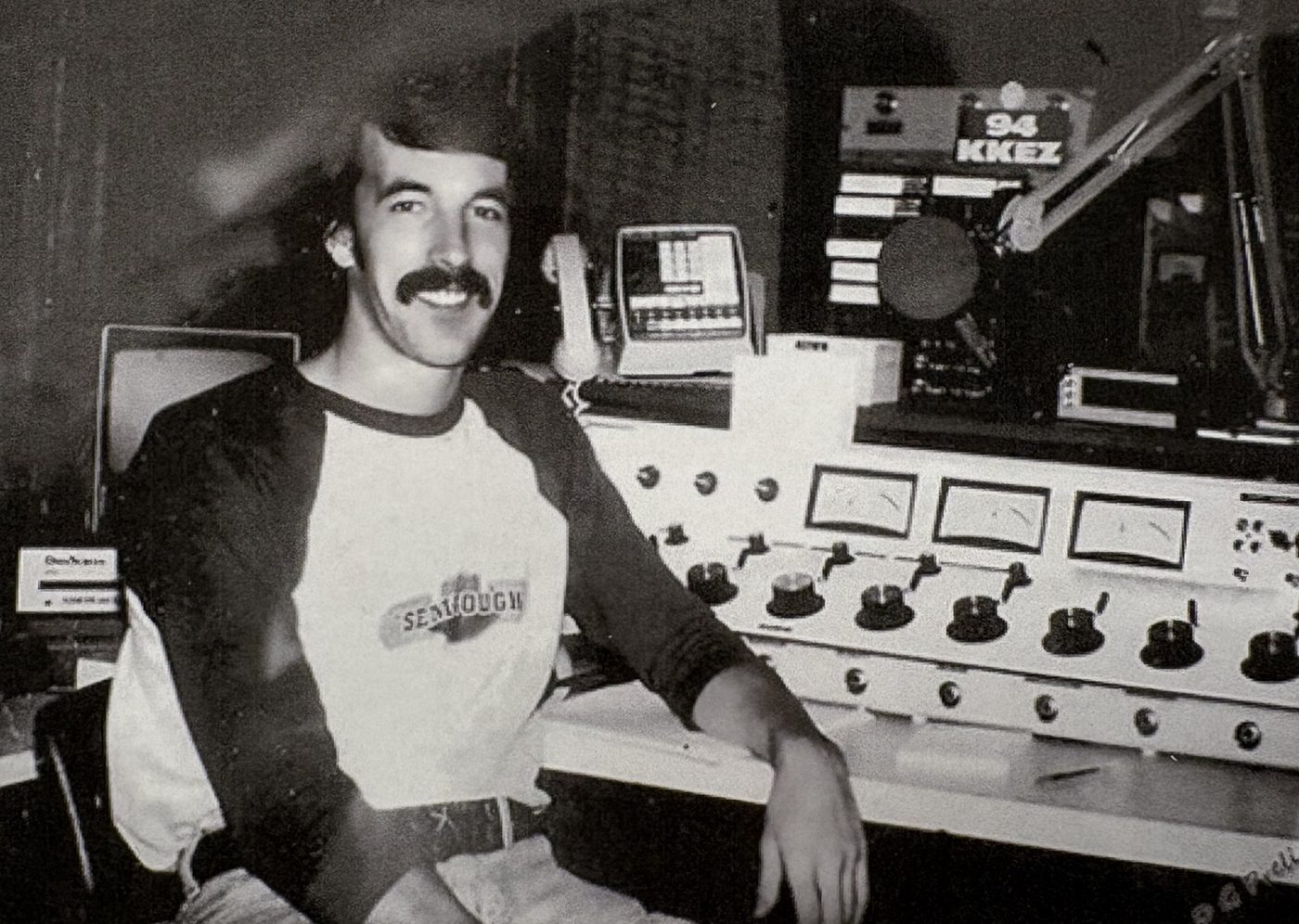
Libbie remembers Chase's memory for music: "I never really paid attention to the song or the artist but Charlie knew them all," along with details about each song. Chase also had a huge record collection: thousands of records, his wife, Lynn Bohlke, says, "all in alphabetical order and cataloged." His signature sign-off came from "The Boy in the Box": "Be good, buy bonds, and bye bye"; Libbie says the name was a nod to old radios, many of which were shaped like a box. "He had fun on the air," Libbie says, "always engaging the listeners and was always up for doing promotions."
Chase and Chris Robbins (Chris Walterman) had been at the Brown Institute at the same time, in different classes; Robbins first noticed him because of the green military jacket he usually wore, and the two would say hi in the hallway. Chase's first job was at KRIT in Clarion and Robbins's at KWMT. About three months after Robbins started, he walked past Libbie's office, saw Chase inside, just hired at KKEZ, and "we both looked at each other like…hey I know you!" They became lifelong friends.
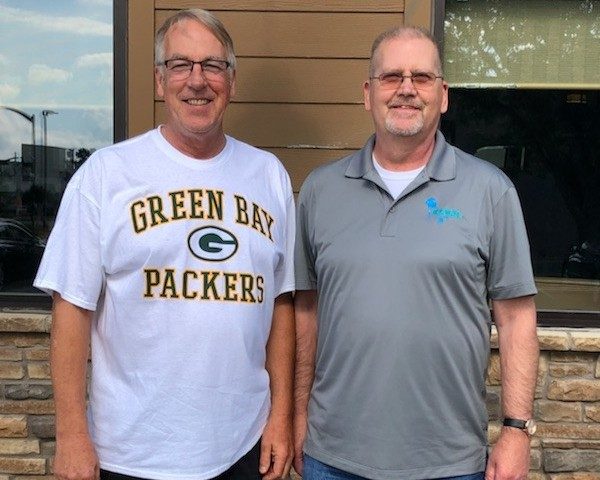
KKEZ since 1987. After the Z94 years, KKEZ went to classic rock in the early 1990s, and in January 2000 it became "Mix 94.5," an adult contemporary station at 100,000 watts. It briefly went soft AC in 2009 before returning to adult contemporary that summer, and today it is still Mix 94.5, playing hot AC. In the summer of 1991 Jon Jenkins brought Dave Haldin back to KKEZ to do mornings, but Haldin left radio that November. Through the ownership changes, two voices carried over: Jerry Sheeder's news, and Jane E. Morgan, who stayed on 94.5 for four decades before moving to KWMT.