

Fort Dodge Broadcasting: A History · Chapter 5 of 9
On this page
92.1 FM: from KTGA to "92 Rock"
No Fort Dodge frequency has worn more names than 92.1. Its license dates to July 28, 1975, and in the five decades since it has been KTGA, KSMX, KFTX-FM, KFDC, KUEL, KZLB and KUFX, all one station.
KTGA: "Keep The Gospel Alive." The FCC granted the construction permit on December 2, 1974, and KTGA signed on Monday, July 28, 1975, with studios on the mezzanine of the Warden Plaza, where the building's public business offices were, and a tower west of Otho, just off Highway 169. Its first owner was Gospel Radio Inc., owned by the Rev. N.S. Beminio, a train conductor, and Jack Becker, a farm equipment designer. Beminio ran the station himself, and the call letters stood for "Keep The Gospel Alive."
In 1977 Beminio left broadcasting for health reasons, and on June 1 that year KTGA was bought for $110,000, including $20,000 for an agreement not to compete, by Rainbow Broadcasting Company, owned by James E. "Jim" Boardman, a freelance writer and photographer with no other stations. For a while it mixed middle-of-the-road music with religious programming, plus farm and classical shows. By 1978 it had turned to Top 40, the first rock station on Fort Dodge FM, just as FM was winning over AM's younger listeners, with Boardman as owner, general manager and his own chief engineer.
KTGA carried Casey Kasem's countdown on Saturday afternoons and Wolfman Jack's show on Sunday evenings. As an affiliate, KTGA arranged for Wolfman Jack to come to Fort Dodge for the Frontier Days parade on June 9, 1979. He was featured in the parade and appeared at the Runway that evening; the disco's manager, Rick Fuhr, later wrote that the appearance cost the club $4,500.
Earlier that year KKEZ had gone Top 40 too, with KWMT's money behind it. KTGA didn't have the resources to match KKEZ's on-air sound or its sales staff, and most of KTGA's announcers left for better pay. The station struggled.
KSMX. In April 1980 Smithway Communications Corporation, owned by Harold Smith of Smithway Motor Xpress with partners Russell Hilkin and Shannon Reed, bought the station from Boardman's Rainbow Broadcasting for $50,000 plus its debts; the FCC had approved the sale on March 18. Smith became president, and Shannon Reed, the largest shareholder at 33.4 percent, became general manager. Reed was a well-known name in Fort Dodge radio: he had spent three years at KWMT and three more at KTGA itself before buying in. Under him the call letters changed to KSMX, and the station kept its rock-leaning Top 40 sound for a while, but it was hard to find talent and the station sounded thin next to KKEZ.
Within a year Reed had left for stations in Ames. Thomas Carmody, who also ran the sales department, became general manager in 1981 and stayed on through the 1983 sale. KSMX went adult contemporary in 1981, and a switch to country never caught on. In 1983 Smithway sold KSMX for $75,000 to KSMX Radio Limited, owned by Harold O. Bastian, who ran the station for a year.
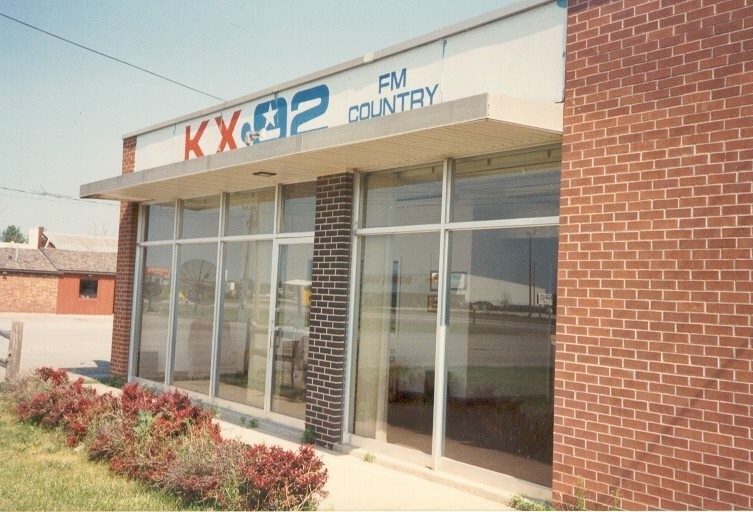
Webster Broadcasters: KX 92. On October 5, 1984 the station changed hands again, for $150,000. The new owner was Webster Broadcasters Inc. of Cedar Falls, owned by the Hamilton family, owners of KCFI in Cedar Falls; Ken Hamilton was president, John Hurley vice president and Paul Coates general manager. Webster changed the call letters from KSMX to KFTX-FM and branded it "KX 92, FM Country."
Around 1986 it moved out of Warden Plaza into a new building at 3566 Fifth Avenue South, which later became home to KVFD and KUEL. The transmitter sat west of Otho on a dog breeder's property, where, former staff recall, the heat from the transmitter building kept the puppies warm in winter. On the air it called itself "Kicks 92." Its late-1984 lineup had Chris Robbins (Chris Walterman) in the morning, Tracy Joel (Hoodjer) at midday and Greg Richards in the afternoon.
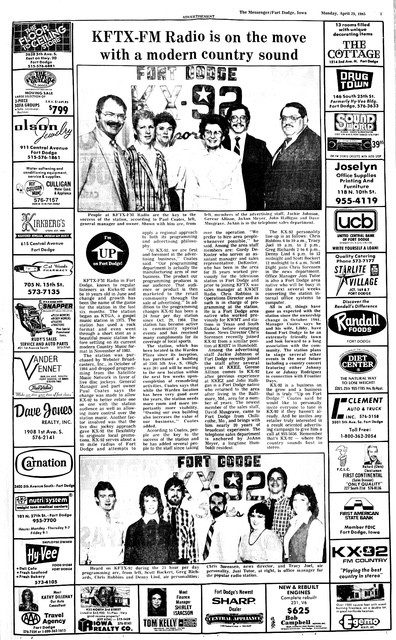
Its biggest promotion put Robbins, KWMT's Big Red and car dealer Bob Campbell of Bob Campbell Motors 48 feet in the air in a camper held up by a crane, for 48 hours, trying to sell 48 cars, with the stunt broadcast on both KWMT and KX 92. Listeners came from all over to see them and buy cars.
Every now and then the crane's hydraulics would settle with a noise, Robbins remembers, and each time Big Red would say, "Campbell, I don't care how many damn cars you want to sell let's get down!" They came down only once: around 3 a.m. one night a thunderstorm set the camper swaying, and Campbell had the crane operator lower it until the storm passed. "Then we went back up and none of the listeners knew," Robbins says.
A package deal (1988). In June 1988 Webster sold KFTX to Dodge Communications, owned equally by Ray Lamb and Dean Sorenson, and in the same transaction Max Landes's group sold Dodge Communications KVFD. The price was $875,000 in all: $400,000 for the FM and $475,000 for KVFD.
The new owners moved the FM antenna from its original site west of Otho to the KVFD tower on Highway 169, south of Highway 20; the application was filed in May 1988, while the sale was pending, and the new license was applied for that December. The station stayed on the air through the change, kept much of its staff, and became KFDC, for "Fort Dodge Country," with Mel Moyer as general manager.
On December 17, 1990, KFDC became KUEL, "Kool 92," playing oldies from the 1960s and early '70s. In October 1991 Sorenson bought out Lamb's half to take full ownership, and that December Bill Grady became general manager of KUEL and KVFD.
Jeremy Borash. Kool 92's best-known alumnus was hired on his 19th birthday in 1994, fresh from the Brown Institute broadcasting school in Minneapolis, to be program director and morning host, and he later became operations manager for both stations. Borash in the Morning had him hypnotizing local politicians on the air, skydiving from 13,000 feet over Fort Dodge, handing out free breakfasts to listeners at a drive-through and broadcasting from a school bus as kids headed to class.
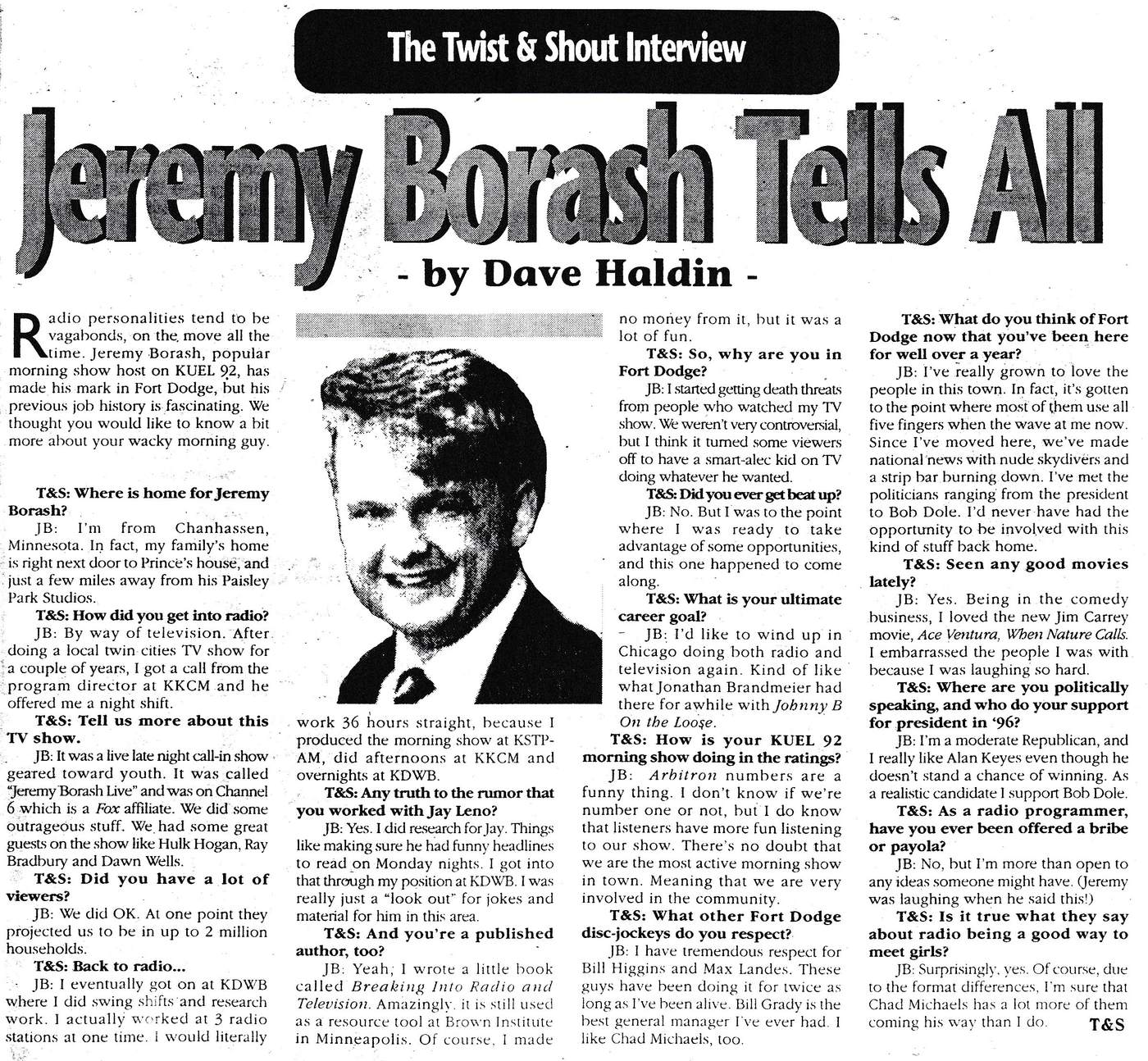
"I think I learned more in those four years than I could have ever learned anywhere else," he said in 2006. "It was more about being involved in the community and finding out how important that is." He became the youngest nominee ever for the NAB Marconi Award for small-market personality.
He left Fort Dodge in 1997 and went on to a national career in wrestling television: writer and announcer at WCW, ring announcer and play-by-play voice at TNA/Impact Wrestling for 16 years, and later vice president of content and development at WWE. He never lost touch with Fort Dodge, returning to its airwaves in 2001 to host the All-America City broadcast for KVFD and KUEL. (Wikipedia)
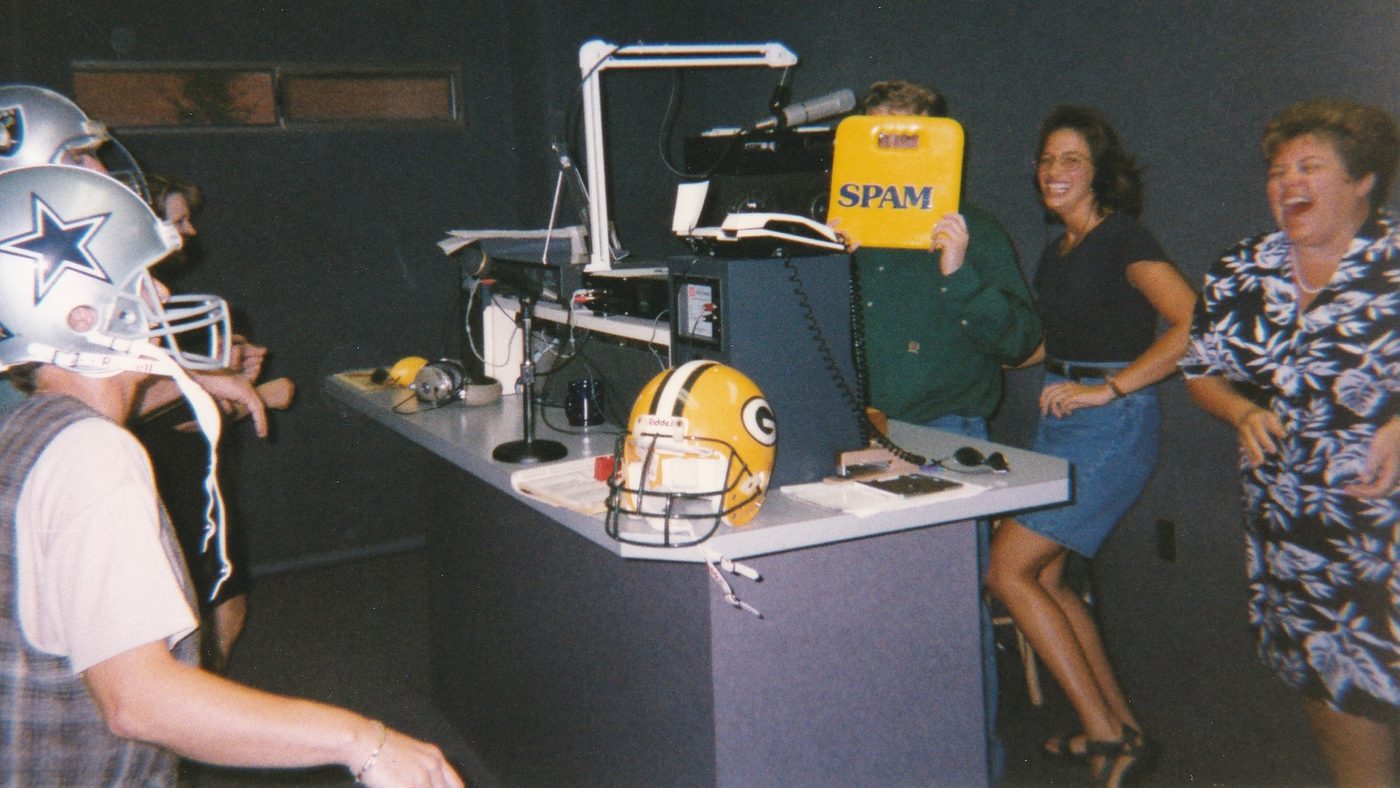
The Wheel of Meat. From 1994 to 1997, Borash in the Morning gave listeners a spin of the Wheel of Meat, sponsored by Randall Foods. Listeners called in, Borash picked a caller at random, and the wheel decided the prize: prime rib, a roast, spam, ground chuck, hot dogs or the joke slot, "what we killed at the transmitter site." Grady had brought the promotion with him from WYUR in Fond du Lac, Wisconsin.
Out of the studio. During the 1990s, Kool 92 was the live remote king of the Fort Dodge market, and Grady did the vast majority of those broadcasts himself, more than 700 over about a decade by his count. "When I arrived they needed a host for 'Come Alive,' so I did that when it was in the basement of the Laramar. After that I was always somewhere. The longest day was Black Friday, a string of remotes beginning at 5:30 a.m. I'd get up at 3:30 a.m. to be live on the air in front of Target, and after an hour I would go to the next one, and that continued for 12 hours straight. I enjoyed most of what we did, just not that."
The Come Alive at 5 Reunion. The Laramar version, called simply "Come Alive," was short-lived. By the time Grady took it over it was, he says, "a shell of what it was," and he hosted it through the spring of 1992. Later Mike Parry and Chris Robbins brought him the idea for a one-time "Come Alive at 5 Reunion" on KUEL at the Laramar, in May 1996. Parry introduced Charlie Chase, as he had at the Rock 'N Roll Reunion, and the night ended in a big conga line. "It was the first time I ever experienced the fun those guys had, and the response from the people who remembered those days was also memorable," Grady says. "Charlie was a fantastic host."
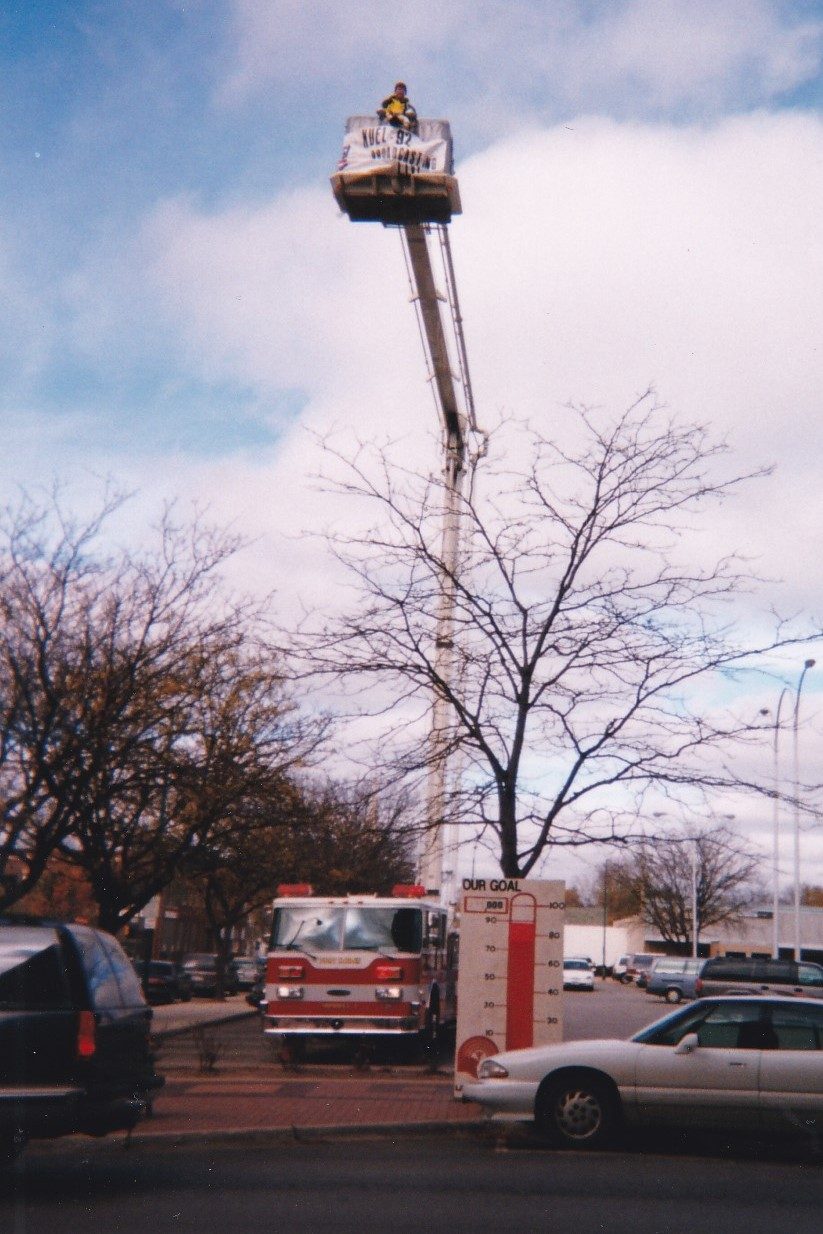
Being live and out in the community was a big part of the stations' NAB Crystal Radio Awards for community service, and some remotes raised money directly: in October 1998 Grady and the Fort Dodge Fire Department raised money for the United Way by sending him up in a fire truck's bucket over the Norwest Bank parking lot on Central Avenue.
Format Change to Adult Contemporary. On April 1, 1996, the same week the stations moved into the Dowd Building, KUEL switched from oldies to adult contemporary. It kept the Kool 92 name, which was already established and fit the hip, cool AC hits of the '90s.
The timing turned out to matter. Grady later got a call from Chris Knight, the new general manager of K97 and KTLB, who had succeeded Mike Parry. KTLB had been ready to drop country for adult contemporary, he said, and had negotiated contracts for the music and imaging. The agreements were on his desk that Friday, but he decided to wait until Monday to sign them. Driving to work that Monday, April 1, he tuned in Kool 92 and heard the new format. The first thing he did when he walked into his office, he told Grady, was tear up the contract. Later in 1996 KTLB went to oldies instead, the format Kool 92 had just left behind.
In 1999 the frequency that had struggled for two decades won an NAB Crystal Radio Award for community service and within 3 years of changing format, won the NAB Marconi Award for AC Station of the Year, arguably the station's finest hour.
Video
KUEL-FM receives the 1999 NAB Marconi Award for AC Station of the Year in Orlando, Florida, in October 1999; General Manager Bill Grady accepts on behalf of the staff (YouTube)
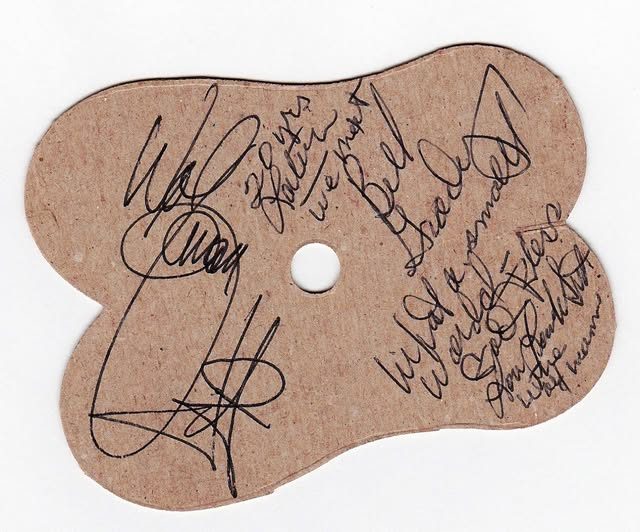
Wolfman Jack and Lou Lamb Smith. When Wolfman Jack flew into the Fort Dodge airport the night before the parade in June 1979, Bill Grady and his friend Dave Ambroson drove out on the spur of the moment to try for an autograph. All Ambroson had to write on was a cardboard pair of novelty "balloon feet" he found under the seat of his car, but they made it through a big crowd at the airport, and Wolfman Jack signed the back.
Twenty years later, in April 1999 in Las Vegas, Wolfman Jack, whose real name was Robert Weston Smith, was inducted posthumously into the NAB Broadcasting Hall of Fame at the same convention where KUEL, the 92.1 station that had brought him to Fort Dodge, received its NAB Crystal Radio Award. At a reception before the ceremony Grady showed the balloon feet to Smith's widow, Lou Lamb Smith, who said her husband had come home raving about how wild the weekend was and how much fun Fort Dodge had been. She signed next to his autograph: "20 years later we meet Bill Grady. What a small world. God Bless. Lou Lamb Smith, the Wolf Woman."
All-America City (2001). The stations' remote work paid off in June 2001, when Fort Dodge competed for the National Civic League's All-America City Award in Atlanta. KVFD and KUEL reported daily from Atlanta, where Jeremy Borash and Jay Alexander covered the city's 52-member delegation and its Friday-morning presentation to the jury.
Back home, Grady and Tony Thomas broadcast live from the new Fort Dodge Public Library on both stations, and a closed-circuit video link let the jury in Atlanta see the crowd gathered there. Organizers had hoped for 250 people; more than 1,200 came, in a city of about 26,000. The stations carried the awards ceremony live that Saturday, when the announcer read, "This city is Fort Dodge, Iowa!" Fort Dodge was one of 10 cities named All-America Cities that year.
Audio
All-America City Awards broadcast, KVFD and KUEL, June 22–23, 2001 (42:11; Fort Dodge Radio)
KZLB and KUFX. The station became KZLB in 2009 and has since been "The Blaze" (active rock), "The Eagle" (classic rock) and, since October 3, 2019, "92 Rock." On October 12, 2026, Connoisseur Media moved the KUFX call letters, used in San Jose, California, since 1998, to 92.1, keeping the San Jose calls registered to the company after that station took back its old KBAY letters.