

Fort Dodge Broadcasting: A History · Chapter 8 of 9
On this page
- Where it came from
- You Are The Guest
- Alan Colmes's pick
- The production voice of the show
- Historical significance
- MyFortDodge.com
- Early internet video
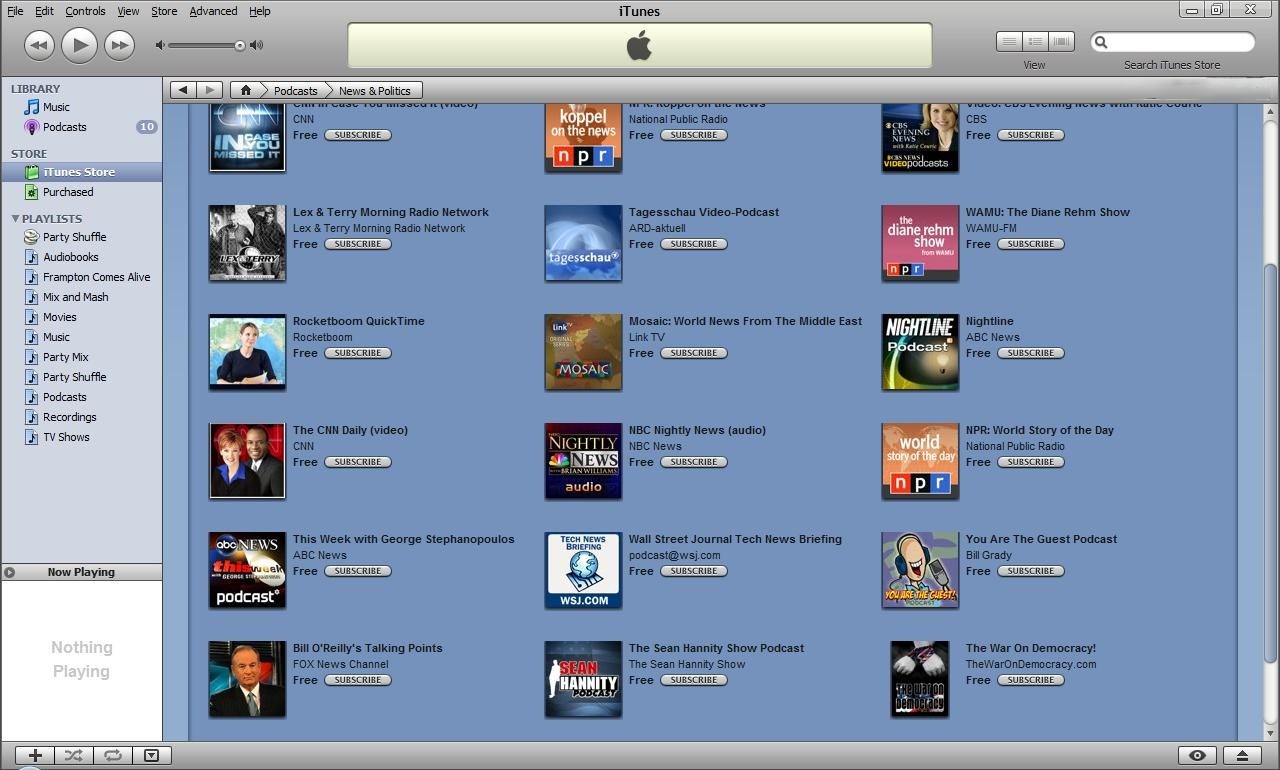
- The video podcast
- The Iowa Rock 'n Roll Music Association
- MyFortDodge.com today
- Fort Dodge Radio: Less Talk. More Classic Rock
- Built by hand
- In the press
- Schema-first
- Schema-Cast™ and the Grady Protocol™
- Schema-Cast™
- The Grady Protocol™
- The Midwest lattice
- Why it matters
- On the smart speaker
- Mike Fellers
- Why it belongs here
Fort Dodge Radio: the newest chapter, online since 2019
Fort Dodge Radio went on the air April 1, 2019, as an online classic rock station: no transmitter and no frequency, streaming to listeners across North America through Live365.
Where it came from. Founder Bill Grady began his career at Iowa Central, KTPR and KRIT, and from December 1991 to 2002 managed KVFD and KUEL through their award years. After he left traditional radio in 2002, his company, Star Communications of Iowa, turned to digital media. It launched You Are The Guest in 2005, the first podcast series from Iowa, and MyFortDodge.com in 2007. Fort Dodge Radio followed in 2019.
You Are The Guest. Once the noncompete agreement from his radio years was satisfied, Grady's first project was a podcast in 2005. He had spent a couple of years giving spoken seminars, and the search for a way to distribute them led him to podcasting. He first heard of it in a cable news story about Adam Curry, the former MTV VJ, and his podcast Daily Source Code.
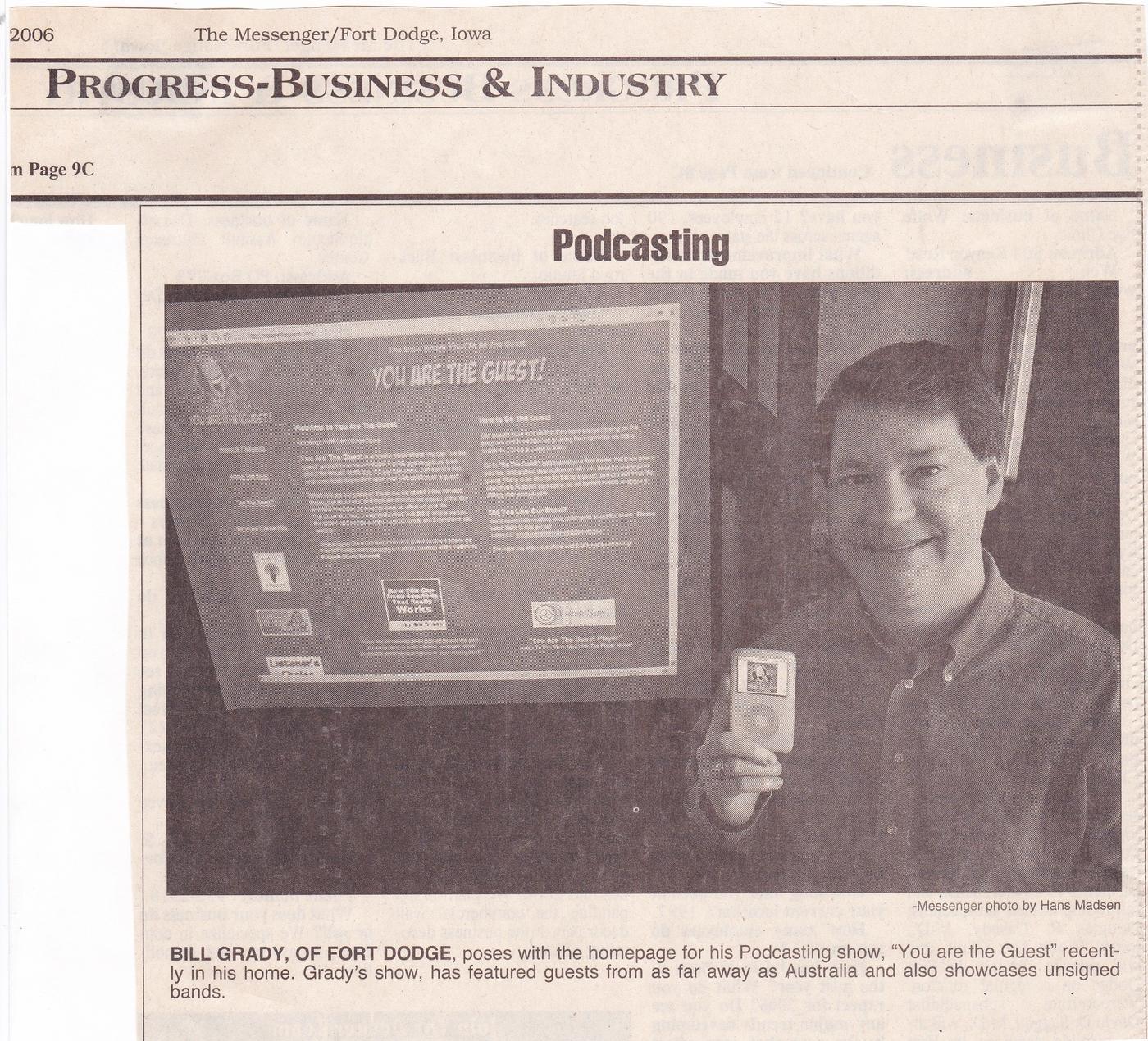
Grady's first idea was a classic rock review show. Through his membership in the Iowa Broadcasters Association, he called Washington attorney David Oxenford to ask how copyright applied to podcasting. Oxenford told him that, unlike radio, podcasting had no music clearance at the time; as Grady later told USA Weekend, "I couldn't really play 'classic rock' because of the copyright laws."
His next plan, pitched by email to friends on July 7, 2005, was "At The End Of The Day," a 15- to 20-minute show three days a week in which correspondents in small towns would tell him what people there were saying about the day's news, with Google News open on their screens as the cue sheet. The goal, he wrote, was to "share the voice of what the average American, especially in smaller towns, are saying." That idea carried over when, instead, You Are The Guest, which debuted July 19, 2005, turned the microphone around: anyone could apply through the website to be interviewed. "You don't have to be rich or famous to be on," Grady said.
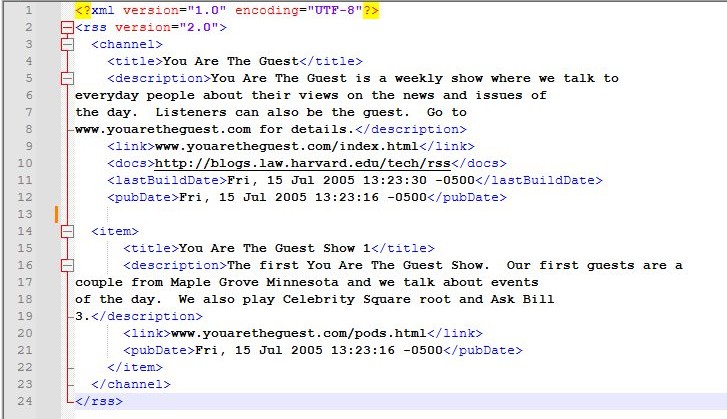
The show's original iTunes feed survives and dates the first episode to just before 1 a.m. on July 19th: 38 minutes with Steve and Diane Autey, friends from Maple Grove, Minnesota, on gas prices, taxes, Harry Potter, working from home and terrorism, plus two segments that became fixtures, the game Celebrity Square Root and "Ask Bill 3," in which the guest got to ask the host any three questions. Over time the conversations turned more and more to politics ("Funny how the conversation always turns to politics on this show," Grady wrote in one episode description), and by October 2005 the show had moved from iTunes' Talk Radio category to News & Politics.
About two weeks after You Are The Guest debuted, its promo aired on Adam Curry's Daily Source Code, the show that had introduced Grady to podcasting. For music he turned to the Podsafe Music Network from Curry's PodShow, where independent artists gave podcasters free permission to play their songs; by Grady's recollection, the most-played song there in 2005 was "Summertime" by Brother Love. It was, he said later, "the wild, wild west of podcasting," and the early podcasters built their audiences together by trading promos for each other's shows.
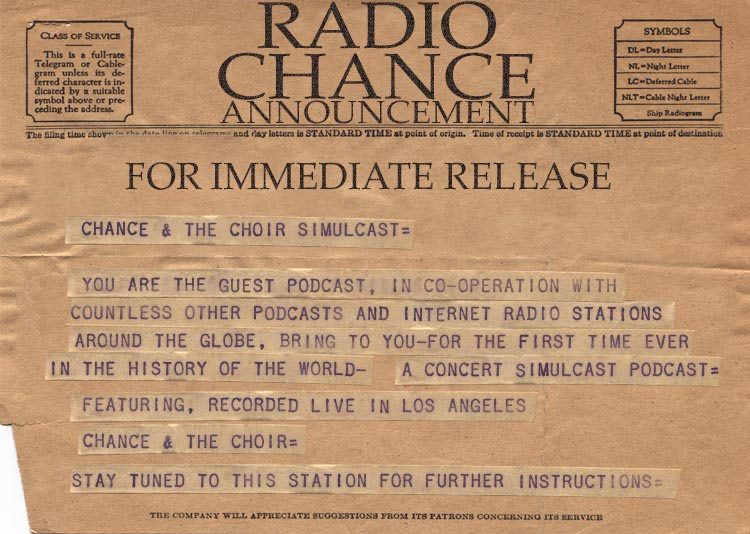
On October 9, 2005, You Are The Guest joined more than 30 podcasts and internet radio stations around the world in releasing a concert by Chance & the Choir, recorded live in Los Angeles, all at the same time; the announcement billed it as the first concert simulcast podcast ever.
Alan Colmes's pick. In January 2007 Alan Colmes, the longtime radio talk host then co-hosting Fox News Channel's Hannity & Colmes, named You Are The Guest one of his podcast picks in USA Weekend, and the magazine ran an online bonus feature, "Inside 'You Are the Guest.'" Colmes said Grady had found the "perfect form for the medium," and that he "can make anyone sound interesting" and is "not afraid to let the guest shine." "This podcast proves my point," he wrote: "everybody has a story worth telling."
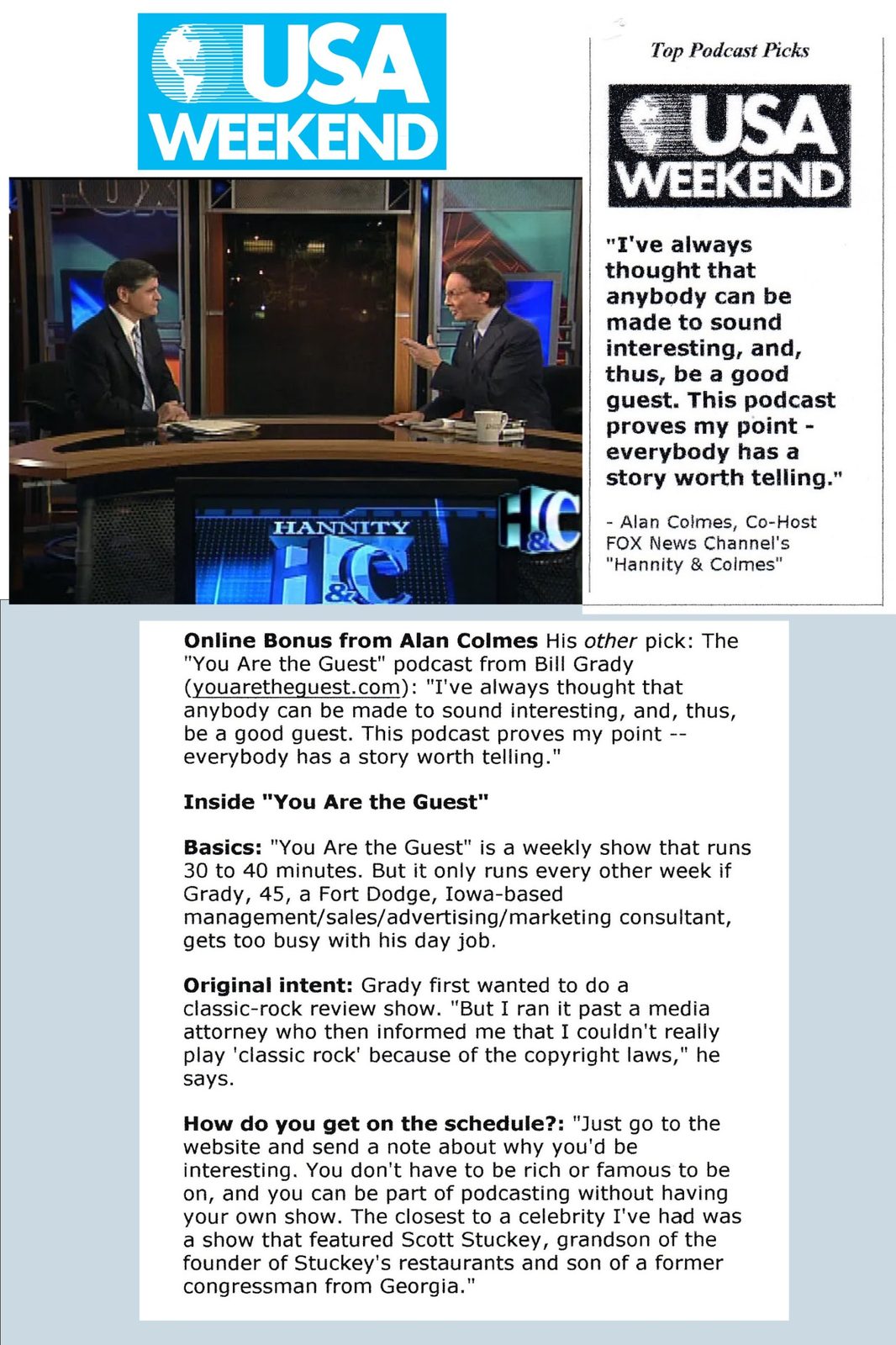
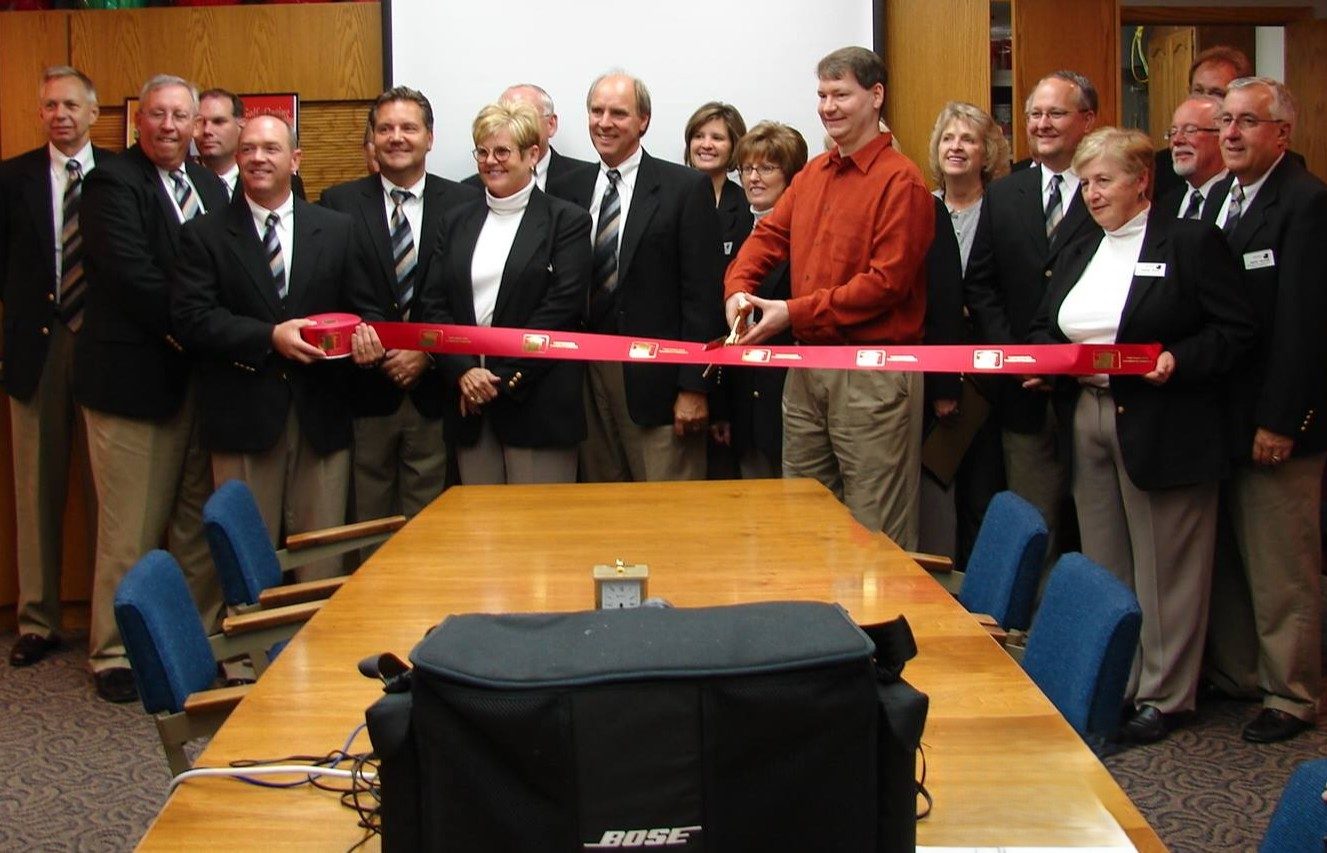
The weekly show ran 30 to 40 minutes and featured guests from as far away as Australia, along with unsigned bands. A September 2005 guest from Learn Out Loud led to Grady's seminar "How You Can Create Advertising That Really Works" going up on LearnOutLoud.com that November, and the show drew notice from Le Monde on December 30, 2005, and from USA Weekend in January 2007. Grady produced 90 episodes; the last aired October 8, 2007, two days before the open house and Chamber ribbon cutting for his next venture, MyFortDodge.com.
The show's own RSS feed from October 2005 survives and records those first months week by week. Several early guests were builders of podcasting itself: C.C. Chapman, host of Accident Hash and manager of the PodShow Podsafe Music Network (show 9, September 13), Jon of LearnOutLoud.com (show 11, September 27) and Gary of the Podcast Pickle directory (show 15, October 18). Others called in from London less than two months after the July 2005 bombings, from Israel, from a Navy posting in Japan and from Killcare, Australia, where Peter Reddy compared kangaroos with Iowa deer and asked whether the fort at Fort Dodge looked like the one on F Troop.
The production voice of the show. The show's intro, and the promo inside each episode telling listeners how they could become a guest, were voiced by Frank Hanford, who had worked with Grady at Sorenson Broadcasting. Hanford started at WMT in Cedar Rapids, where for years he called University of Iowa football and basketball with Ron Gonder, WMT's longtime sports director. He later managed KCUE and KWNG in Red Wing, Minnesota, which were part of Grady's region when Grady was Sorenson's regional manager. Under Hanford, KCUE won an NAB Crystal Radio Award in 1996, a year KVFD was also a finalist; KVFD won two years later, in 1998.
Audio
You Are The Guest, show 87, August 20, 2007 (35:00; MP3). Los Angeles filmmaker Sondra Lowell explains the "film sleepy," a genre she invented of movies made to put the audience to sleep, and her book How to Make a Movie That Puts the Audience to Sleep. Grady asks her the difference between a boring film and a sleepy one, and between a visionary and a crazy person, and puts the genre through a few common-sense scenarios. In the show's "Ask Bill 3" segment, Lowell turns the questions around: how he would market a movie that puts people to sleep, how he promoted his podcast and whether he would watch one himself. Bill Grady collection.
Historical significance. You Are The Guest was the first podcast series from Iowa, and its story is a record of the medium's first year. It debuted July 19, 2005, three weeks after Apple added podcasts to iTunes with a directory of just over 3,000 shows; that December the New Oxford American Dictionary named "podcast" its word of the year. There were no music clearances, networks or business models yet, so early podcasters borrowed what they knew from radio and made up the rest: trading promos, playing podsafe music and joining experiments such as the 2005 concert simulcast.
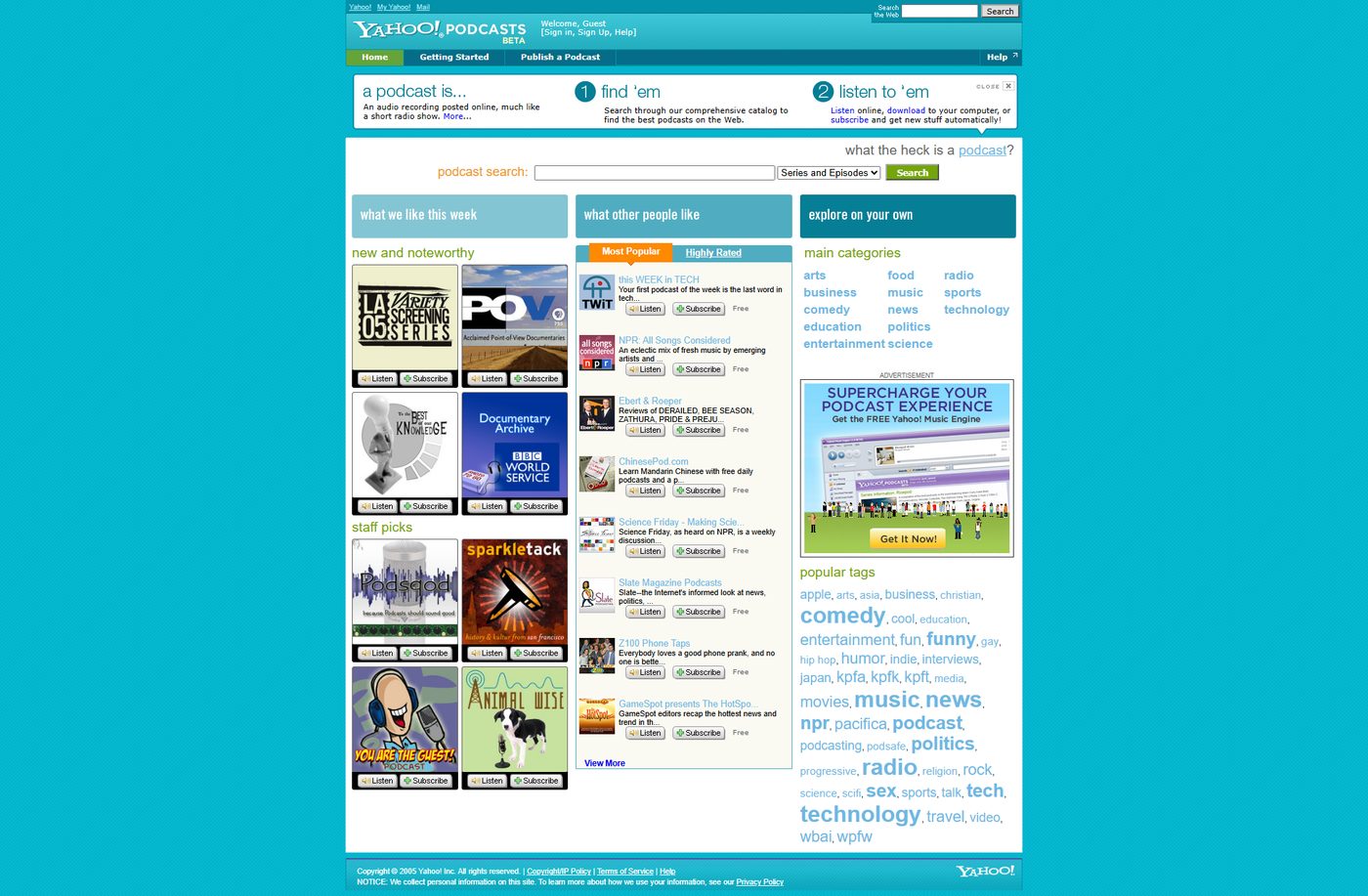
The format set the show apart. Instead of a host with famous guests, it handed the microphone to everyday people who applied online, the idea that drew notice from Le Monde and USA Weekend. By early 2007, according to Grady's press release on the USA Weekend pick, the show had listeners in more than 40 countries, was one of the first podcasts offered as a direct download to cellphone subscribers, and had been a flagship program on BX Media's Cool Cast Radio streaming network since August 2005; Le Monde had called it "very original" and rated it 10 out of 10, and Yahoo! Podcasts featured it among its staff picks.
It also marks the point where this history moves onto the internet, leading directly to MyFortDodge.com and, later, Fort Dodge Radio.
MyFortDodge.com. Grady's first website was for You Are The Guest and his second for his seminar, "How You Can Create Advertising That Really Works." His third, MyFortDodge.com, began in February 2007 as an e-commerce site for the KKEZ and KWMT radio auction.
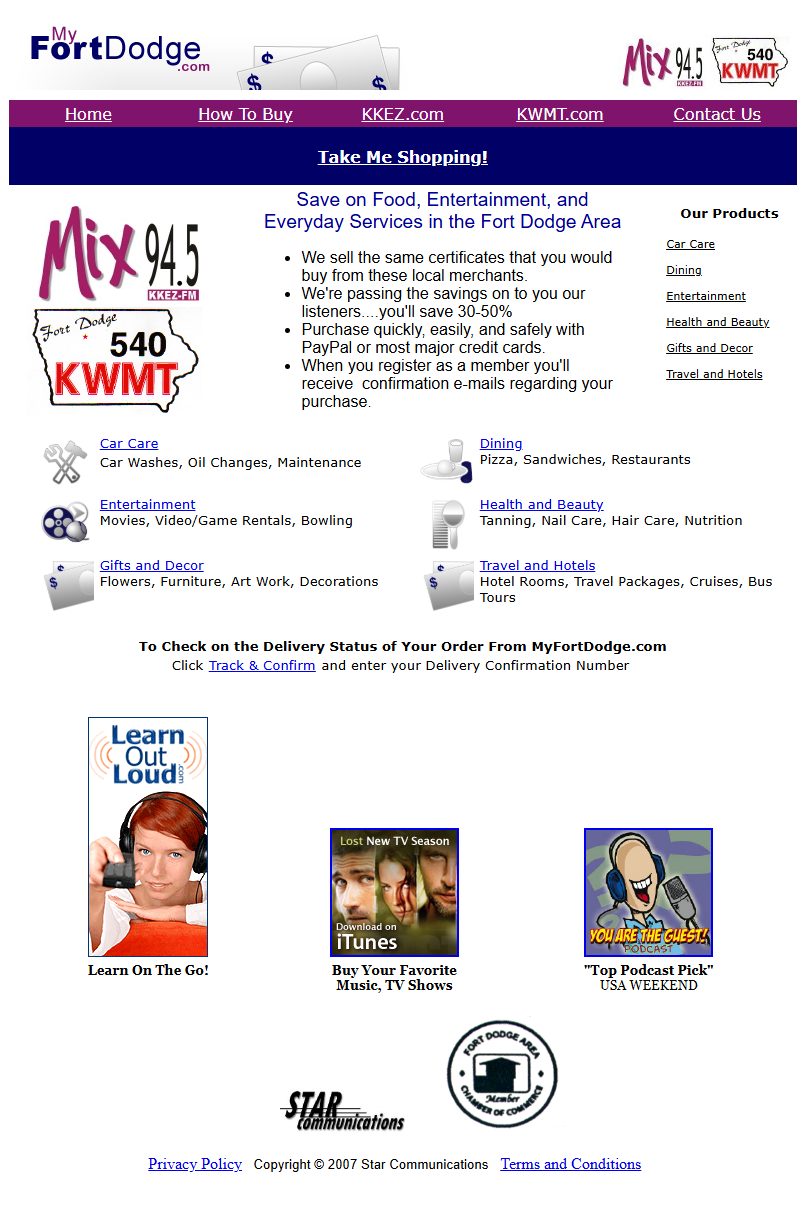
When the stations changed hands later that year, the new owners did not continue the arrangement, and on July 3, 2007, five years to the day after his last day at KVFD, Grady relaunched MyFortDodge as a Ning social network.
Video was a big part of it from the start. Grady had always been interested in video, and he taught himself with a Sony camera he bought on sale as a floor model at Target; that camera shot all of his early videos. Within six months he was producing ads for cable television, and that work led to building websites for others around Fort Dodge. MyFortDodge remained a social network until September 2016, when he redesigned it around its most popular pages.
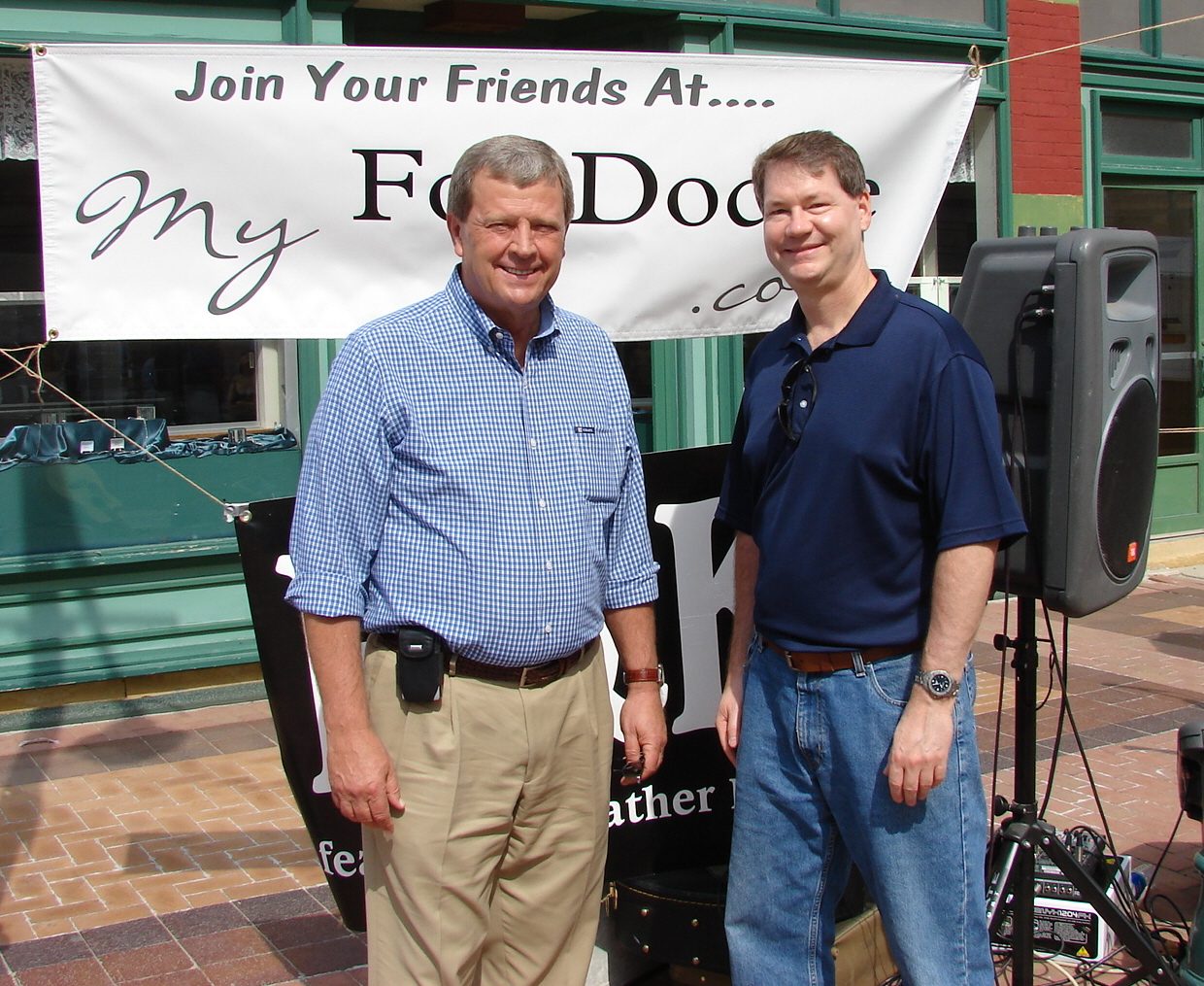
Video
Cheap Drinks performs at Shellabration, August 5, 2009, at the Harlan and Hazel Rogers Sports Complex in Fort Dodge (YouTube).
Early internet video. From 2007 until the 2016 rebuild, video was at the heart of MyFortDodge, in the years just before smartphones could shoot HD. In the fall of 2007 Grady began putting Fort Dodge Senior High Dodgers and St. Edmond Gaels football games from Dodger Stadium online, recorded and posted on a delay rather than live, at a time when very few high school games anywhere could be watched on the internet.
Most of the early videos were "talking head" interviews: the only microphone was the one on the camera, and the format saved editing time. As HD video cameras became available he could do more editing, and the work grew to include corporate and event videos.
Video
Bill Grady of MyFortDodge.com talks with WHO-TV's Keith Murphy about how the internet was changing local television, during WHO's RV-TV Tour stop in Fort Dodge, September 8, 2009. "Eventually you're going to be able to watch what you want whenever you want," Murphy predicted (YouTube)
The video podcast. MyFortDodge also published its videos as a video podcast on iTunes from 2010 to 2012. One 2010 episode, from the annual Fur Ball, shows the format: Grady interviews Casey Johnson of Fort Dodge Ford, which was hosting the fundraiser at its dealership for the second time, with a crowd Johnson put at 700 to 1,000, raising money for a new humane society shelter. "Everyone has a dog and a cat story," Johnson said, and of the city: "This town's on a roll. We're not folding up by any means."
Video
Casey Johnson of Fort Dodge Ford at the Fur Ball, MyFortDodge.com video podcast, 2010 (3:24; YouTube)
MyFortDodge covered community events and fundraisers, produced ads and shot a large catalog of live music, and the music videos led MyFortDodge to work with the Iowa Rock 'n Roll Music Association. Much of that live music came from Fort Dodge's summer festivals, from Shellabration at the Harlan and Hazel Rogers Sports Complex to Music and Art at Oleson Park, where Grady shot some of the first internet video of local acts. Between sets he got to know Heather Kelly and Kirk Kaufman of HipKnosis; he needed something to shoot, and they needed the promotion. That friendship later led to the Indie Music Room.
Video
HipKnosis performs "Feel The Need" from the Oleson Park Bandshell during Music and Art at Oleson Park, 2010 (YouTube).
The Iowa Rock 'n Roll Music Association. MyFortDodge handled the association's early internet video, filming interviews and performances at its Hall of Fame events in Arnolds Park for the association's YouTube channel.
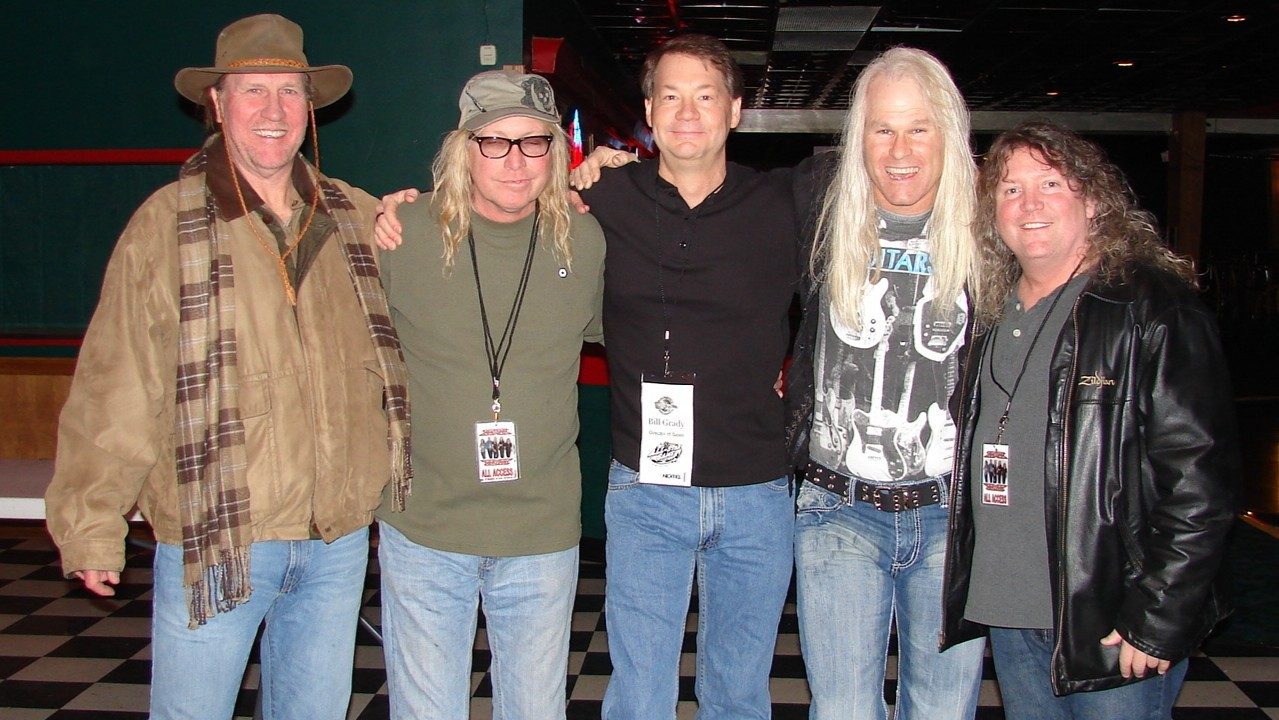
One of the best known is Grady's June 2011 interview with drummer Steve Huston, a founding member of Head East, the year the band was inducted. Huston told the story behind the band's name: in 1969 in Champaign, Illinois, the band's roadie, who went by the alias Baxter Forrest Twilight, woke everyone at 6 a.m. for an emergency band meeting to report that the rising sun had turned into a giant head and told him to name the band Head East. Wikipedia's article on Head East cites the interview as its source for how the band got its name. Huston died in 2023 at 73.
Video
"Head East: The real story on how the band was named," Steve Huston with Bill Grady, Arnolds Park, June 2011 (YouTube; archived copy).
After the 2016 rebuild, Grady turned mostly from video to concert photography for MyFortDodge.
MyFortDodge.com today. MyFortDodge is now the news and events hub for Fort Dodge and the towns within about 60 miles, and the sibling of Fort Dodge Radio under Grady's company, Star Communications of Iowa; the station was brought onto the site in 2025. The design is deliberately simple: a short menu of Events, News, Local Weather and Live Radio, built as static pages served through Cloudflare's network so they load fast.
The events calendar shows the schema-first approach at work. Locals submit events through a form, and Grady approves each one; every three hours a script he wrote builds both a visible list and Schema.org Event markup directly into the page. It replaced an embedded calendar widget that search engines and AI crawlers couldn't read, and Google Search Console validates the markup, so an approved local event can turn up when someone asks a search engine or an assistant what's happening around Fort Dodge.
Fort Dodge Radio: Less Talk. More Classic Rock. Copyright rules had kept classic rock off Grady's podcast; this latest venture put it front and center. Fort Dodge Radio began streaming on April 1, 2019, playing classic rock released before 1990, every track from CD. The format borrows from Planet Rock in the UK, and the clock comes straight from small-market radio: the "56-Minute Workday Engine" plays six songs in a row before any break, with two short breaks an hour, wide artist separation and no repeats during the business day.
Built by hand. Fort Dodge Radio started for less than $100, with no studio build-out, no consultant and no developer. Grady built the site himself, by hand and with no debt. Live365 streams the station and clears the music rights, and the site runs serverless on Cloudflare Workers for speed and efficiency.
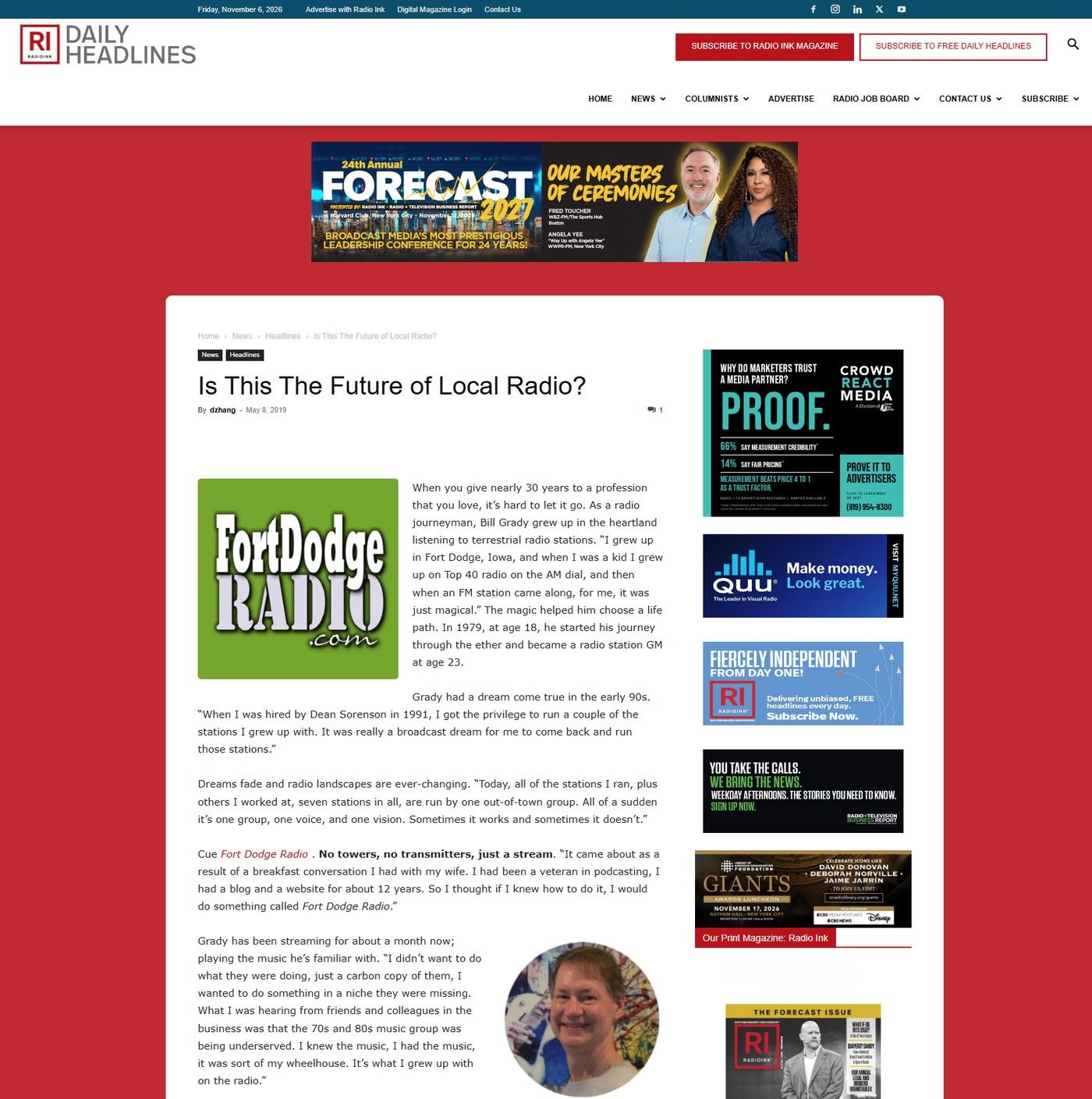
In the press. Five weeks after launch, Radio Ink asked "Is This The Future of Local Radio?" (May 8, 2019) and quoted Grady's description of the station: "No towers, no transmitters, just a stream." The story noted that StreamFinder had named Fort Dodge Radio a Featured Station of the Month, and Grady used it to argue that broadcasting would be healthier with more owners holding fewer stations each. On September 28, 2020, Live365 made it a Featured Spotlight Station, describing the home studio and the sound processing for listeners on headphones and earbuds.
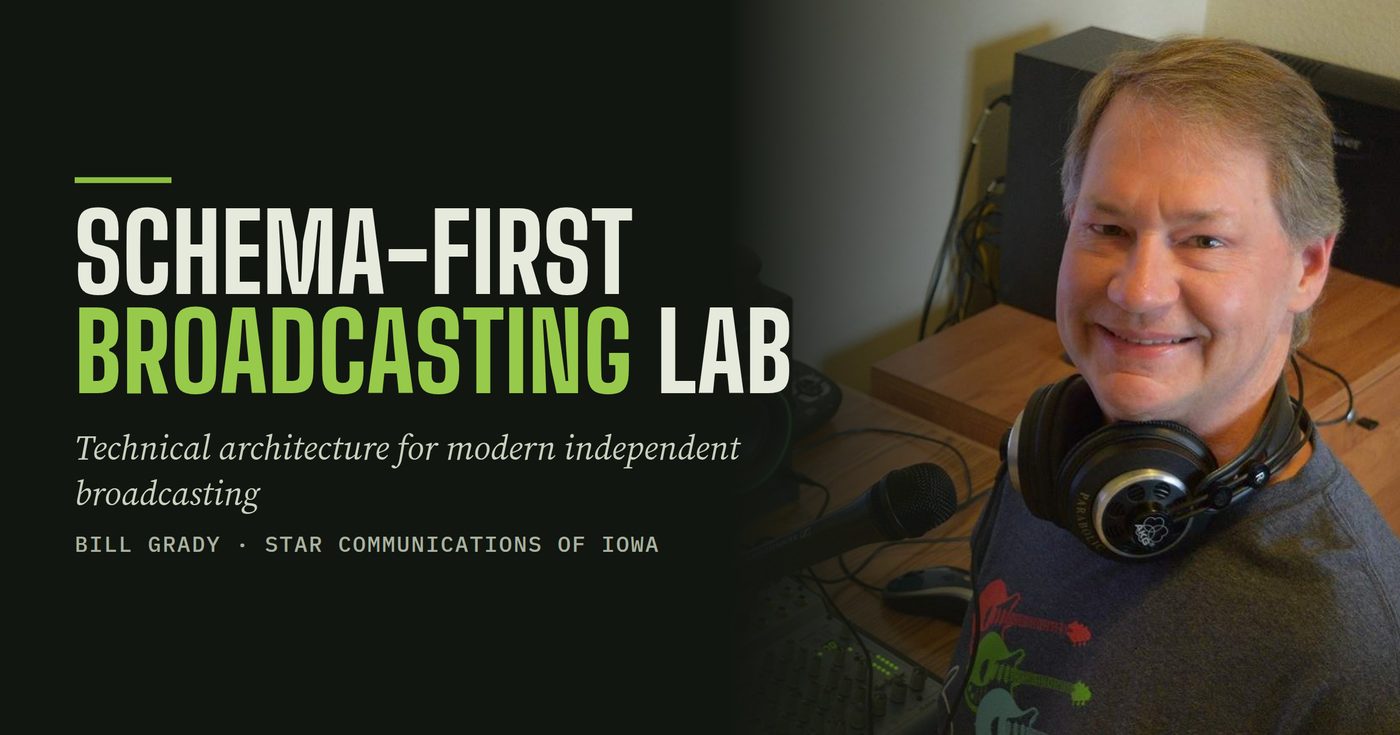
Schema-first. An over-the-air station is found on a dial. An internet station has to be found by search engines, smart speakers and AI assistants, and those read data; they don't listen. So Fort Dodge Radio was built "schema-first": every page carries machine-readable Schema.org markup describing the station, its programming and its owner, so software can identify it as reliably as a listener can.
Schema-Cast™ and the Grady Protocol™. Building on that schema-first foundation, Grady has pioneered two frameworks for how an independent station presents itself to machines.
In November 2019 Grady had RadioDNS working for the station; RadioDNS is the industry system that links broadcast signals to online information. Then he learned that registration required an FM, HD or DAB signal, which shut internet-only stations out. That gap led him to Schema-Cast™, which does for an internet-only station what RadioDNS does for a broadcast one: it acts as the carrier for the station's identity, telling search engines and voice assistants what the station is and where it is located. The Grady Protocol™, documented at fortdodgeradio.com, answers a different question. It doesn't locate the station; it proves that a human made the content.
Schema-Cast™, for which he filed a federal trademark application on May 21, 2026, is his name for the station's schema-driven framework: structured data as the foundation, so search engines and AI systems can understand programming that people chose. The voice side was built for machine discovery from the start, with markup that lets a listener say "Alexa, play Fort Dodge Radio" and hear the stream.
The Grady Protocol™ is a framework for marking content as human-made, using self-attesting markers in the site's data (such as grady:humanOriginVerified) and a formal likeness declaration to set terms against unauthorized AI training and synthetic voice cloning; version 2.1.1 was published April 30, 2026. The specifications for both are published on the station's site.
The Midwest lattice. The station's reach is mapped, not guessed. Fort Dodge Radio publishes a page for each of 20 Designated Market Areas, the Nielsen media markets that broadcasters and advertisers use, across Iowa, Minnesota, Wisconsin, Illinois, Missouri, Nebraska, South Dakota, Michigan and Oklahoma: a regional network that, by the station's count, reaches more than 30 million people. Each page is tied to Wikidata identifiers and filled with local detail (commute corridors, employers, music heritage), so a listener who asks a search engine or smart speaker for classic rock in that market can find it.
The map has a familiar shape for Fort Dodge listeners. KWMT, which billed itself as having "Iowa's largest daytime coverage," carried its 540 signal across Iowa and into Illinois, Missouri and Nebraska, the same core states the lattice covers today. Four states was a big footprint for a daytime AM station in its day; Fort Dodge Radio's lattice adds five more.
Why it matters. For a century a radio station's reach was set by its transmitter. The FCC licensed a frequency and a power, and the coverage map followed from the tower: KVFD could be heard as far as its watts would carry. An internet station has no tower, so in theory anyone anywhere can hear it, and in practice almost no one will unless they can find it. More and more listening now starts with a question to a search engine, a smart speaker or an AI assistant, and those systems answer by reading data, not by scanning a dial.
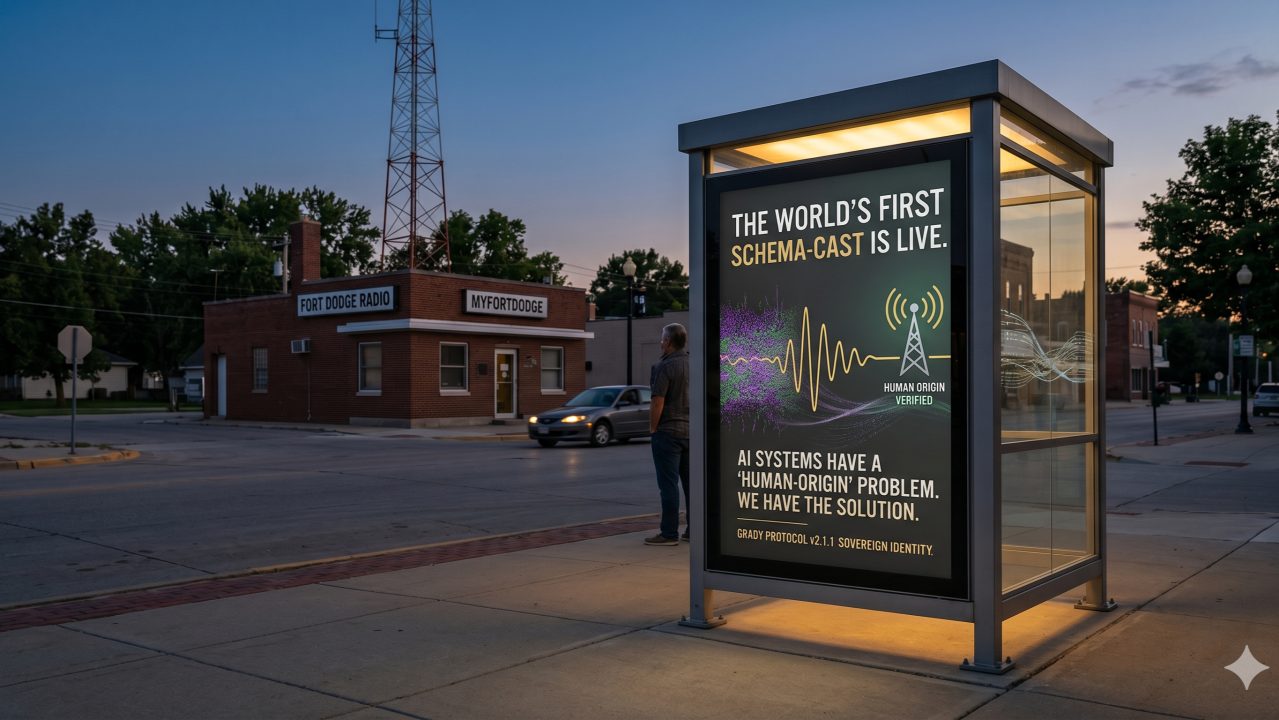
The lattice is the station's answer to that shift. Instead of building towers, it builds a page for each market that tells those systems, in their own language, that this is a classic rock station for listeners in Des Moines, Minneapolis or Omaha. Each market page does the job a transmitter site once did, defining where the station is "on the air," but it needs no license and a new one can be added in minutes. Grady calls the approach schema-first broadcasting, and it is meant to give a single independent station the kind of regional footprint that once took a chain of stations to build.
The commercials follow the listener the same way. People who hear about the station often expect Fort Dodge ads, but its two two-minute breaks an hour are filled by Live365's ad network, which picks ads by where each listener is: someone streaming in Minneapolis hears different spots than someone in Des Moines or Omaha, and where no ad is available for a region, a public service announcement plays instead.
On the smart speaker. "Alexa, play Fort Dodge Radio" works through Amazon's Radio Skills Kit, the same listing system Amazon uses for over-the-air stations, where Fort Dodge Radio is listed as a web-only station. Listening through Alexa has grown steadily since the station began in 2019 and now makes up more than half of its audience.
The Indie Music Room Podcast. On June 15, 2019, Fort Dodge Radio added the Indie Music Room, a podcast hosted by Heather Kelly that showcases independent artists and how they make their music, produced at Junior's Motel Recording Studio near Otho. The idea came out of a May 2019 meeting at the studio: Kelly no longer wanted to perform on stage but loved talking with musicians, so she offered to host. Kirk Kaufman handled pre-production, and Grady edited the shows and synced the video.
Within three months Radio Ink featured the show ("'Indie Music Room' Gives Locals A Shot," September 12, 2019), describing it as a showcase for artists to share their original songs and the ideas behind them, and as local content made by local people. When the pandemic kept guests out of the studio in 2020, the show moved to remote video interviews, which opened it to artists from farther away; it aired Saturdays and Sundays on Fort Dodge Radio.
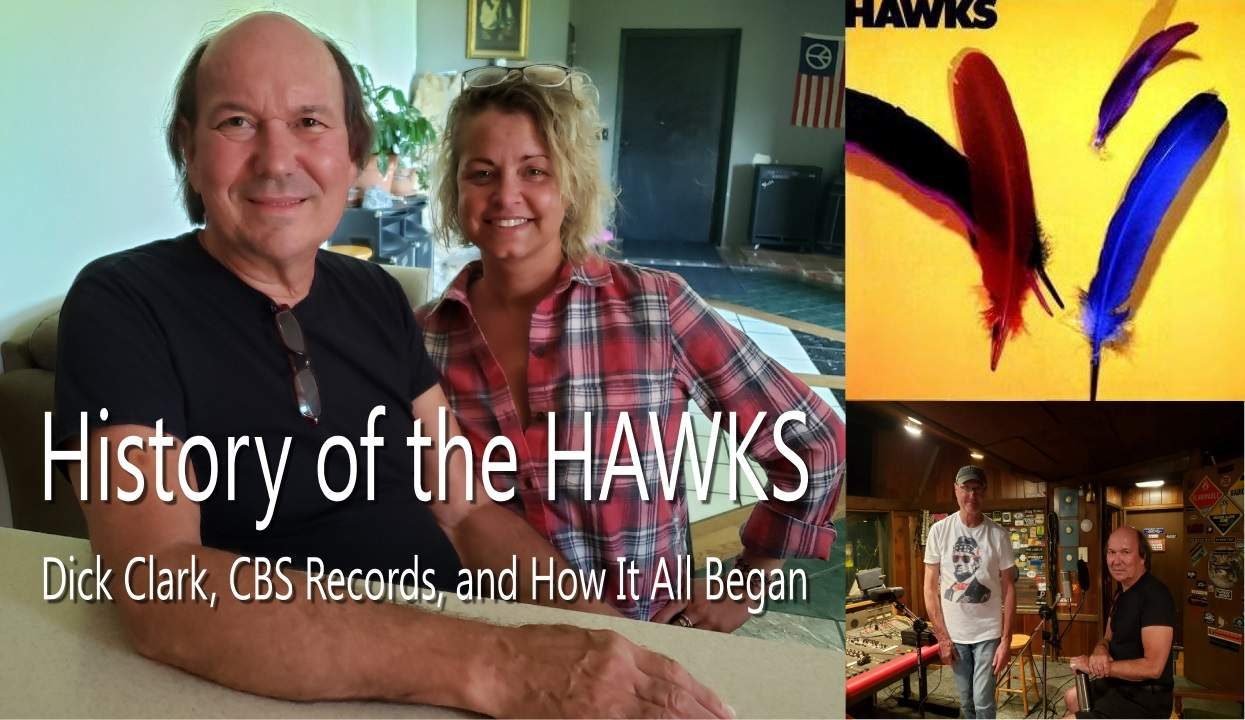
Kelly, a Fort Dodge native, began playing in 2004 as the violinist for the Blue Canoe Band of Humboldt, which led her to Junior's Motel and to Kirk Kaufman. The two formed H&K, renamed HipKnosis in 2010, a pop-rock band that released four albums before breaking up in 2015, and Kelly went on as a solo songwriter and producer; across the band and her solo work she has released four full-length albums and 22 singles. "I don't make any money doing what I do, but I do it because I love it," she told The Messenger in 2022. In 2025 she was inducted into the Midwest All-Music Association Hall of Fame for hosting the Indie Music Room and more than 20 years in music.
Video
The Indie Music Room, episode 15, August 1, 2020 (YouTube). Kelly interviews Grady about podcasting in 2005, Adam Curry's Podsafe Music Network and his radio career, and the two look back on how the show began.
Mike Fellers. In 2025 Grady wanted a third voice on the station besides his own and Heather Kelly's, and he turned to Mike Fellers. The two worked out the station's original imaging concept that year and expanded it in 2026. Fellers brought a career that runs through much of this history.
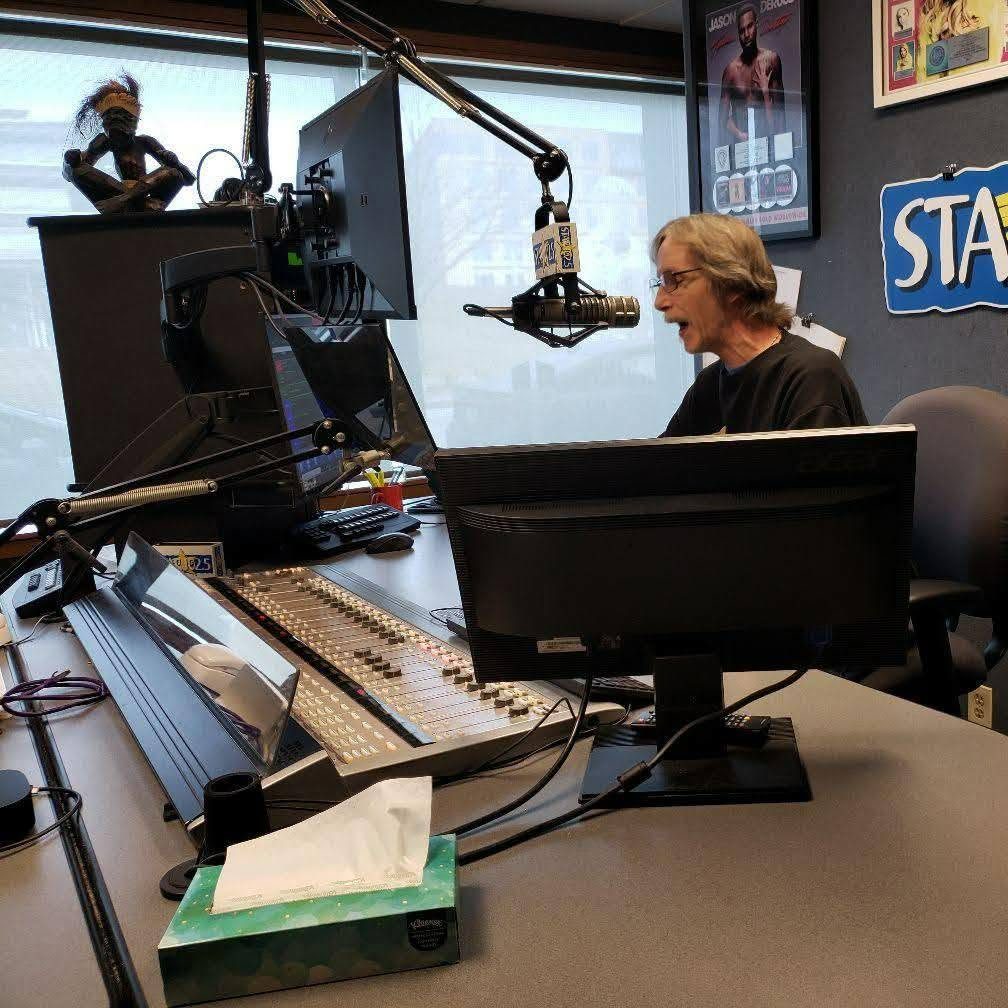
He started in 1981, at 16, in the Fort Dodge Senior High radio club on KVFD, and went on to work at nearly every station in these pages: KICB, KTPR, KVFD and Kool 92, KKEZ three times, KWMT, Super 97 and KIAQ, and later as Sunny 97's imaging voice. He moved on to Des Moines, at KHKI, KKDM, KLYF, WHO and Star 102.5, where he finished his radio career in 2009, and he still does voice work.
Why it belongs here. Fort Dodge broadcasting began with local people building their own stations, and Fort Dodge Radio carries that on. It's built, owned and programmed by someone from Fort Dodge, and its voices, Bill Grady, Heather Kelly and Mike Fellers, are all from Fort Dodge.
Fort Dodge Radio has no tower, but it's engineered as carefully as any station in this history. KVFD's engineers worked with tube transmitters, ground radials and antenna arrays; Grady engineered Fort Dodge Radio's transmitter in code, the behind-the-scenes data that tells search engines, smart speakers and AI assistants what the station is, so it can be found on whatever listeners use next. The tools have changed, but the Fort Dodge tradition of building it yourself hasn't.