

Fort Dodge Broadcasting: A History · Chapter 2 of 9
On this page
KVFD 1400 AM: "The Voice of Northwest Iowa"
KVFD signed on Sunday, December 24, 1939, and it has been on the air ever since, making it one of Iowa's oldest continuously licensed AM stations.
Founding. Northwest Broadcasting Company won a construction permit in 1937 for a 100-watt station on 1370 kHz, sharing time with KFGQ in Boone. Its backers were Fort Dodge attorney Edward Breen, who had been an announcer and program director at WHO in Des Moines and was then a state senator; O.M. Oleson; and Allen R. Loomis II. Local challenges held up construction until the FCC re-granted the permit on July 13, 1939. KVFD went on the air that Christmas Eve, with studios in the Warden Building and a 310-foot tower south of town on Highways 169 and 20. Breen was president and general manager.
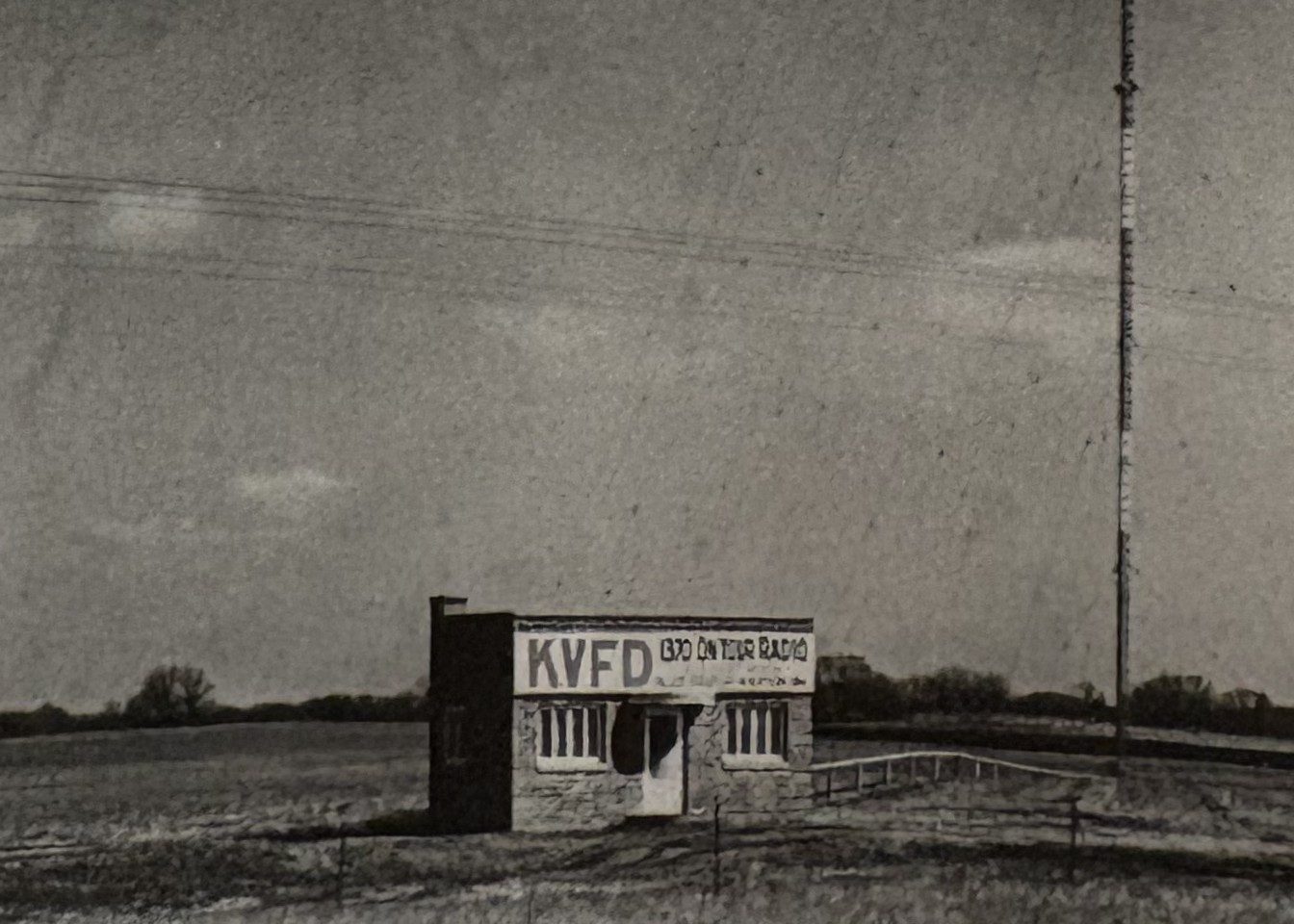
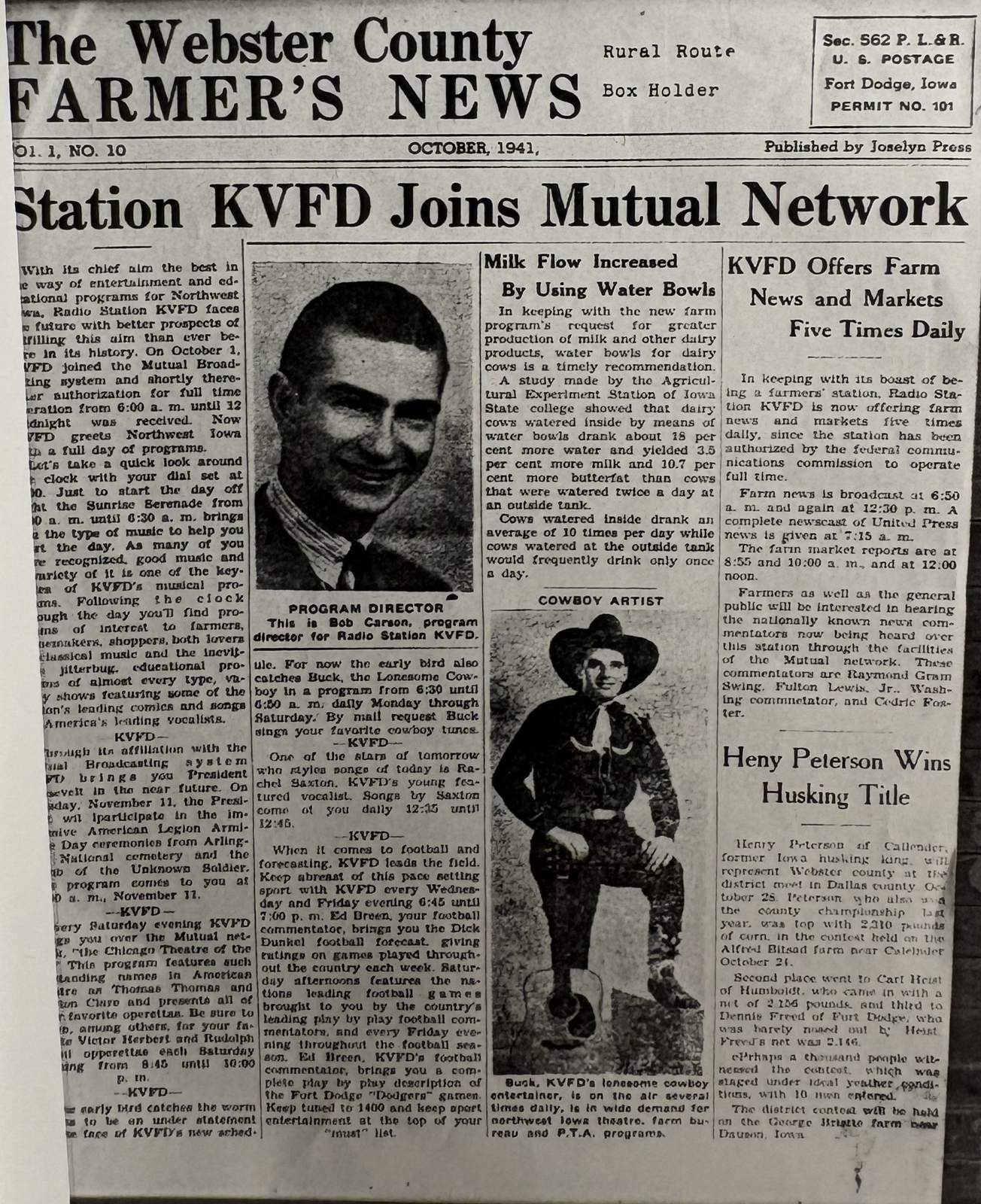
Finding its place on the dial. When the NARBA treaty reshuffled North American stations on March 29, 1941, KVFD moved to 1400. Northwest Broadcasting then bought KFGQ a new tower in exchange for full use of the frequency, and on October 1, 1941 KVFD went to unlimited hours and joined the Mutual network. The new schedule ran from 6 a.m. to midnight, with farm news and markets five times a day, Mutual commentators such as Raymond Gram Swing and Fulton Lewis Jr., Buck the Lonesome Cowboy every morning at 6:30, and Breen himself calling Fort Dodge Dodgers football; Bob Carson was program director. By 1954 KVFD served a nine-county region of about 21,490 families. Day power rose to 1,000 watts, licensed August 30, 1961; the station joined the Iowa Radio Network in 1965, and in 1971 it moved its transmitter and tower half a mile south of the Highways 169 and 20 intersection.
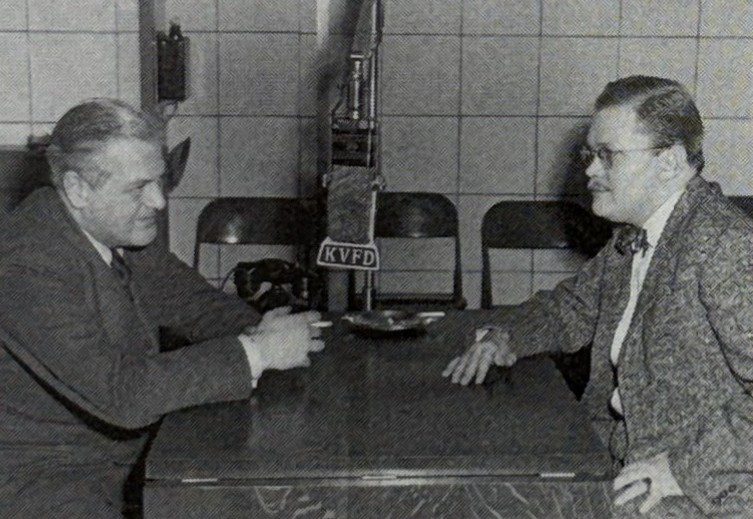
The full-service years. For decades KVFD was Fort Dodge's hometown station: local news, live local sports, farm programming, middle-of-the-road music, Mutual News, and St. Louis Cardinals baseball. By the late 1950s KVFD was broadcasting every Fort Dodge high school game, and many college games, from the press box at the high school stadium. Breen delivered his own commentary, It Seems to Me.
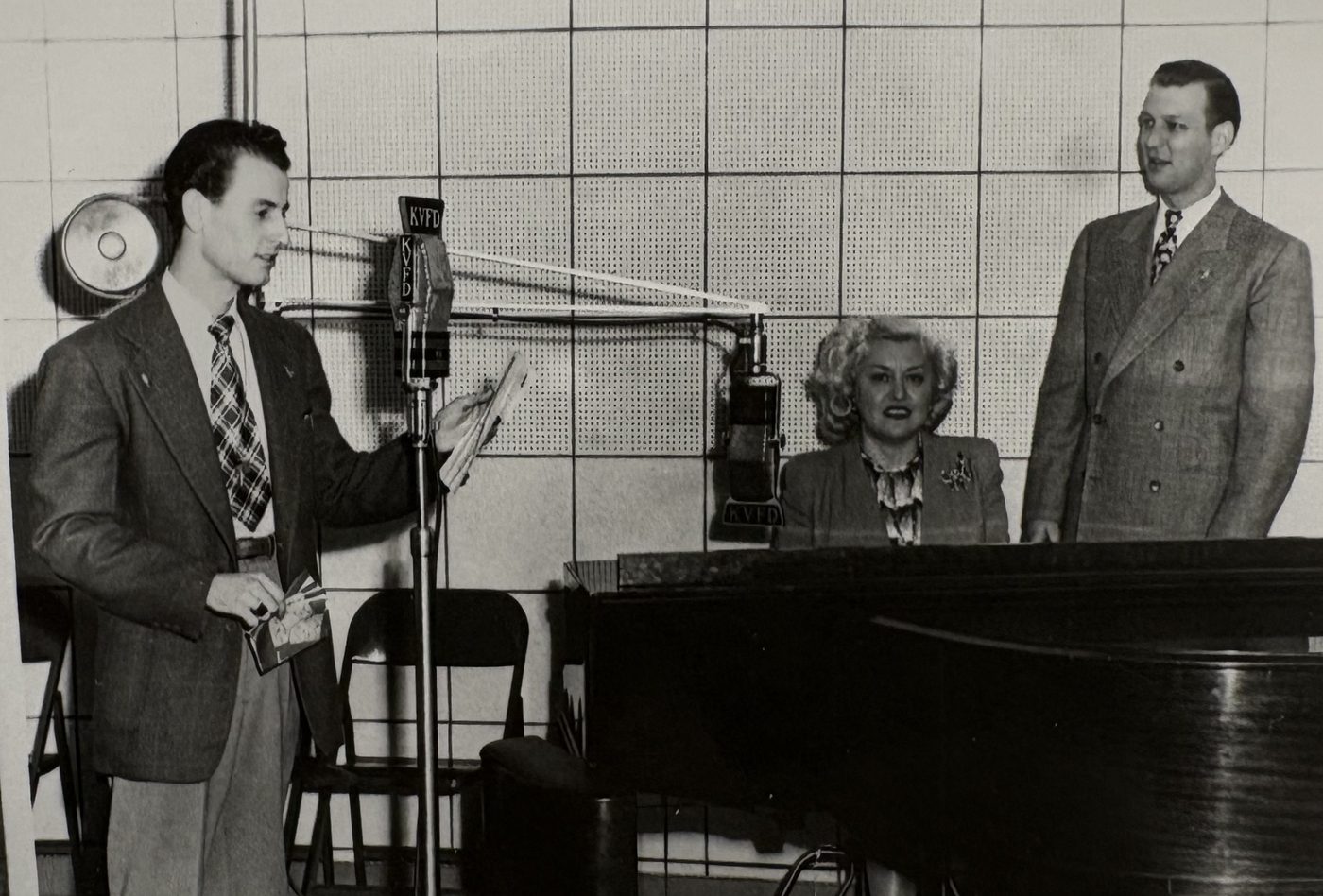
Drexel Peterson, who joined KVFD in October 1943 and hosted the station's wartime "Your Letter From Home" broadcasts, became its program director and held the job for some thirty years; he also programmed KQTV when it signed on in 1953.
Several programs ran for decades: the Cooking School, first held in 1955; the Swap Shop, a half hour at 1 p.m. for listeners buying, selling, trading or giving things away (Landes remembered "when a wife called in and wanted to give away her husband"); and the Rev. Lloyd Meyer's Old-Fashioned Church of the Air, broadcast live for an hour every Sunday evening for 24 years from a booth in his Eagle Grove church.
One of KVFD's first hires became its most famous alumnus: Gene Elston joined in 1940 at age 20, worked the press box when the Cubs and White Sox played an exhibition at Fort Dodge's Dodger Stadium on April 9, 1942, returned to KVFD in 1944 after serving in the Navy, began calling minor league baseball in Waterloo two years later, and went on to become the first voice of the Houston Astros and winner of baseball's 2006 Ford C. Frick Award. He died in 2015 at 93.
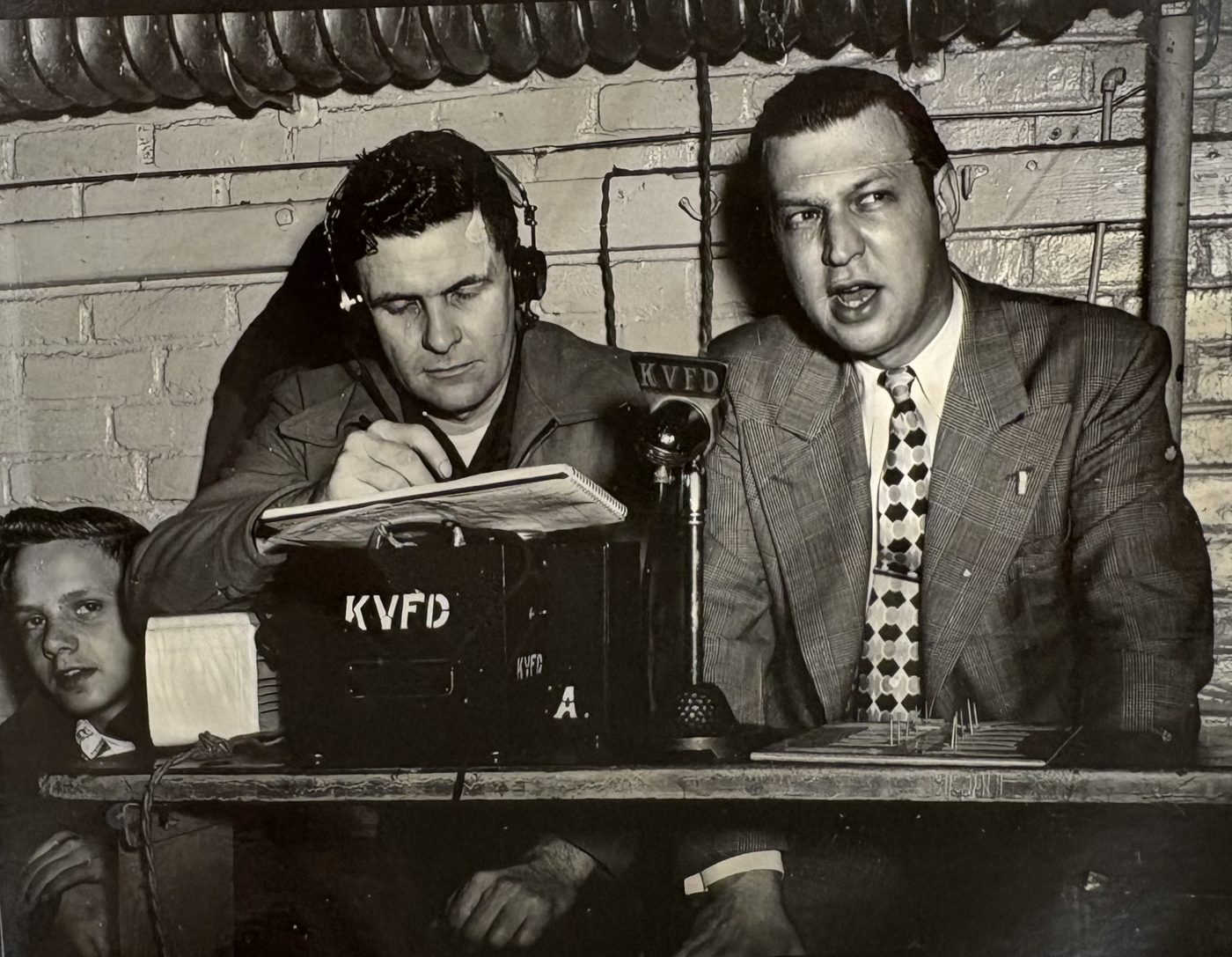
Sports on KVFD. Local sports were part of KVFD from its first years, when Ed Breen himself called Fort Dodge High School Dodgers football and Gene Elston worked the press box. In the 1950s the station had its own sports director: the Broadcasting Yearbook lists Wally Engelhardt, Johnny Green, Bob Roderick and, by 1956, Bob Brown.
Brown had started his journalism career at KQTV in 1953 before moving to KVFD radio, and in 1956 he became sports editor of The Messenger, where he stayed until he retired in 1993; the Iowa High School Athletic Association gave him its Sports Media Award in 1976.
Bill Higgins came to KVFD in 1955 as a sports director and broadcaster. He had started in radio at KICD in Spencer and spent 1951 to 1953 in the Army in Tokyo as a news broadcaster for the Far East Network during the Korean War. Like many of Breen's radio staff he worked both sides of the house: in the late 1950s he was also news editor at KQTV, and in the 1960s KVFD's promotion manager. At KVFD he called Fort Dodge Senior High Dodgers games for years and received the same IHSAA award in 1980. Known for his deep, rich voice, Higgins later hosted KVFD's morning show until he retired in 1996; he died on December 31, 2007, two days after Max Landes.
In the 1990s Joe Peterson was sports director of both KVFD and KUEL while doubling as news director, and the Iowa Sportscaster Association named him its 1996 Play-by-Play Announcer of the Year.
"Your Letter From Home." During World War II, KVFD mailed a printed weekly letter about life back home to Fort Dodge-area men and women in the service. It began in the last week of October 1943. Ed Breen wrote nearly every opening letter and filled the rest with excerpts from service members' own letters. On Tuesday nights volunteers from the Wa Tan Ye Club, Fort Dodge's women's service club, filled the station's offices to address the envelopes by typewriter and by hand, as many as 5,500 a week, and local sponsors paid for the printing. On the air, Drexel Peterson, who joined KVFD the same week, hosted a companion program at 12:45 each weekday afternoon that grew into interviews with service members home on leave.
The letters ran until 1946. Service members wrote back that the letter reached them faster than any other mail, and about 5,000 of their letters came back to the station. The project's records survive in an archival collection, most of it from 1943–1946: KVFD's letters, the replies, broadcast scripts, photographs and sketches, along with 1974 oral histories in which local historian Roger Natte interviewed Ed Breen and Drexel Peterson. The Webster County Historical Society's Roger Natte Archives Room holds a mix of original letters and digital copies, along with a transcript of the Peterson interview.
Drexel Peterson. For more than three decades the voice many listeners connected with KVFD belonged to Drexel Peterson. Polio struck him at six on his parents' farm near Madrid, and he walked on crutches all his adult life. During his treatment in Minneapolis a teacher encouraged his singing and speaking voice, and by the late 1930s he was singing on WOI in Ames. In 1943 he wrote to Ed Breen from Boone asking for an announcing job. Breen later recalled seeing the crutches at their first meeting, hearing an excellent audition, and inviting Peterson's family up the next Saturday to put their doubts to rest.
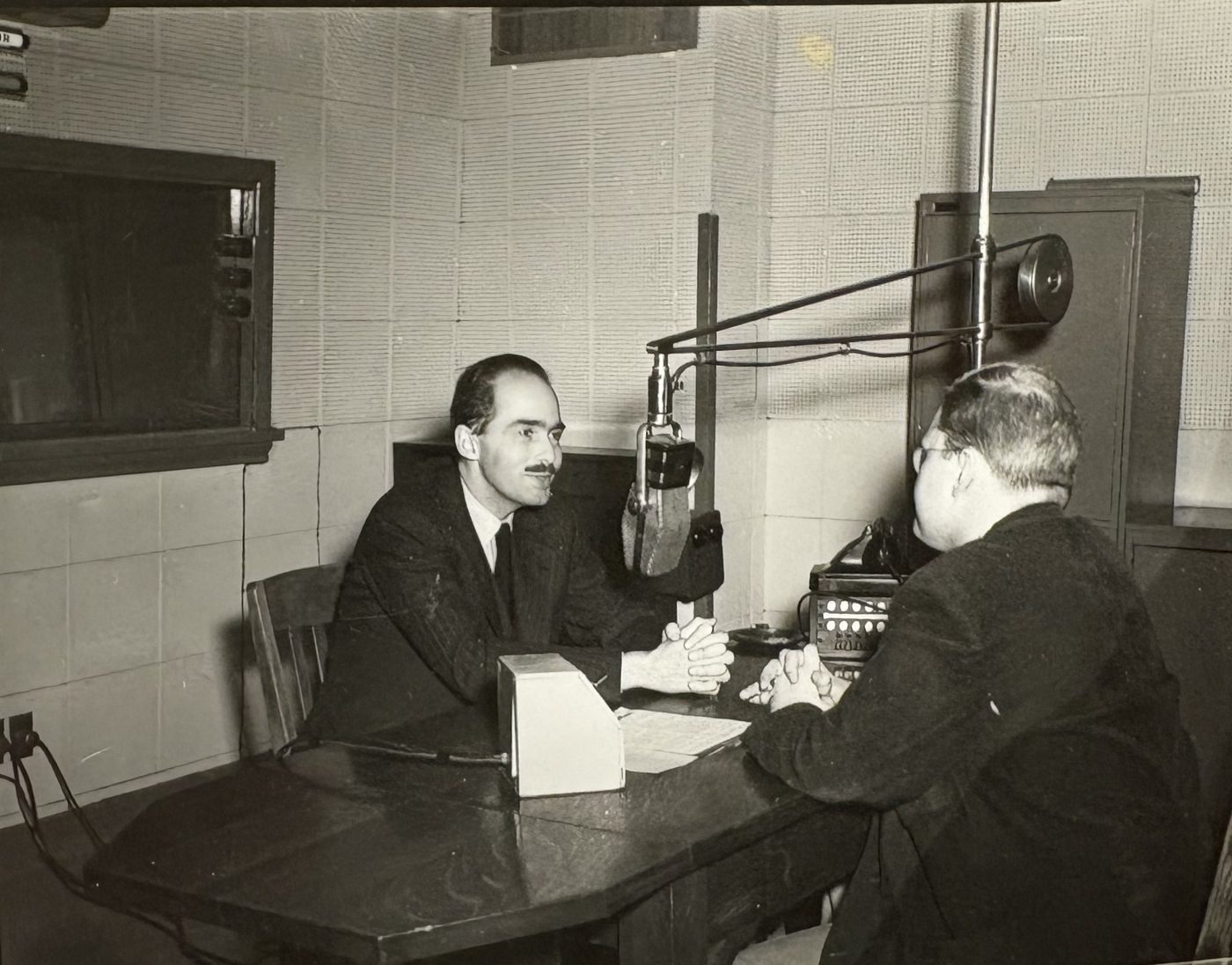
Peterson stayed 34 years, as announcer and program director. With his wife, Ruth, whom he married in 1945, he hosted Ruth and Drex every weekday from 9 to 9:30 a.m.; Ruth gave away a recipe at the end of each show, delivered by taxi to a winner drawn from the phone book. He interviewed Richard Nixon twice, once aboard a campaign train from Waterloo to Fort Dodge, as well as Carl Sandburg, his favorite, Burl Ives, Hedda Hopper, Randolph Churchill and the historian Will Durant, his longest interview, and for years he was the KVFD Santa Claus who read children's letters on the air. When post-polio syndrome forced him to retire, Mayor Herbert Conlon proclaimed April 14, 1977, "Drexel Peterson Day." Ruth died May 10, 1994, and he died September 10, 1999, at 80.
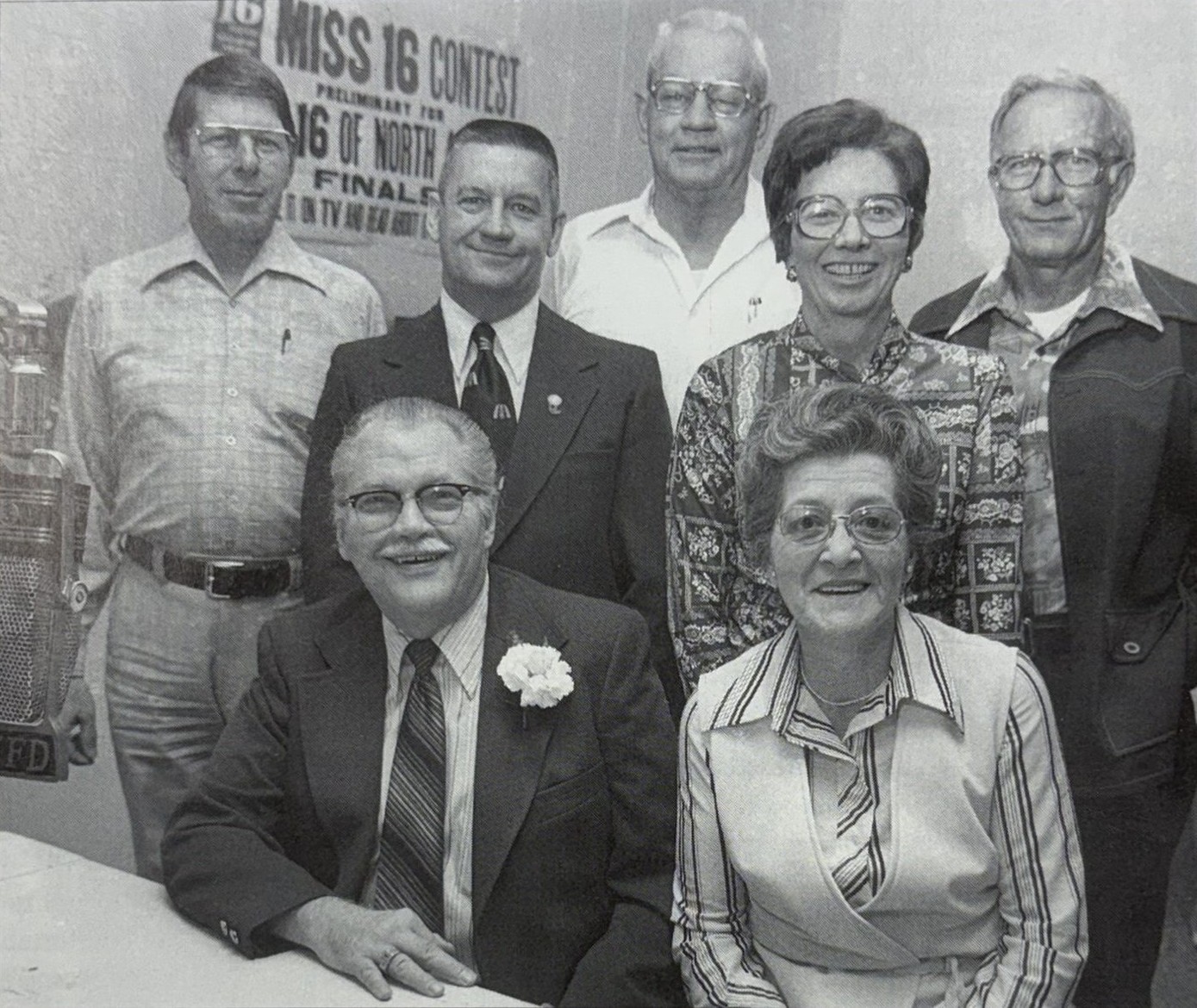
Local owners (1971–1988). Northwest sold KVFD on August 1, 1971, for $450,000, to Fort Dodge Broadcasting Inc., a group of local investors led by longtime Commercial Manager Max Landes, who became President and General Manager. In the 1970s KVFD played middle-of-the-road music by day and, from 1973, Top 40 at night, and announcer "Buckskin Bill" Smith played country tunes and commercial jingles on his guitar during a two-hour program. Landes entered the Iowa Broadcasters Association Hall of Fame in 1995.
The KVFD Radio Club. In the spring of 1979 Bud Young, a teacher at Fort Dodge Senior High, started a radio club that gave students their own program on KVFD. Every Saturday afternoon the members wrote the show from scratch and recorded it; each student was assigned a segment or could pitch an idea to the group, and the finished program aired Sunday nights at 7 on KVFD. The first show aired Sunday, March 4, 1979, without a name. Hosts Dave Ambroson and Chris Jensen asked listeners to mail in suggestions, and the winning entry, from Todd Macek, made it Dodger Teen Beat; the prize was his choice of either a KVFD spy camera or a 16-inch Paul Revere's Pizza. The show mixed school news, commentary, record reviews, comedy sketches and a weekly Billboard top-five countdown. Bill Grady was a member of the first club, and Mike Fellers got his start in it in 1981, at 16; both went on to long careers in radio.
Audio
Two early Radio Club shows (14:28). The first, March 4, 1979, has Dave Ambroson and Chris Jensen launching the name contest, Twirp Week news from Maria Powell and Grady's weekly feature, "Off the Wall and Down the Hall," on the lunch line. The second, March 18, 1979, hosted by Mike Morrissey and Dawn McGuire, announces the winning name, Dodger Teen Beat, and includes Tracy Vaubel's album feature on the Village People's Cruisin', a detective-serial spoof by Dave Ambroson and Bill Grady called "Get Serious", and Dan and Mike's "Take Five" countdown. Vaubel went on to work at KKEZ for a while. Bill Grady collection.
Max Landes. No one worked in Fort Dodge broadcasting longer: he spent 60 years at KVFD. Born in Marshalltown in 1921, he played baseball at the University of Iowa in the Nile Kinnick era, and he graduated with a communications degree. He entered the Army in 1943 and was wounded in action in Europe in the fall of 1944, earning the Silver Star, the Bronze Star and the Purple Heart. After he recovered, he taught military science at the University of Illinois, coached its rifle team, and left the service as a captain.
He came to Fort Dodge in 1946 and joined KVFD in sales, rising to sales manager and then station manager. Landes later said that during the television years KVFD radio covered KVFD-TV's cash shortfalls to keep channel 21 on the air. He ran the station until the 1988 sale, then stayed on in sales through the award years and into the Three Eagles era, retiring in January 2005 with a celebration at the Laramar Ballroom. Away from the station he served on the Fort Dodge school board from 1968 to 1974, helped organize the YMCA Little League and served for years as its commissioner and a coach, and was named Fort Dodge's Outstanding Young Man in 1953. He died in Fort Dodge on December 29, 2007, at 86.
Video
"KVFD Radio, Fort Dodge, Iowa Tribute," by Callie Bierman (YouTube)
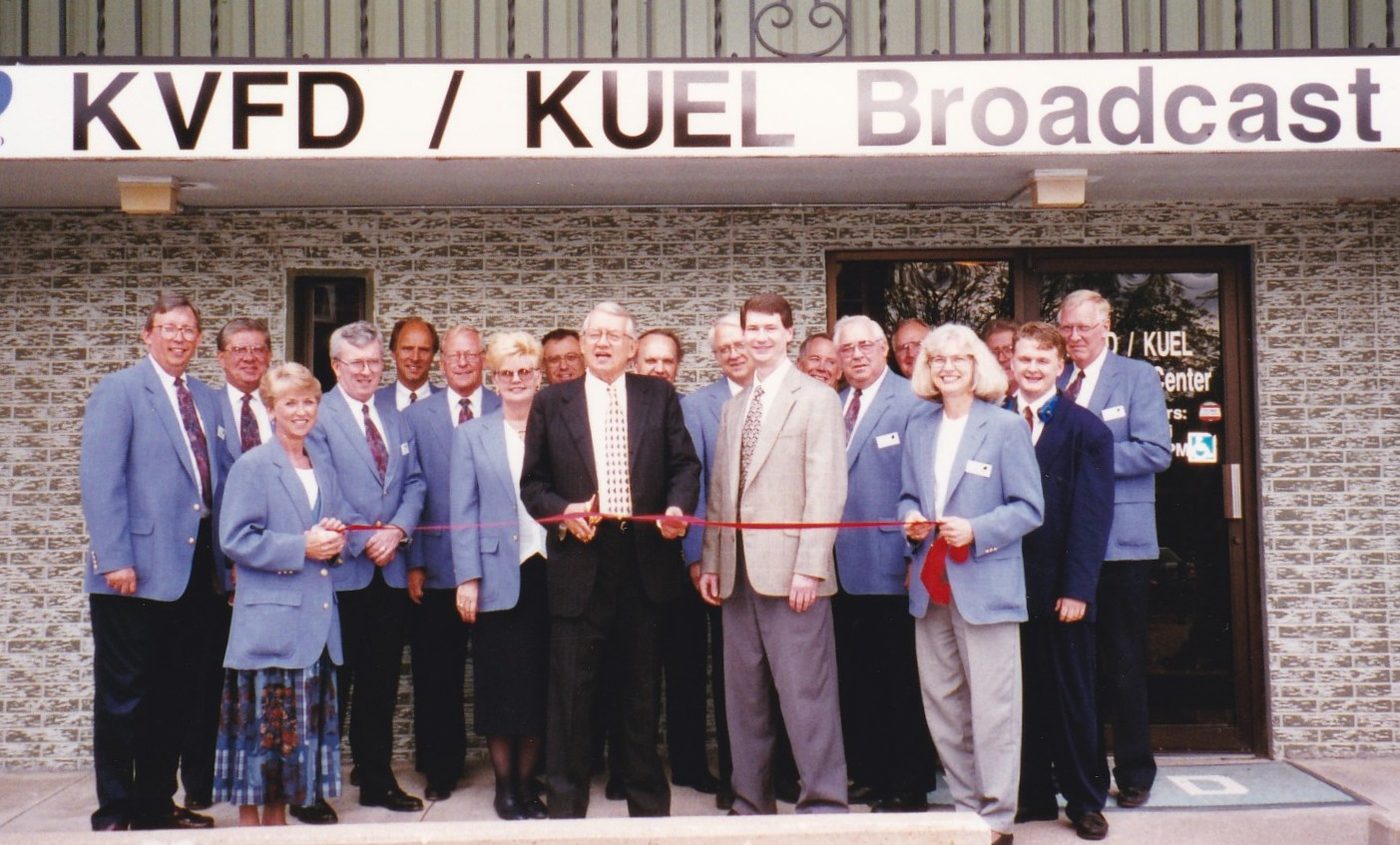
Sorenson and the award years (1988–2002). In 1988 Dodge Communications, owned by Dean Sorenson and Ray Lamb, bought KVFD for $475,000, along with the 92.1 FM. On December 17, 1990, KVFD changed from middle-of-the-road full service to adult standards, keeping its local news; the same day, its FM sister became KUEL. Sorenson took full ownership in 1991, and Bill Grady became general manager that December. In 1996 the stations moved to the Dowd Building at 200 North 10th Street.
Video
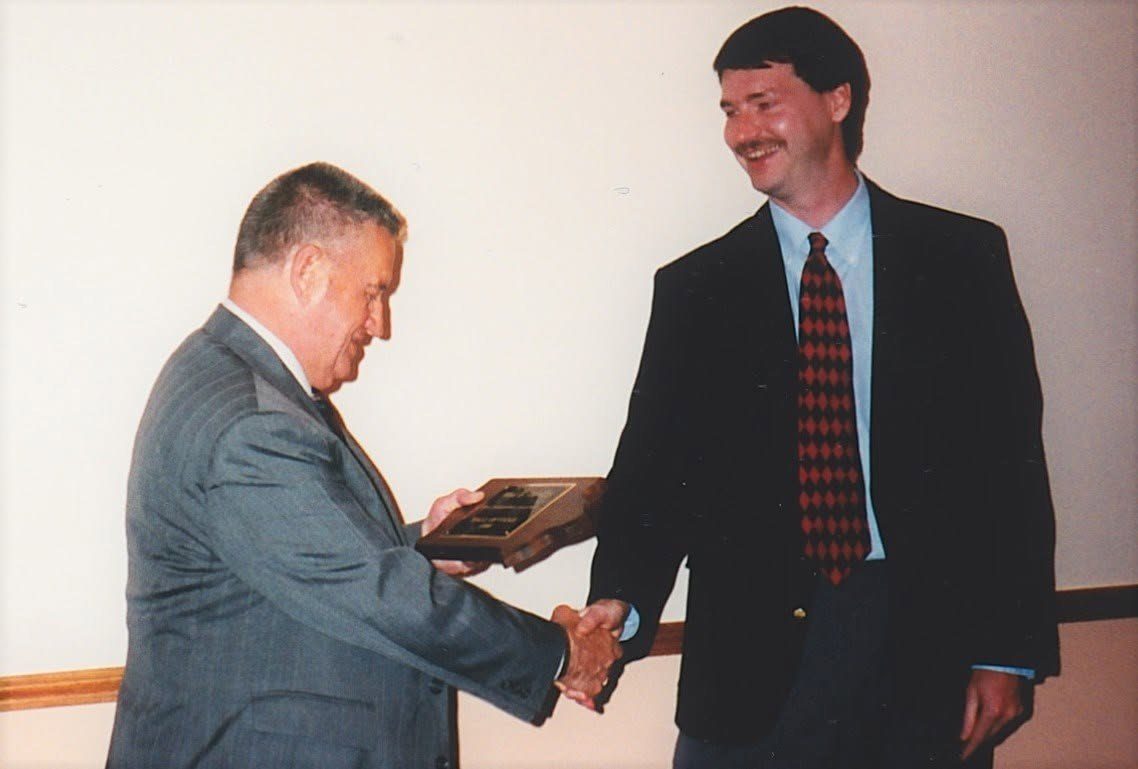
KVFD receives the 1998 NAB Marconi Award for Adult Standards Station of the Year in Seattle, Washington, in October 1998; General Manager Bill Grady accepts on behalf of the staff (YouTube)
Under Sorenson Broadcasting, KVFD became one of the most honored small-market stations in the country: an NAB Crystal Award and NAB Marconi Award for Adult Standards Station of the Year in 1998, and both awards again in 2000. KVFD's sister station, KUEL-FM, also won Crystal and Marconi honors in 1999. The stations had been Crystal Award finalists in 1996 and 1997, before the three straight wins. Read more about the award streak in Young Guns, Big Wins: The KVFD/KUEL Broadcast Legacy.
The award-era staff. The awards went to the stations, but a small staff did the work, most of them in their 20s and 30s and many new to radio. KVFD's 1998 Crystal Award entry, covering 1997, counts 15 employees involved in more than 70 community activities, from 11 seats on boards of directors to 28 volunteer roles and one youth coach.
On June 11, 1997, the station's first Community Service Day sent 70 volunteers from 12 businesses out to clean, fix up and paint for nonprofits including the Red Cross, the Senior Center, Bethany House, the Domestic/Sexual Assault Outreach Center, the Blanden Memorial Art Museum and the Webster County Historical Society, with an hour of live radio from each work site. "Students in the Arts" put 18 young artists a month on the air and gave eight graduating seniors $500 scholarships to Iowa Central. Kids Fun Night at the Fort Museum invited 2,000 students from 11 elementary schools to raise money for their schools, and every Friday in April the morning show went out live from a moving school bus while students voted for their favorite driver. That year KVFD helped the United Way raise $295,000 and received the agency's first Corporate Leadership Award, along with the Governor's Media Award.
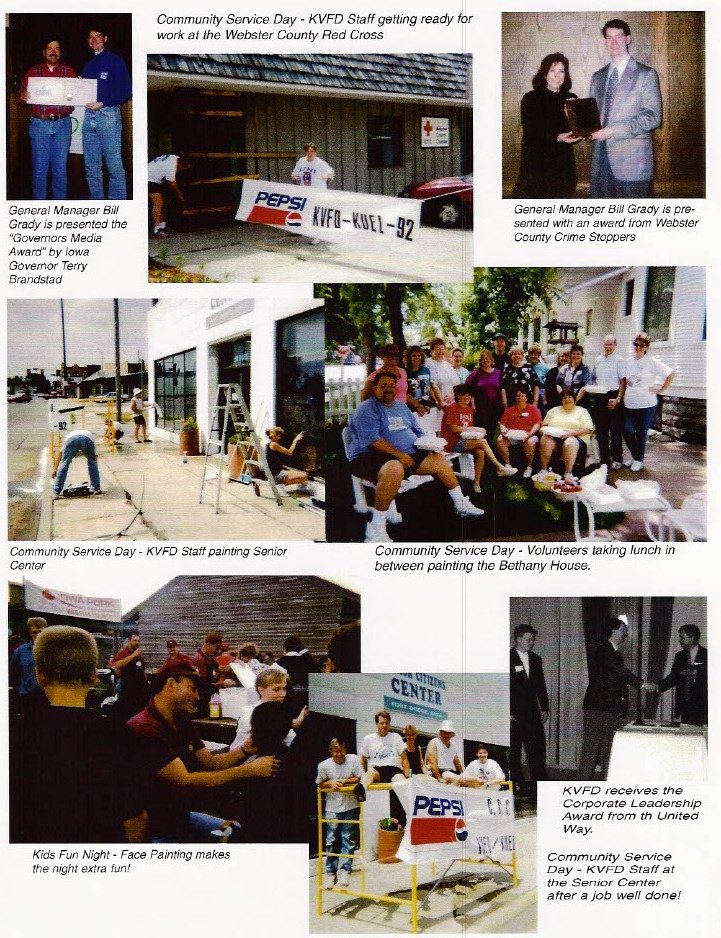
The entry names the people behind it: Operations Manager Jeremy Borash; News Director Joe Peterson; announcers Ed Miska and Brian Peters; Sales Manager Kim Ewing; Traffic Coordinator Deb Telfer; telephone sales representative Chandra Hendrickson; and sales representatives Suzanne Elsbecker, Ann Halbur, Pat McGinty, Linda Trager, Kim Wetzel and Max Landes, whose Kiwanis Club had just given him its Legion of Honor for 50 years of service. Halbur chaired the Webster County Red Cross board and the March of Dimes WalkAmerica recruitment team, mentored at three schools, and was a 1999 finalist for Radio Wayne Streetfighter of the Year.
Throughout the award years many were a part of the team too, including Bill Higgins, Craig Voorde, Mary Sorenson, Chris Walterman, Phil O'Reilly, Mike Temaat, Rusty McNeil, Mike Fellers, Max Christensen, Jay Alexander and Tony Thomas.
"I know of no other company in Fort Dodge that does so many different things in the interest of improving the community for all," Linda A. Smith, executive director of Webster Health Care, Inc., wrote to the station.
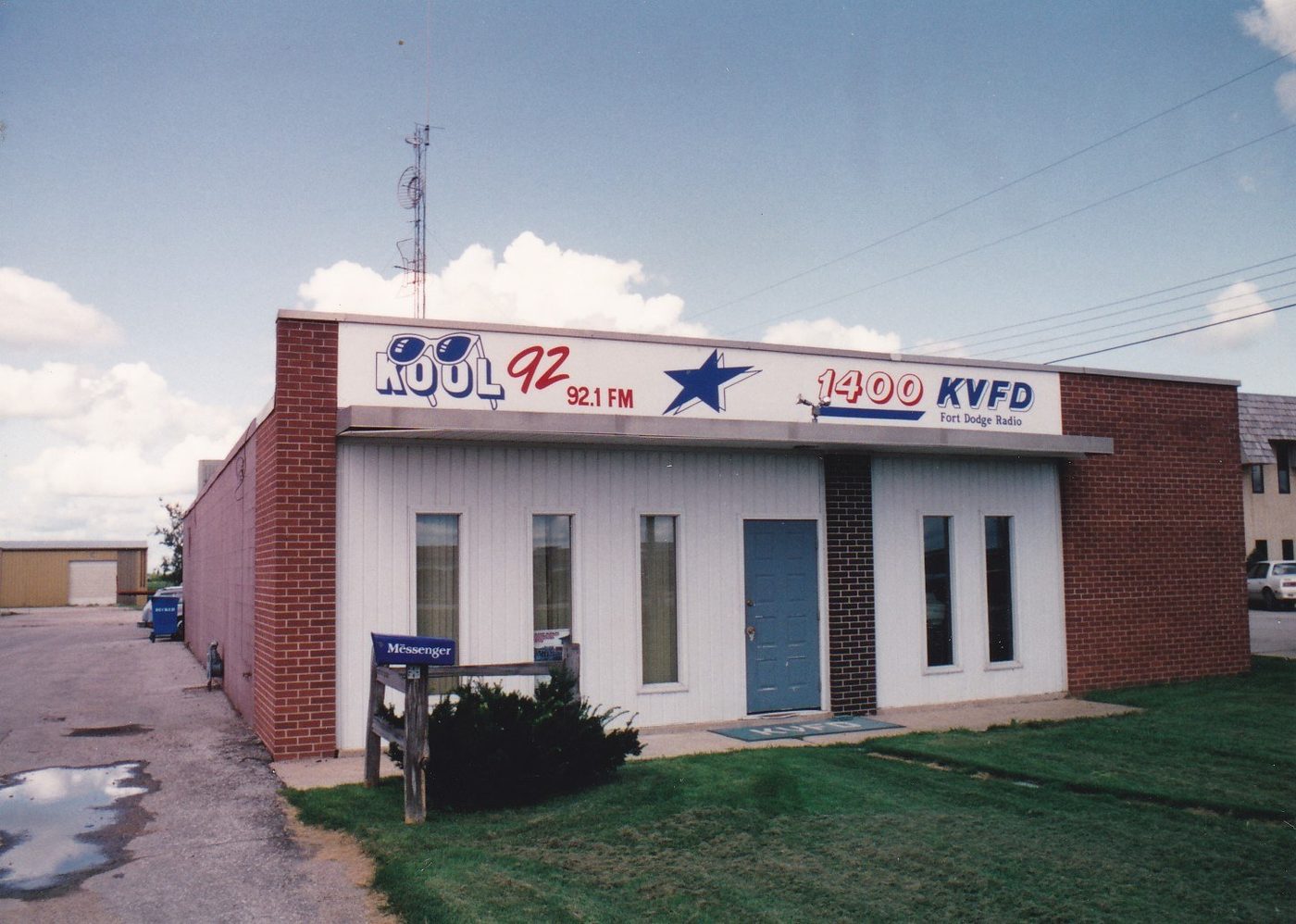
After the award years (2002–today). In July 2002 Grady left after more than ten years as general manager of KVFD and KUEL to start his own company, Star Communications of Iowa, and with him went the award era. The stations went through several managers before they were sold again in 2004, and KVFD dropped adult standards for news/talk; by 2005 it had switched again, to sports, news and oldies.
Today the two-time NAB Marconi Adult Standards Station of the Year is a news/talk station. Waitt Radio had operated Sorenson's stations under an agreement since 2000. In a sale announced in April 2004 and completed in June, KVFD and KUEL went to Three Eagles Communications as part of a $9.45 million deal for nine former Sorenson stations, which also included KWAT and two FMs in Watertown, South Dakota. In both markets Three Eagles was buying out its competition. Three Eagles' Fort Dodge stations passed to Digity in 2014, then to Alpha Media, and in 2025 to Connoisseur Media.
One person saw the stations through all of it. Barb Dennis, whom Grady hired as office manager in April 1992, ran the office through the financial turnaround, the award years and every change of ownership that followed. On the air, she was Kool 92's first Pumpkin Lady. She retired in April 2021, 29 years to the month after she started, and died March 15, 2022.
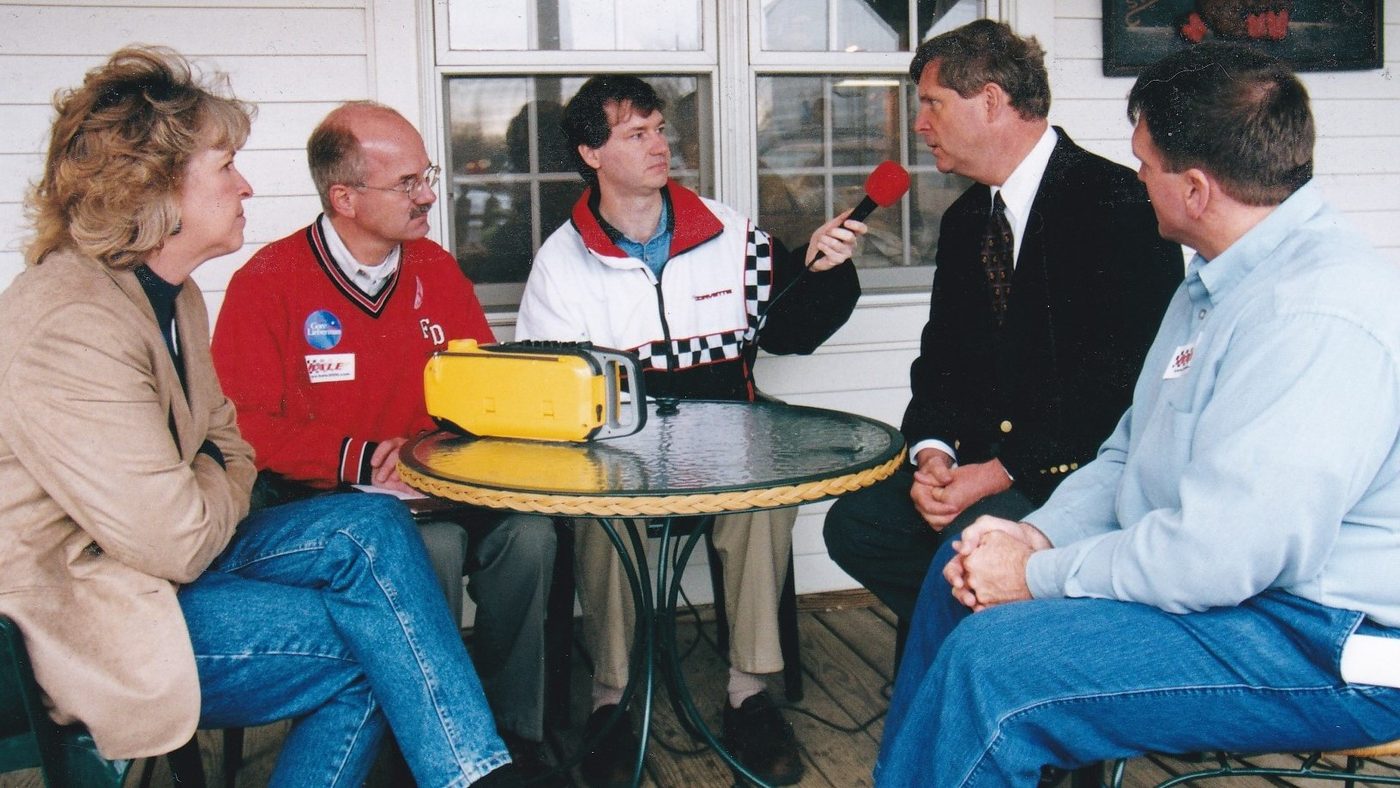
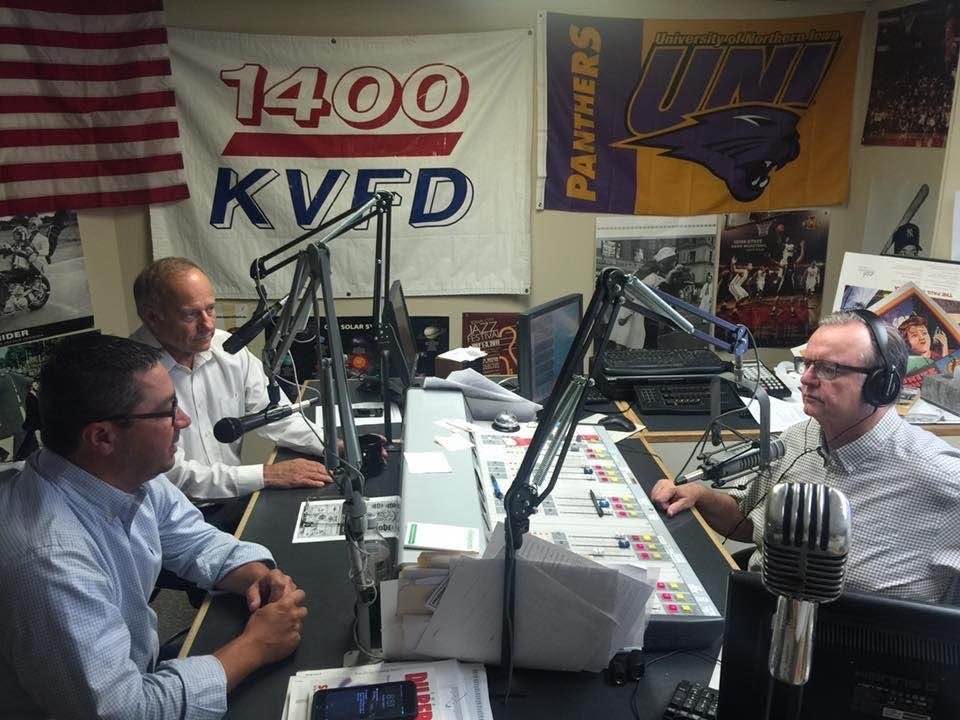
Devine Intervention. From November 2008, Mike Devine hosted KVFD's weekday morning show, Devine Intervention, 6 to 9 a.m., a mix of local news and talk with city and county officials, candidates and community leaders as guests. He streamed it as video online, an early move for a small-market AM station, and from 2013 he also did afternoons on K97, KIAQ. The show ran until 2023.
KFMY 102.7. KVFD's owners added an FM sister in October 1947: KFMY on 102.7, a 10,000-watt signal from an antenna mounted on the KVFD tower. It was among Iowa's early FM stations, but like many early FMs it doesn't seem to have lasted. It appears in the Broadcasting Yearbook through the 1954 edition and then drops out of the Fort Dodge listings, and by December 1958 the KFMY call letters belonged to a new station in Eugene, Oregon. The Fort Dodge FM most likely left the air in the mid-1950s. An ashtray bearing the KVFD and KFMY call letters, one on each side, is a rare keepsake from the station; Steve and Cary Estlund of Kirkberg Jewelers gave it to Bill Grady, and it remains in his collection.