

Fort Dodge Broadcasting: A History · Chapter 6 of 9
On this page
- Founding
- Above the insurance office
- What it meant to Clarion
- Out in the community
- Off the air, then a new manager (1983–1985)
- A future network meteorologist
- Floppy comes to Clarion
- The tower controversy (1986–1987)
- What Clarion lost
- Super 97 in Fort Dodge (1987–1989)
- The radio war
- Super 97 promotions
- The Last Lap Show
- On the air at Super 97
- KIAQ
- Mike Parry's Thanksgiving call
- Since
KRIT Clarion to KIAQ Fort Dodge, 96.9 FM
KRIT went on the air in September 1964 as Wright County's own radio station, licensed to Clarion on 96.9. The call letters said "K-Rite," for the Wright County Radio Company.
Founding. KRIT was founded by Marv "Shorty" Hull, who was working at a radio station in Oklahoma when an equipment salesman told him about an area that badly needed a station: the Clarion area, his hometown. He came back, lined up old friends and classmates as stockholders, and filed with the FCC in the fall of 1962. The FCC soon froze new FM applications while it worked out coverage rules, but Hull held out for the largest class, 100,000 watts, enough to cover the whole county and beyond, and when the license came through in late 1963 KRIT was, he said, the largest FM station in the smallest town in the nation.
An AM man at heart, he built it as a mono FM. Gerald "Jerry" McLaughlin of Belmond, a former Top 40 disc jockey at KRIB in Mason City, was the first manager and would later own nearly 12 percent of the company, most of it stock Hull gave him in 1978; Dean Long was the newsman, Ione Peterson sold advertising and Becky LaRue was secretary. Hull himself was at the station by 4:30 every morning for the 6 a.m. sign-on and stayed most days until sign-off at 10:30 p.m.
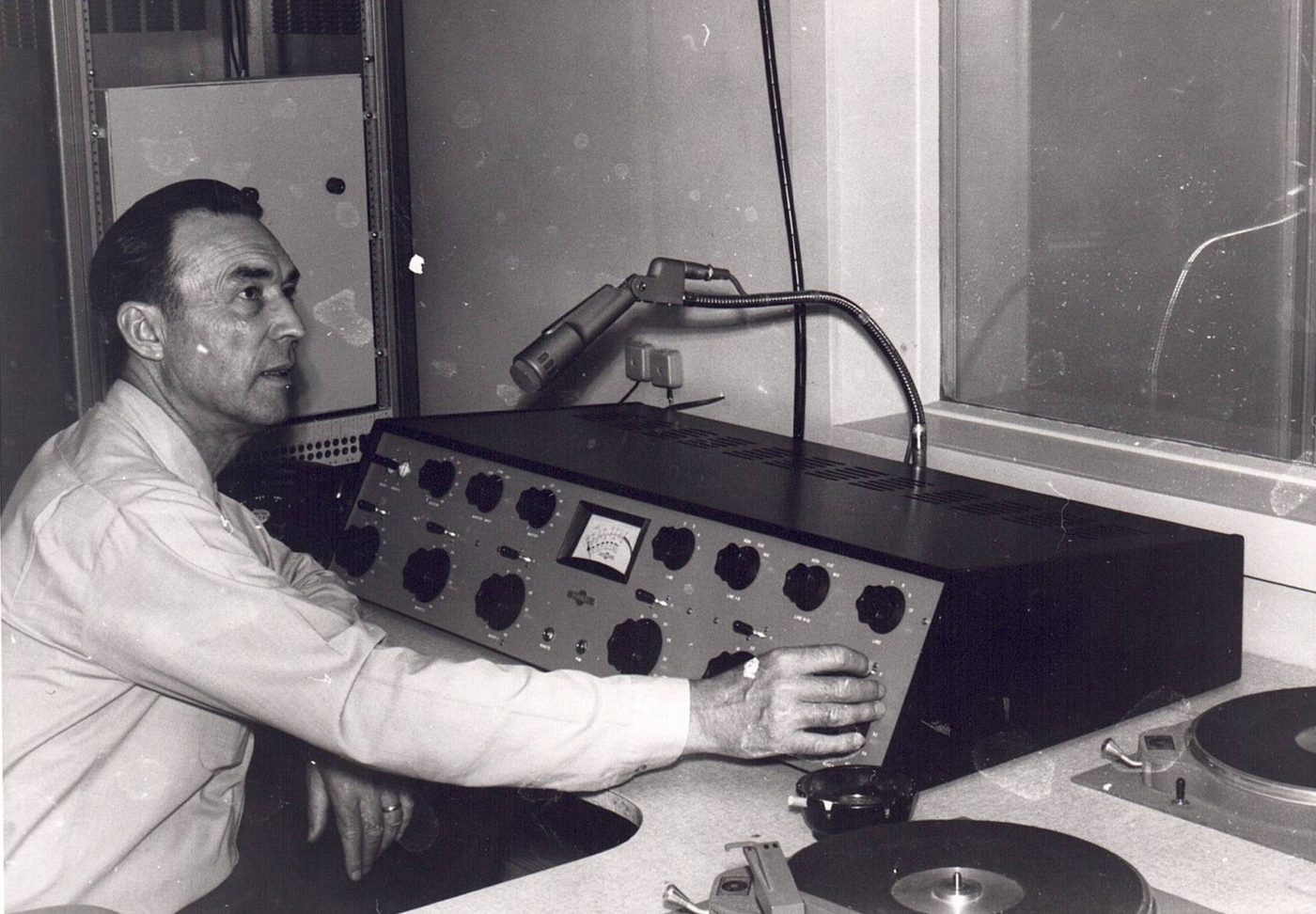
Above the insurance office. KRIT's first studios were on Main Street in Clarion, upstairs from the Sumners Insurance Agency, with the antenna on the roof. There was so much radio-frequency energy in the building, the story went, that the fluorescent lights kept glowing after they were switched off. In the late '60s KRIT moved to a former telephone office at 215 Sixth Street S.W., south of Wright County Implement, with a new tower; the Hulls lived across the street for many years.
What it meant to Clarion. In a county otherwise served by weekly papers, KRIT was the daily source of local news, sports and information. Most of the day it was a middle-of-the-road station playing big band and some country, but every afternoon Teen Time turned 45 minutes over to Clarion High School students, who played their own music. The local Jaycees sold ads for the station and voiced some of them on the air, splitting the income with Hull.
When a tornado hit Belmond on October 14, 1966, McLaughlin took the mobile unit there, and for the first 24 hours KRIT was the town's only link to the outside, relaying to the Red Cross what Belmond needed.
Its signature was wrestling, which sports announcer Ray Arnold talked Hull into trying; it became the station's biggest moneymaker and biggest audience. Arnold, Dale Benjamin, Leroy LaRue and coach Dale Brand called local matches and followed Iowa State, and KRIT was there in 1970 when Dan Gable lost his only college match, at the NCAA finals. KRIT covered the Iowa high school state wrestling championships every year and broadcast the NCAA championships live, a small Iowa station on press row beside ABC and CBS.
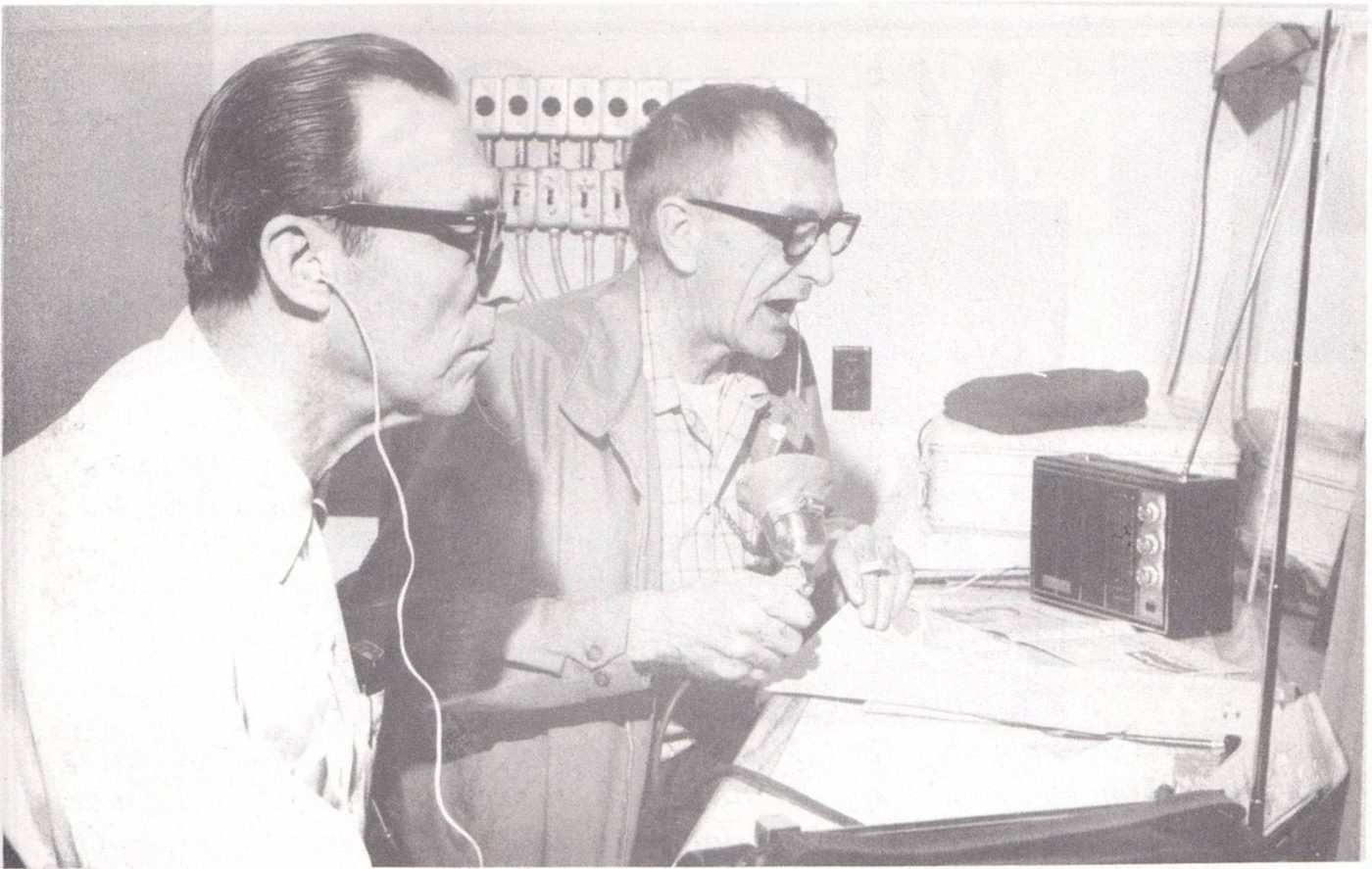
Some of KRIT's best-loved voices weren't on the payroll. Alvina Sellers, known around Iowa as the Hat Lady, was KRIT's "Pumpkin Lady." Sam Douglas, Clarion's local weather observer, stopped by the studio around 7:45 every weekday morning to tell the joke of the day, one of the station's most popular segments.
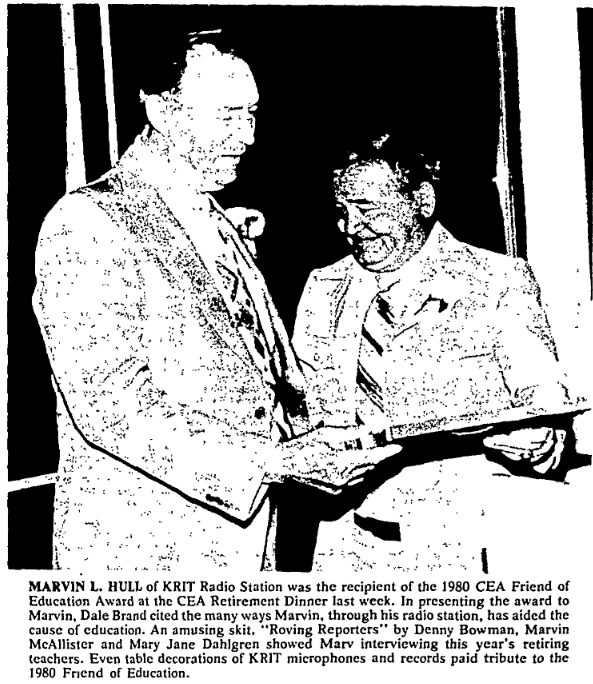
Clarion's schools noticed too: in 1980 the Clarion Education Association (CEA) gave Hull its Friend of Education Award at its retirement dinner, where Dale Brand cited the many ways Hull had aided the cause of education through his radio station, and even the table decorations, KRIT microphones and records, paid tribute to him.
The Passing of Larry Hull and Ownership Change. The Hulls' son Larry, a 1965 Clarion High graduate, was drafted during the Vietnam War, finished college at Winona State and worked in finance in Kansas City, Tulsa and Salina before coming home around 1976 to be KRIT's sales manager and sports broadcaster. He died in November 1979 at 32, and afterward, Hull said, "it just wasn't worth it to work that hard all the time." Selling the station let the Hulls retire, and the original stockholders did well on their investment.
On August 1, 1981, Central Iowa Broadcasting took over, having bought the station for $370,000. It was owned in equal thirds by Fort Dodge native Don Rabbitt and brothers Miller and Ross Roskamp, who together also owned WFON-FM in Fond du Lac, Wisconsin, where Rabbitt was president and general manager.
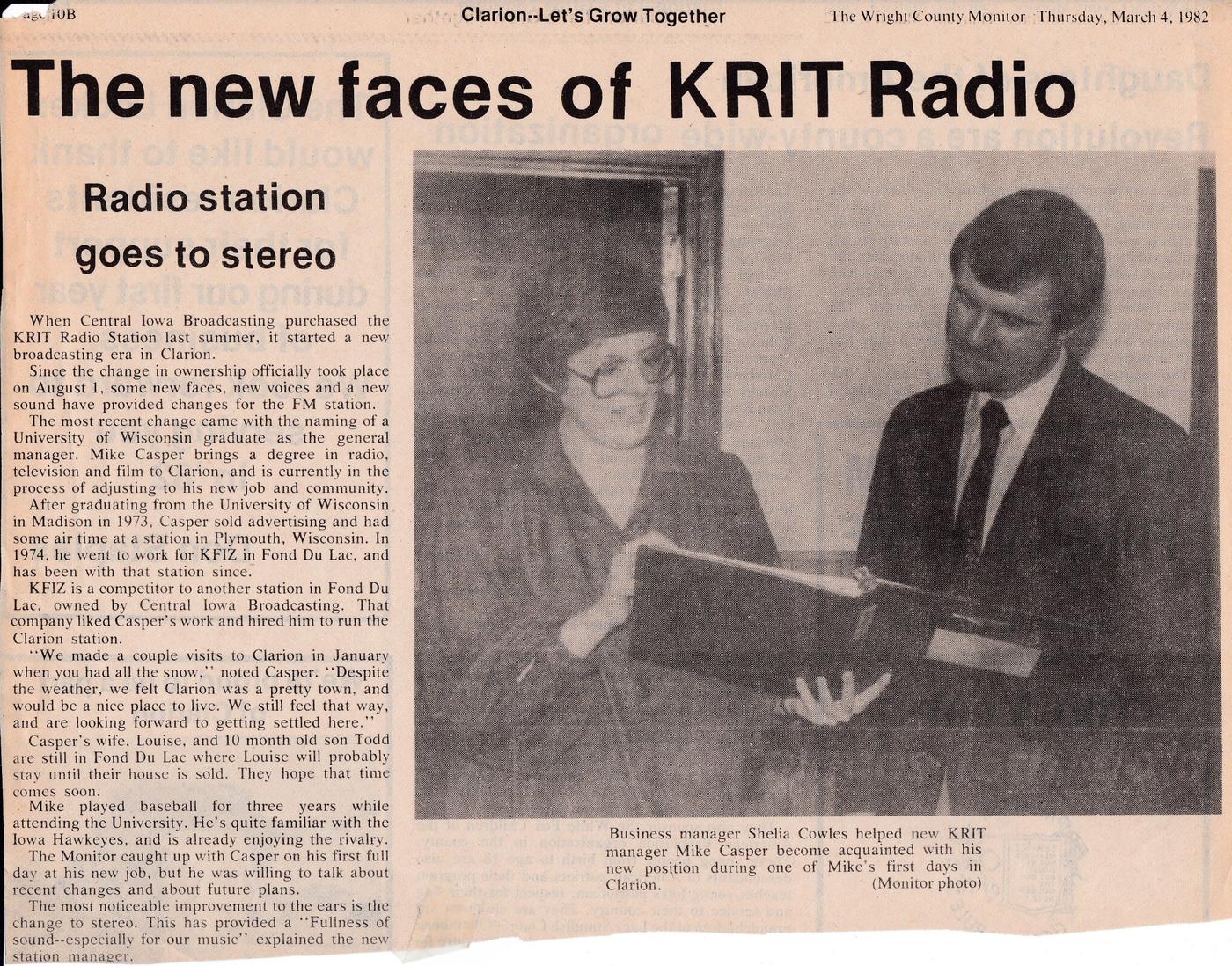
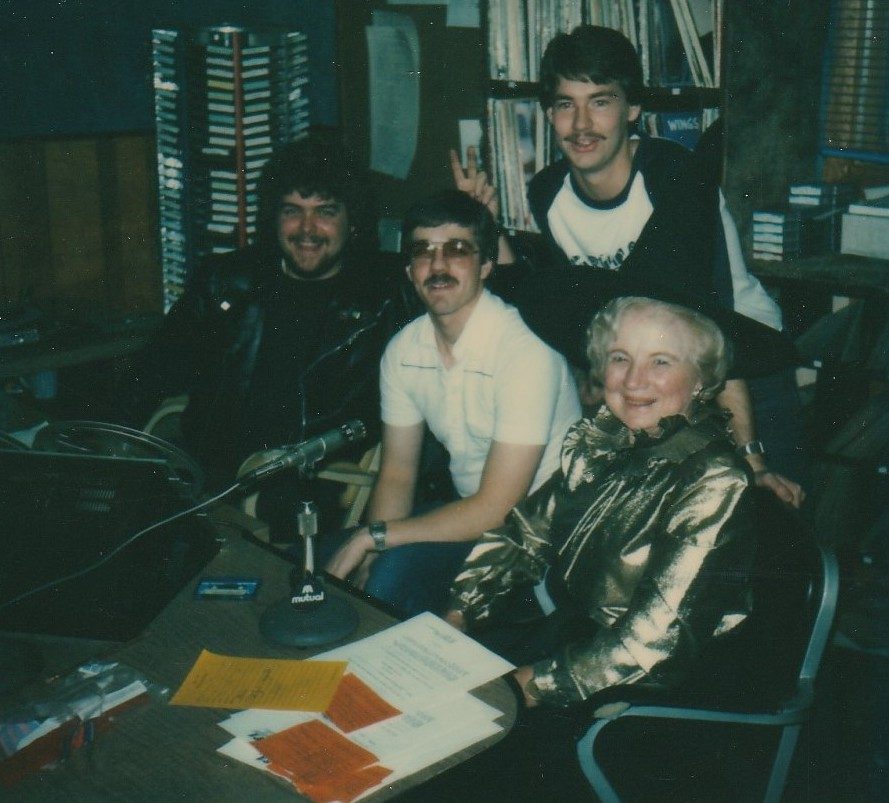
KRIT went stereo, adopted adult contemporary and carried Minnesota Twins baseball, and the signal rose to 93,000 watts. Stereo brought a "fullness of sound, especially for our music," said Mike Casper, whom the owners named general manager in early 1982. A 1973 University of Wisconsin graduate with a degree in radio, television and film, Casper had worked since 1974 at KFIZ in Fond du Lac, a competitor of the owners' WFON; his work there got him noticed as an all-around broadcaster and leader which led to his first management job, running KRIT.
The "K97" air staff that fall was Steve Autey in the morning, Bill Grady at midday, Steve "Dr. Wax" Rose in afternoon drive with The Wax Museum oldies show and Dennis Lowe at night, with Dean Long continuing on news. Rose, Grady and Autey also called area football, basketball and wrestling. Grady had worked part time at KRIT while attending Iowa Central Community College in Fort Dodge and was hired for his first full-time job three days before he graduated in 1981. In 1983 he became news director, and Jon Pappenheim replaced Lowe at night. Over the years KRIT's news directors also included Bruce Brandt and Vern Beachy, and Kent Bailey and Stacey Herrington served as morning hosts and program directors.
Audio
Steve Autey and Bill Grady on KRIT-FM mornings, February 10–11, 1983 (2:53): dense fog over "the metropolis of Clarion," weather from meteorologist Fred Wagner sponsored by H&R Block of Clarion, a listener's request for aerobic dance music, and the two hosts in "official" Richard Simmons sweatsuits. Bill Grady collection.
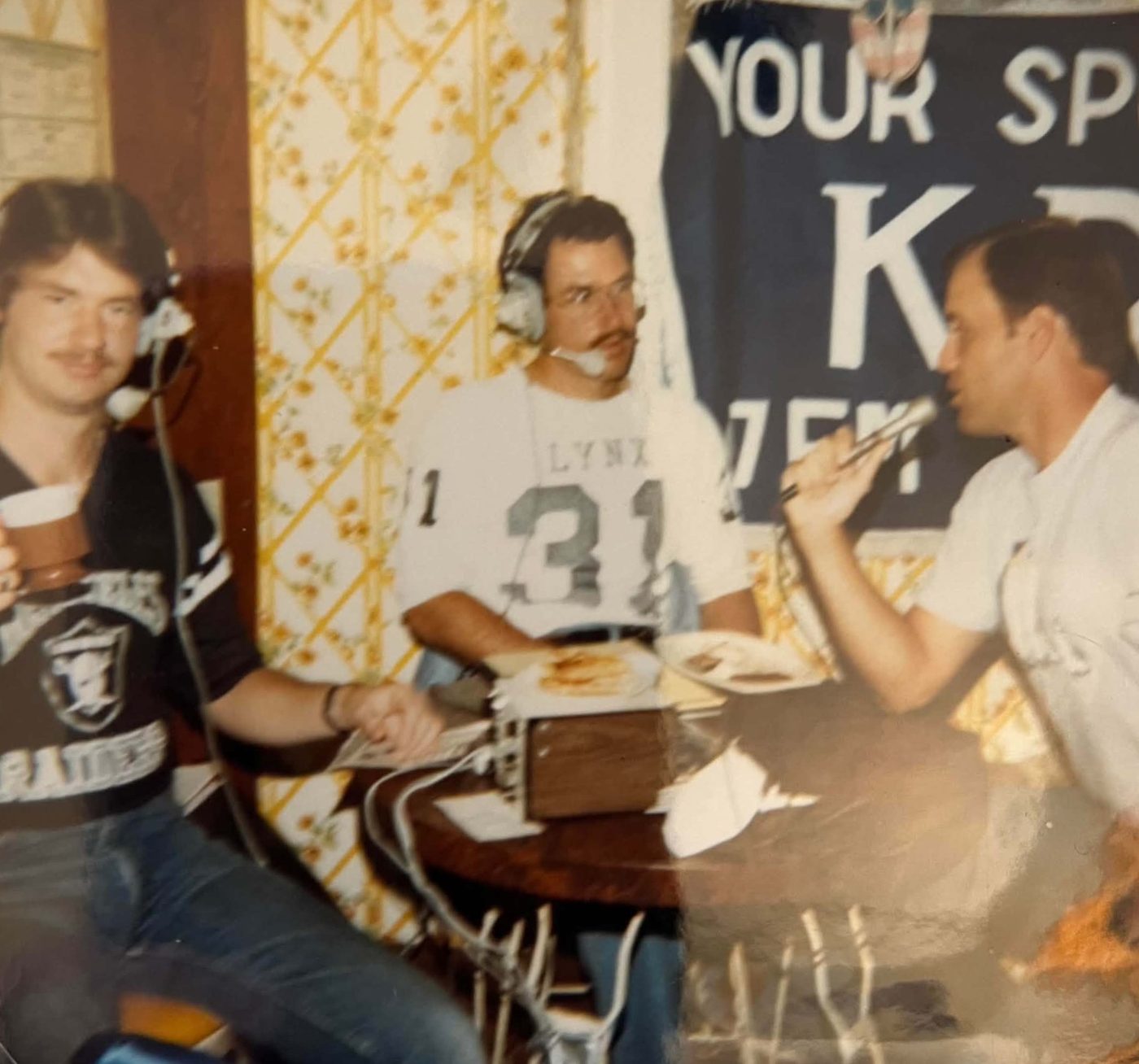
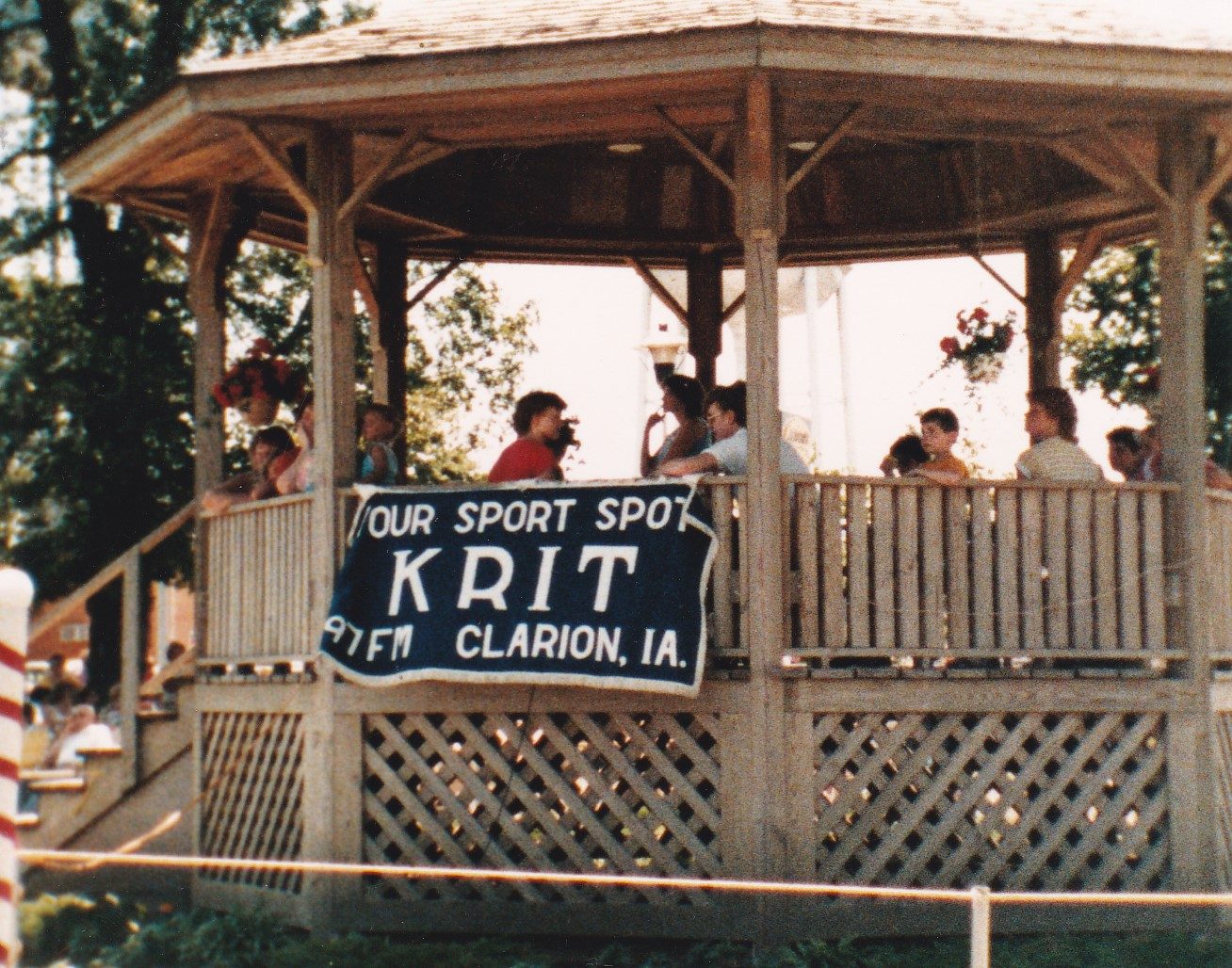
Out in the community. KRIT didn't just report on Clarion's big days from the studio; it was part of them. On Wednesday, July 27, 1983, RAGBRAI XI, the Des Moines Register's annual bicycle ride across Iowa, made its overnight stop in Clarion. More than 7,000 riders poured into town that day, camping on the high school grounds, buying out the food stands run by local groups and filling the courthouse square for the evening's entertainment.
KRIT was part of the planning committee, and for weeks beforehand it ran stories and announcements getting the town ready. On the day itself the station broadcast continuously, relaying information to riders, their support teams and residents: what was happening, where to go and which streets were blocked off. Afterward, riders' thank-you letters to the Chamber of Commerce called Clarion the "High Point" of the ride.
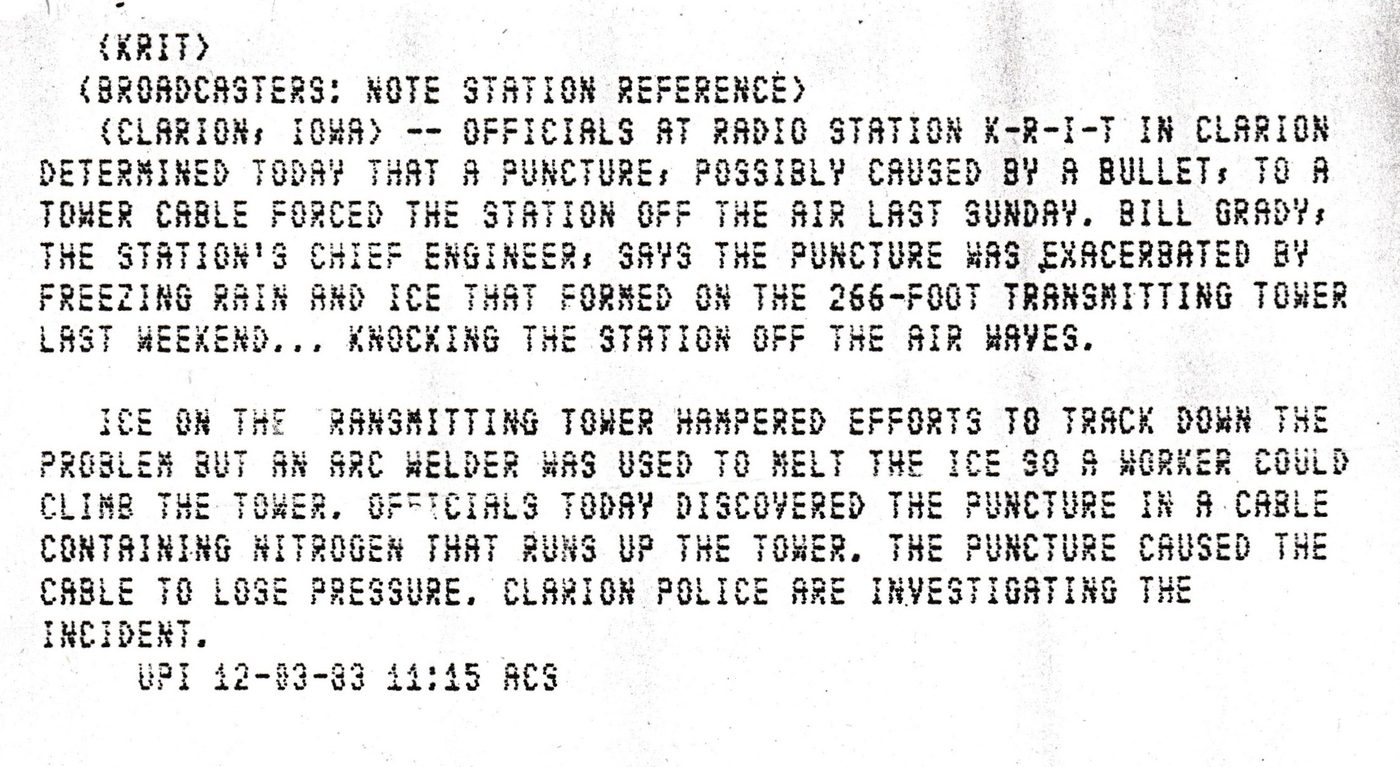
Off the air, then a new manager (1983–1985). The new owners put about $100,000 into the station, including a new transmitter switched on October 26, 1983; a month later KRIT went off the air for 22 days, from November 27 to December 19, 1983. Someone had shot a rifle bullet through the nitrogen-filled transmission line on the 266-foot tower; when the Thanksgiving ice storm hit, moisture got into the punctured line and the signal began arcing back toward the new transmitter. Ice kept a climber from reaching the damage until crews used an arc welder from B.C. and T. Bunn, the welding company next door to the studio, to melt it off the tower, and Clarion police investigated.
Replacing 300 feet of line cost $6,000 to $7,000, and the outage cost advertising during the Christmas shopping season and fell in the middle of a November 20–December 12 ratings survey. "Because we've missed half of the rating period, we may not fully know the implications of this for six to nine months," Station Manager Mike Casper told the Eagle Grove Eagle. KRIT was back on the air the week before Christmas and continued serving the area.
The Highway 3 bridge and Ownership Change. KRIT's people were part of Clarion's civic life off the air, too. In the fall of 1984 the Iowa Department of Transportation planned to tear out and rebuild the Highway 3 bridge just east of Clarion during the summer of 1985, routing traffic around town on a detour. Clarion businesses feared the kind of losses Goldfield had suffered during its own road project.
On November 19, 1984, Grady and businessman Mark Hensel took the concerns of a citizens' group to the Wright County Board of Supervisors, and that afternoon Grady opened a meeting of 54 people at the New Home Cafe, including State Representative Delwyn Stromer and county officials, by laying out the problem. Before the meeting ended, DOT Commissioner Darrell Rensink called department headquarters in Ames and announced that the bids would be relet so the bridge could be rebuilt one half at a time, keeping Highway 3 open.
In December 1984, General Manager Mike Casper left to become general manager of KFIZ-AM in Fond du Lac, and ownership changed as well. The Roskamps bought out Rabbitt, and on January 1, 1985, Grady became general manager at 23. Starting as an announcer, he had gone on to serve as the station's news director, sports director, chief engineer and top salesman, and despite his youth he was the natural pick to succeed Casper.
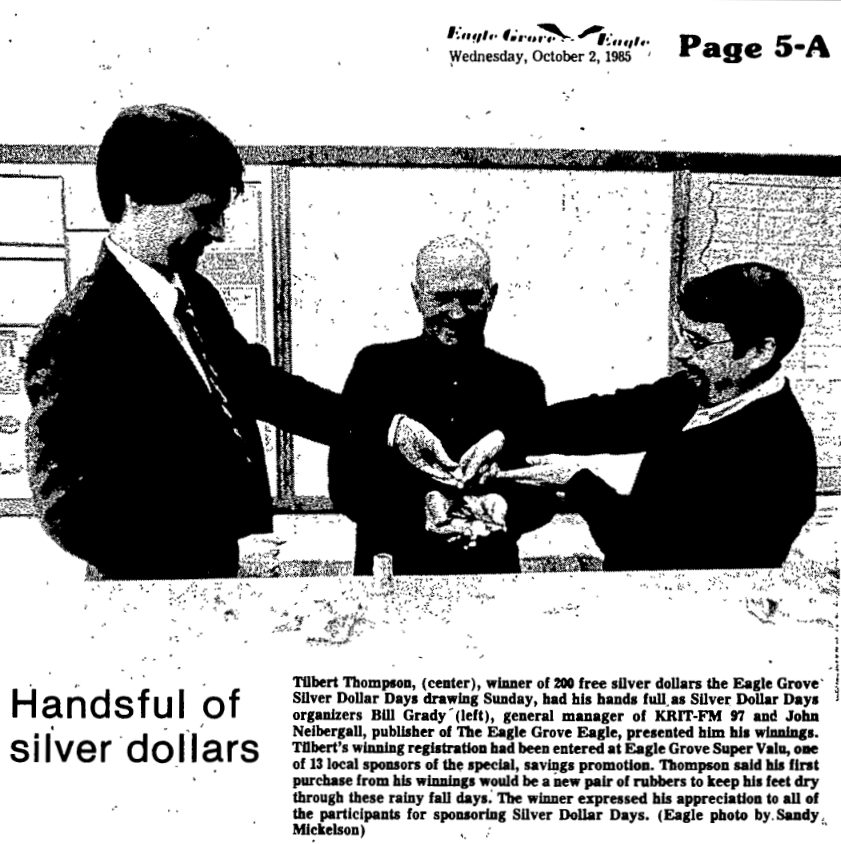
Silver Dollar Days in Eagle Grove. KRIT's promotions reached neighboring towns as well. In late September 1985 the station and the Eagle Grove Eagle organized Silver Dollar Days in Eagle Grove: eleven stores joined them in offering specials and registrations for a sack full of 200 silver dollars, and KRIT broadcast live segments from 10 a.m. to 1 p.m. Friday and Saturday. The drawing was held at the Sunday noon Flight Lunch at the Eagle Grove Municipal Airport. Tilbert Thompson, whose entry was registered at Eagle Grove Super Valu, won the silver dollars, presented by the promotion's organizers, Grady and Eagle Publisher John Neibergall.
The Eagle Grove ties outlasted Grady's time at KRIT. After he returned to Fort Dodge in 1991 as general manager of KVFD and KUEL, he rejoined the Eagle Grove Area Chamber of Commerce. He served on the steering committee for Eagle Grove's Old Fashioned Summer Fest, June 27–29, 1992, and took a turn as the Retail Association's quarterly chair in the fall of 1993, when the association ran its "All Your Christmas Wishes in Eagle Grove" promotion.
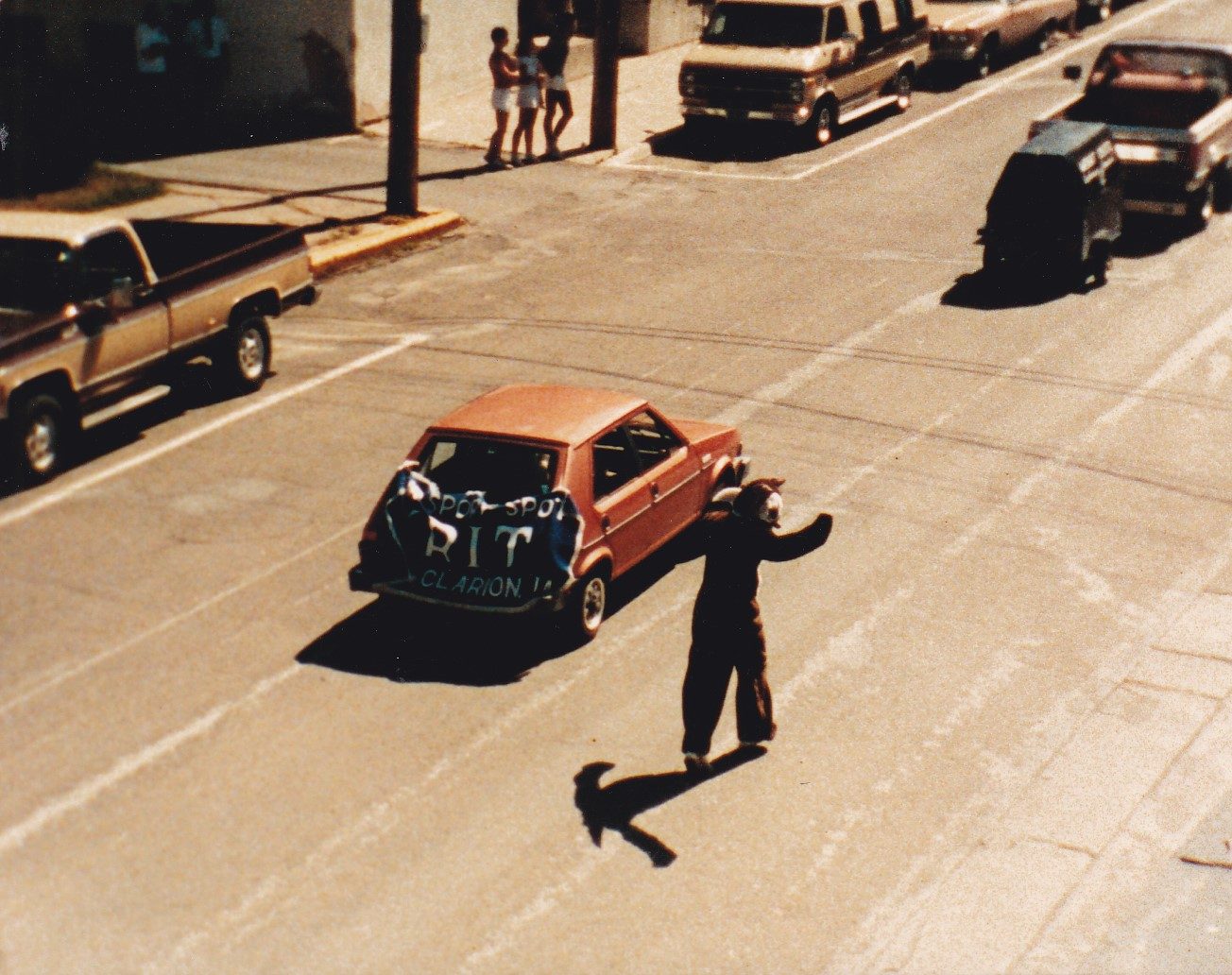
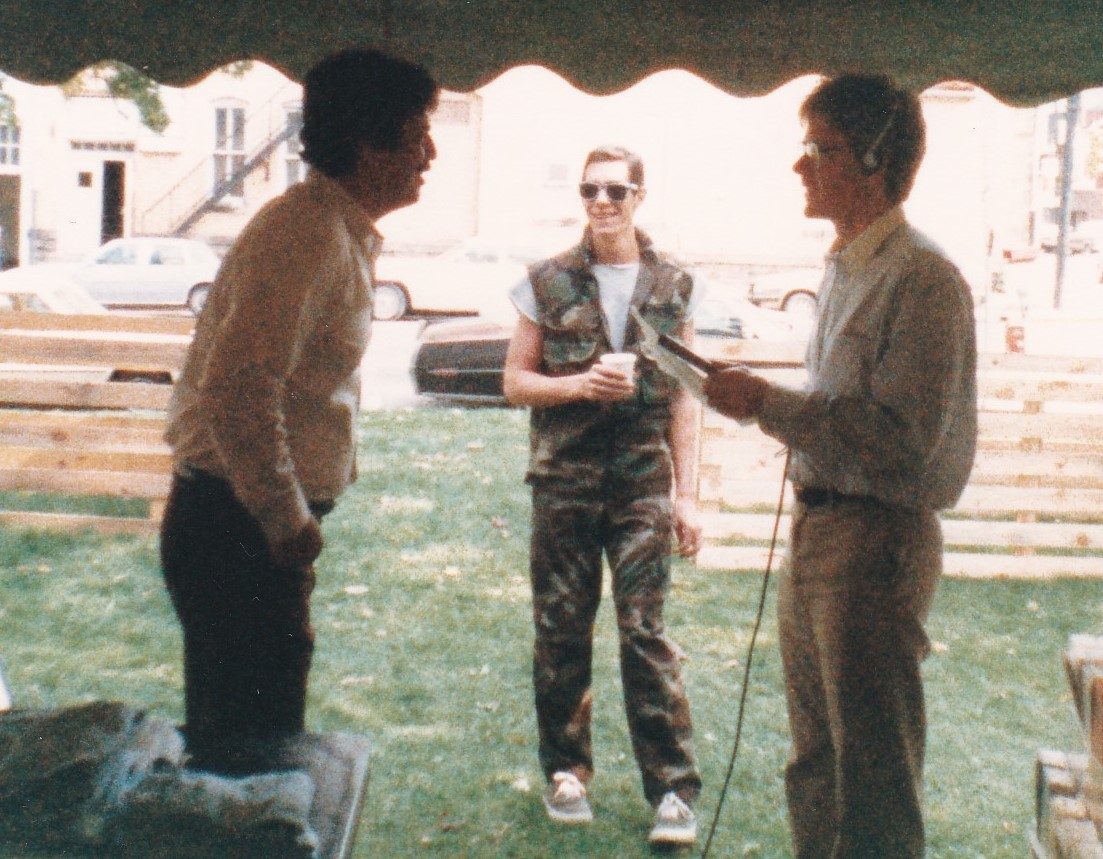
By January of 1985, Grady was KRIT's manager, a Chamber of Commerce board member and its retail chairman. In October of that same year he represented the Chamber in a Clarion delegation to its sister city, Clarion, Pennsylvania, for the Autumn Leaf Festival, and told Clarion, Iowa's story in an interview on the Clarion University television station. Throughout the week he also sent live reports on the festival back to KRIT listeners.
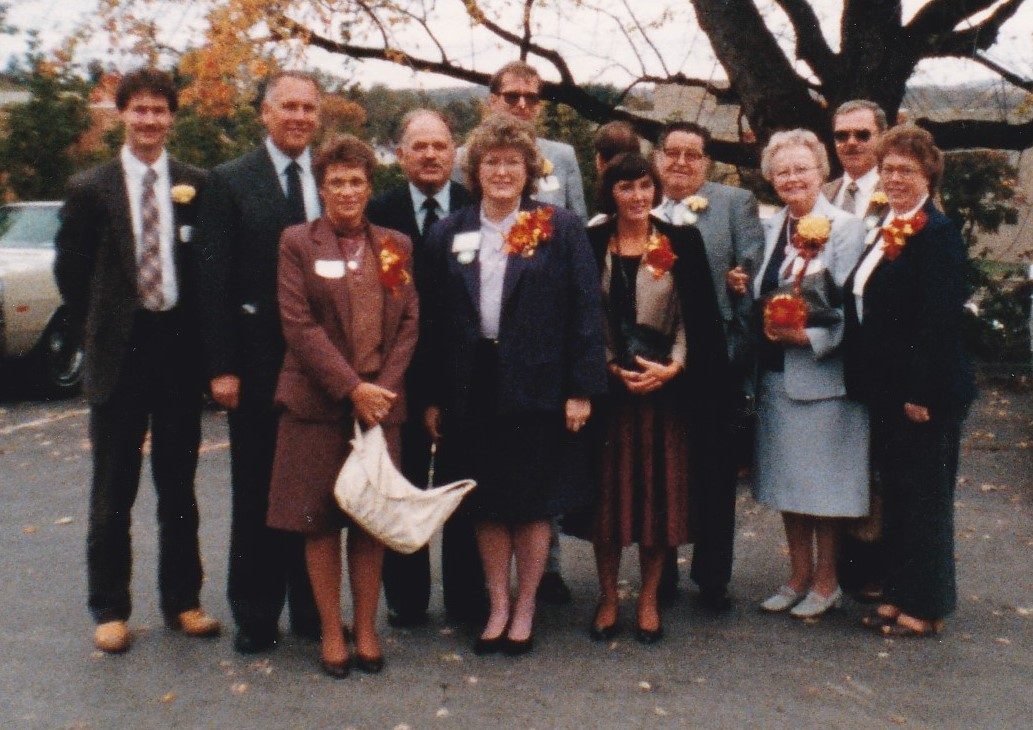
The visit was meant to cement the towns' new sister-city relationship: the two mayors, Melvin G. Riffer and Dennis C. Olson, were named grand marshals of the festival's 32nd annual parade, and more than 40 visitors from Clarion, Iowa, were to ride in it aboard the Knight's Inn double-decker bus. Grady stayed with William C. "Bill" Hearst and his family; Hearst ran WWCH, the Clarion, Pennsylvania, AM station his late father, William Curtis Hearst, had co-founded in 1960. The next June, during Festival in the Park, Clarion, Iowa, hosted a delegation from Clarion, Pennsylvania, that included WWCH News Director Alice Parker.
A future network meteorologist. One of the part-timers on Grady's staff at KRIT was Sean McLaughlin of Belmond, whose father, Steve McLaughlin, owned McLaughlin Brothers Chevrolet there and advertised on KRIT; Steve was a cousin of Jerry McLaughlin, the station's first manager. After earning a broadcast journalism degree at Iowa State University, he reported and anchored at KIMT-TV in Mason City and WOI-TV in Ames, did weather at KMIR-TV in Palm Springs, California, and spent about 12 years as chief meteorologist at KPNX, Phoenix's NBC affiliate. In July 2004 he joined NBC News as MSNBC's weekday meteorologist and the Sunday weather anchor on Weekend Today, and he filled in for Al Roker on Today more than 90 times. He later returned to Phoenix, where he has been a meteorologist and news anchor at KPHO, and has won eleven regional Emmy Awards.
Floppy comes to Clarion. One of the last big promotions KRIT ever did as a Clarion station, and one of its biggest, came that same fall. Duane Ellett and his beagle puppet Floppy had been on WHO-TV in Des Moines since 1957, and a generation of Iowa children had grown up with them. As the Chamber's retail chairman, Grady worked out the details of the appearance with Ellett himself.
Video
Duane and Floppy on WHO-TV, noon show, Wednesday, November 27, 1985: KRIT General Manager Bill Grady and Clarion Chamber of Commerce Executive Secretary Karen Weld promote the Clarion Christmas Kick Off Parade on Friday, November 29, with Duane Ellett and Floppy as its co-grand marshals (YouTube)
On Wednesday, November 27, 1985, Grady and Chamber Executive Secretary Karen Weld went on Duane and Floppy's noon show on WHO-TV to promote it, and two days later Ellett and Floppy rode as co-grand marshals of Clarion's Christmas Kick Off Parade, themed "Home for Christmas." Grady was Ellett's host for the entire morning before the 10:30 parade, and the two spent it trading stories. After the parade, Ellett and Floppy appeared in the IPS Community Room to a standing-room-only crowd. Ellett died in 1987, less than two years later.
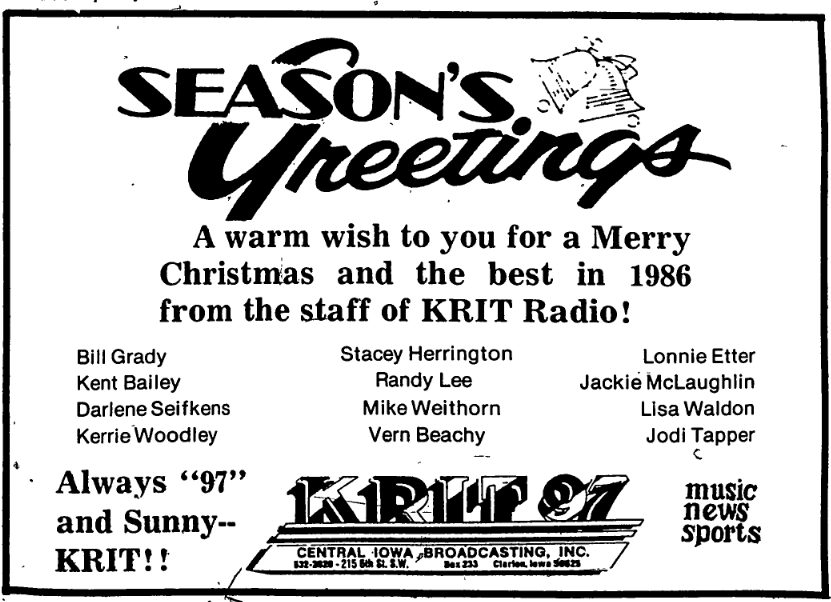
Ownership change and the move to Fort Dodge. In May 1986 Linder Broadcasting of Mankato, Minnesota bought KRIT from the Roskamps through a company named Linder Broadcasting of Fort Dodge. The FCC filing listed the price as $110,000 in cash, but the full deal was larger: by Grady's account, about $220,000 plus the station's liabilities. The new owners built a 640-foot tower near Badger, in Humboldt County, and over the next year moved the station into Fort Dodge as "Super 97," with studios downtown at 1014 Central Avenue.
The plan was kept quiet at first. In October 1986 Grady learned that the station was leaving Clarion for Fort Dodge; by his account, the announcement was being held back so Clarion advertisers would keep buying time. Grady was opposed to the move and left later that month for KFIZ in Fond du Lac, Wisconsin. He went on to manage WCWC/WYUR in Ripon and Fond du Lac before coming home to Fort Dodge in 1991 to run KVFD and KUEL.
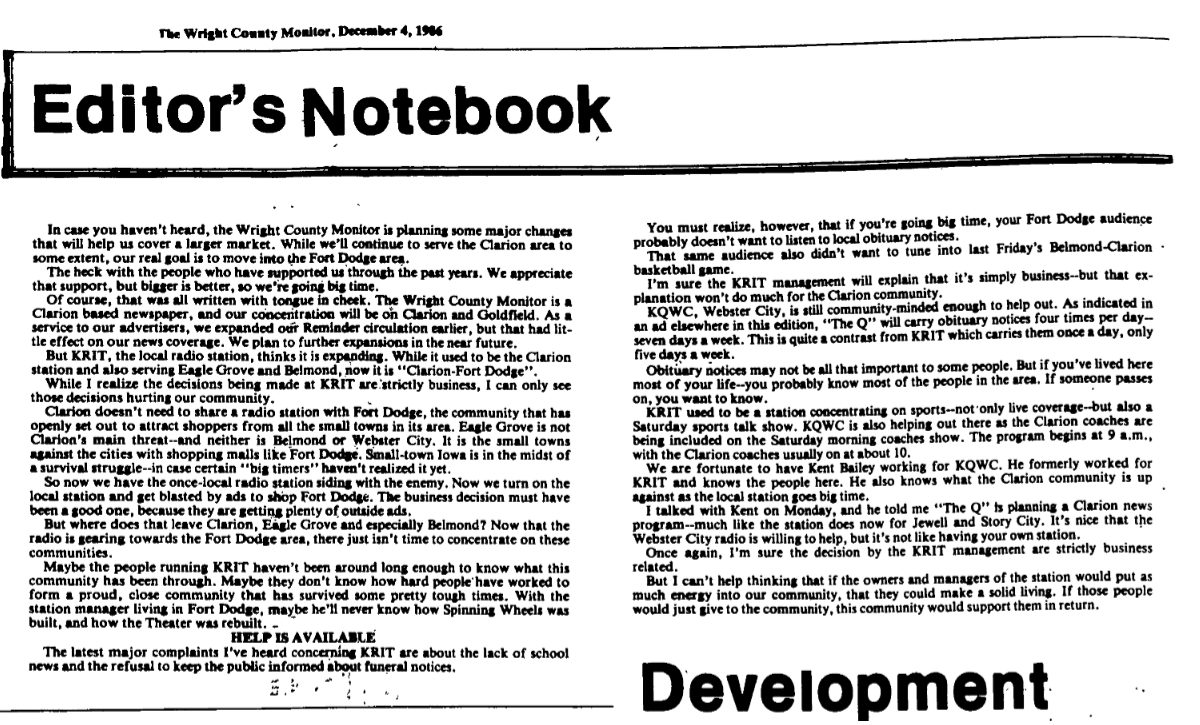
Once the plan was out, it was not popular in Clarion. In December 1986 the Wright County Monitor's editor complained that KRIT, now billing itself as "Clarion-Fort Dodge," was running ads for Fort Dodge stores, carrying funeral notices only once a day, five days a week, and doing less school news, while Webster City's KQWC stepped in with Clarion obituaries and coaches' shows. Readers wrote in agreeing, and two weeks later editor Ed Dorsey added that the "local" station "claims it cares about Clarion, and then broadcasts live from retail outlets in Fort Dodge, urging shoppers to spend their money in that city."
The tower controversy (1986–1987). The new tower brought complaints of its own: listeners of Humboldt's KHBT-FM reported interference from KRIT's strong signal. In December 1986 about 20 Humboldt County residents told their county supervisors that they could no longer pick up KHBT, and some had trouble receiving WOI-TV, Channel 5 in Ames; KRIT offered filters for affected televisions, and the county attorney notified the FCC.
In January 1987 an FCC investigation found the problem lay in the listeners' radios, not the station, though KRIT remained responsible for fixing interference within 2½ miles of the tower; General Manager and Vice President Burke Bartell said the station had installed filters on radio antennas at more than 50 homes.
The complaints kept coming. In March 1987 KHBT owner Bob Christensen got Senator Charles Grassley and Congressman Fred Grandy to sponsor a two-hour public hearing, where Humboldt-area residents, FCC officials and staff from both stations aired the problem. Bartell said KRIT had logged 83 complaints since moving to the new tower and had bought 28 new radios for listeners whose older sets couldn't filter out the stronger signal. James Dailey of the FCC's Kansas City office said he would recommend holding up KRIT's operating license until every interference complaint was resolved. On March 26 the Humboldt Independent reported that the FCC had given KRIT 30 days to "effectively address the outstanding interference."
What Clarion lost. When Marv Hull built KRIT, he held out for the biggest FM license there was, 100,000 watts, so a small-town station could reach all of Wright County. A 3,000-watt station would have stayed in Clarion, but the big license would later make KRIT a target.
FCC rules allowed a station to move its tower to improve its service, and to keep its city of license as long as its signal still covered that city. Linder followed the letter of those rules, not their purpose. The new tower near Badger put a strong signal over Fort Dodge, a market already served by four stations, the oldest of them on the air since 1939. The station's main office and studios moved to Central Avenue in Fort Dodge, where its staff lived and worked.
In Clarion, Linder rented an office to hold the station's public file, and that was the extent of KRIT's presence in its city of license. Clarion lost its radio voice, and Fort Dodge gained one more station splitting the same advertising pie.
For more than 20 years KRIT had been the daily news and information source for Clarion and the farms and towns around it, and a partner to the businesses that kept it on the air. By the 1986 Christmas season the same station was broadcasting live from Fort Dodge stores.
Clarion High School games soon disappeared from the station, along with the meet-the-candidates forums, breaking news bulletins, the live remotes from Festival in the Park and the Wright County District Junior Fair, the lost-pet and bake sale announcements, all the things small-market radio does best. Gone too were the volunteers and community partnerships, the jobs, and the payroll the station had supported for two decades.
KRIT was more than a music station that changed hands and changed format. For more than two decades it had been the area's only daily source of local news and information, licensed to Clarion and built to serve it. "Clarion went from having a voice to having a void," Grady says. "KQWC tried to pick up some of what was lost once KRIT turned its attention to Fort Dodge, but it couldn't compare to what a full-service station in that town had been doing."
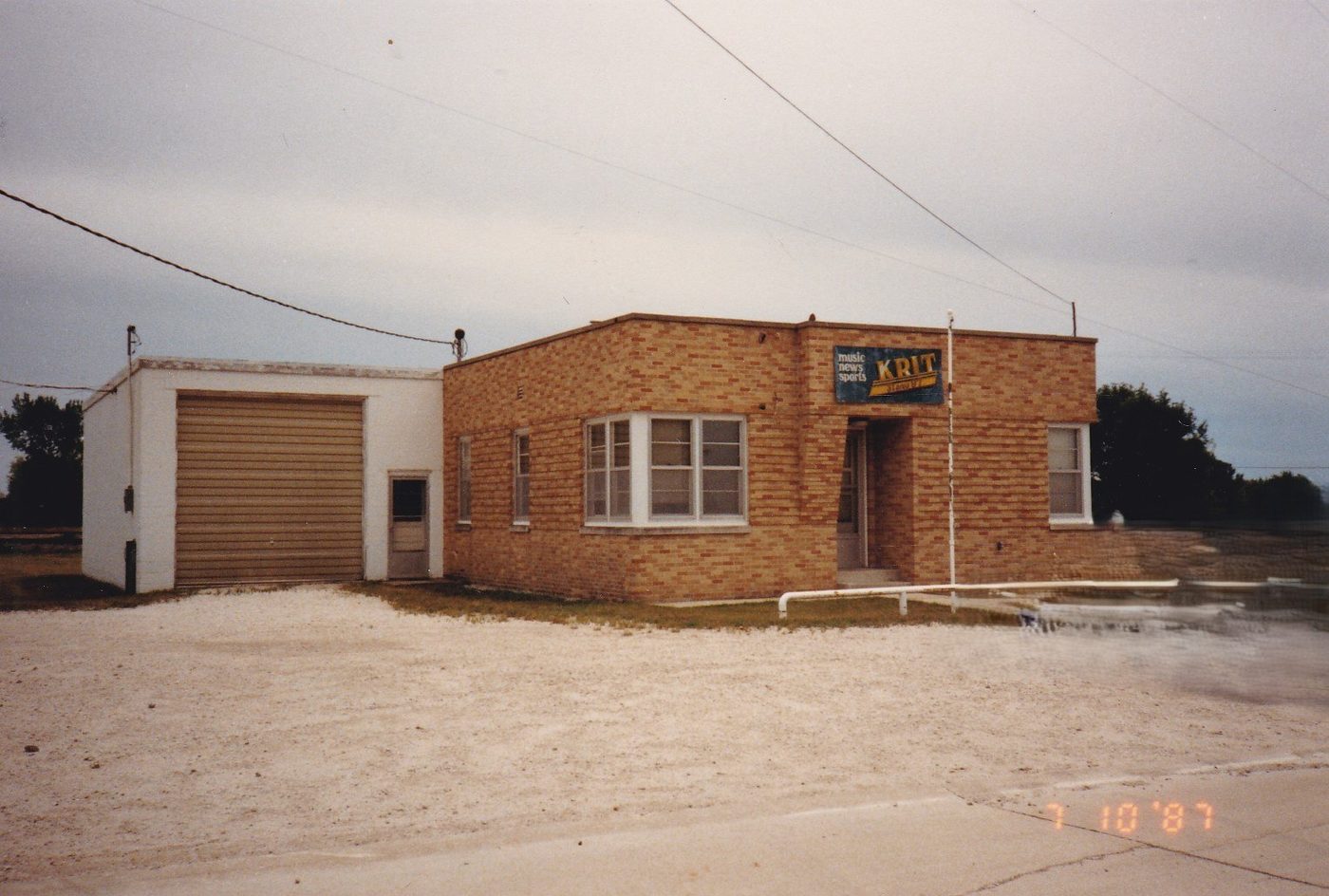
Super 97 in Fort Dodge (1987–1989). Once the move was complete, KRIT, now "Super 97," went after Fort Dodge's Top 40 audience head to head with KKEZ's Z94. Chris Robbins (Chris Walterman), a Brown Institute graduate who had started at KWMT in 1980 and done mornings on KX 92, joined on March 1, 1987, while the station was still in Clarion; he was its first program director in Fort Dodge and stayed until 1996.
Dave Haldin, who had left KKEZ for FM 108 in Waterloo when Jim Davis took over there, came to KRIT in April 1987, while the station was still in Clarion, and by the fall of 1988 Mike Parry had arrived as general manager, following Burke Bartell. It was a busy, fast-changing station: three program directors and three general managers over two years, counting Grady, who was still running the station when the move was set in motion.
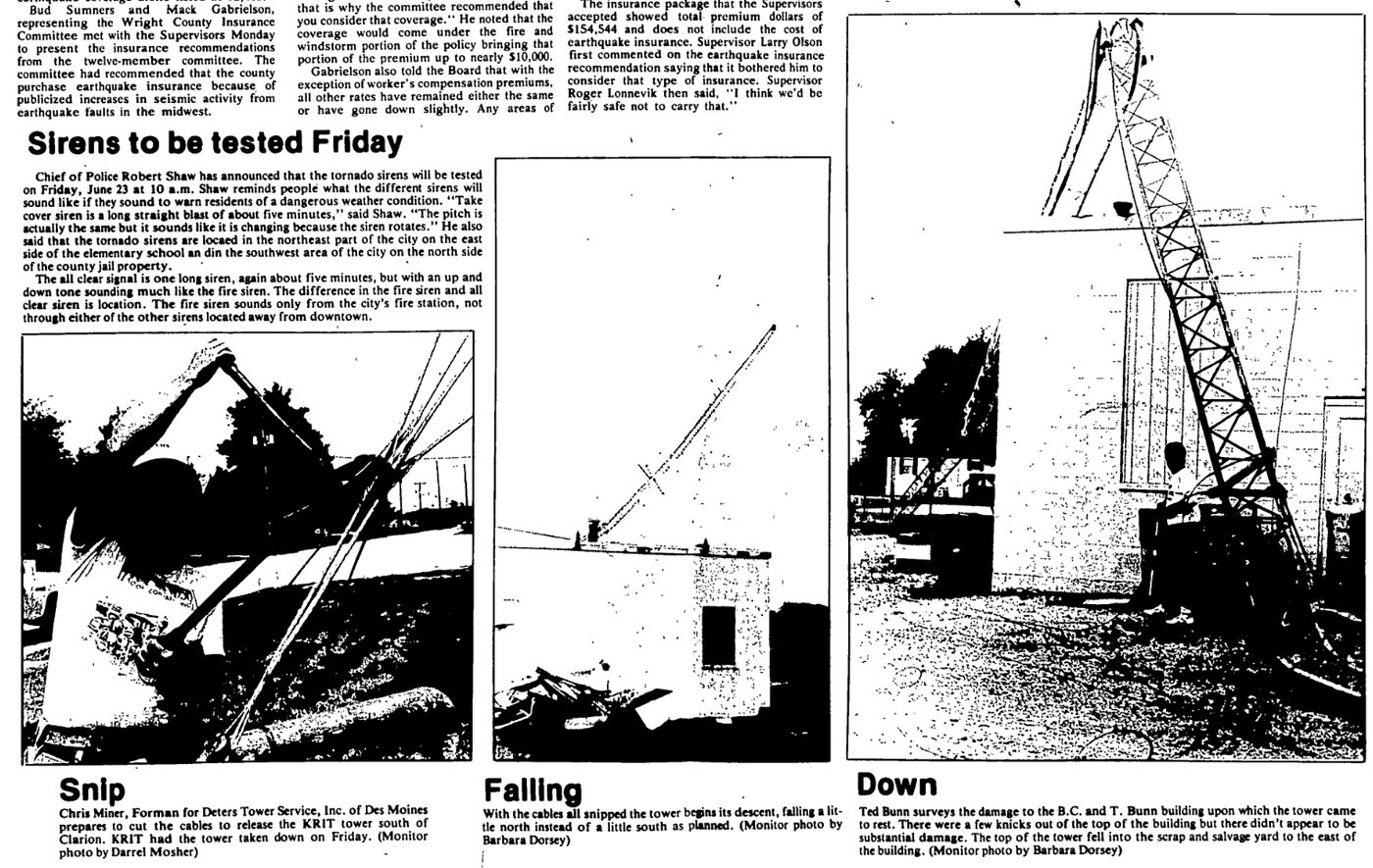
In June of 1989 the last piece of KRIT in Clarion came down. On Friday, June 16, 1989, a crew from Deters Tower Service of Des Moines, led by foreman Chris Miner, cut the guy wires on the old tower on the south edge of town. It was supposed to fall a little south; it fell a little north instead, landing on the B.C. and T. Bunn building and dropping its top into the scrap and salvage yard next door. The building came away with only a few nicks.
Marv Hull settled the last of his Clarion business in 1991 and retired to Henryetta, Oklahoma. He died on July 15, 1992, at 79, nearly 30 years after he first applied to put KRIT on the air.
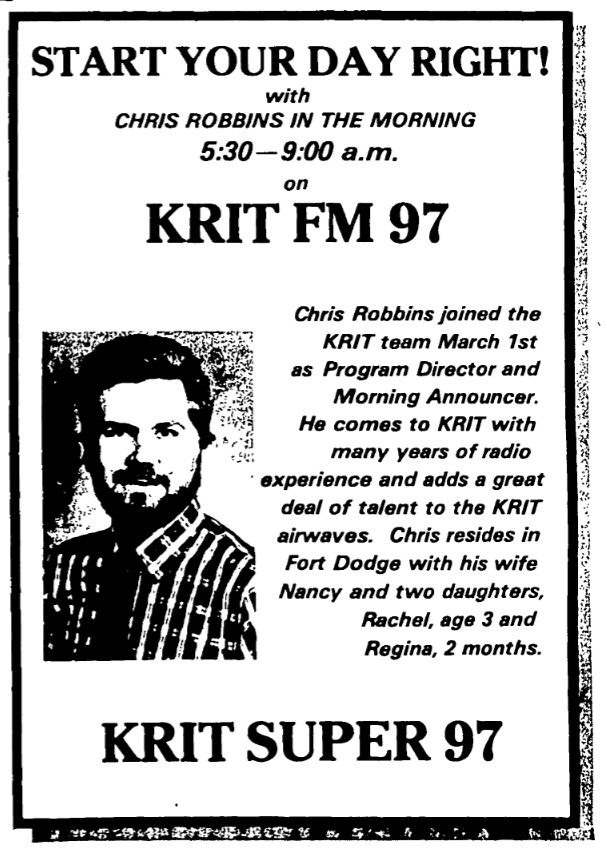
The radio war. Drew Durigan, let go at KKEZ that spring, joined Super 97 for nights when it went on the air from Fort Dodge in May 1987. General Manager Burke Bartell, who had been listening to him, told him, "We need a personality. We need a presence at night." Fort Dodge was "such a vibrant, competitive little market back in the mid-80s," Durigan says: fewer than 30,000 people, five radio stations and four owners, "and they all made money. You'll never, ever see that again."
Audio
Drew Durigan, "the Minnesota Maniac," on Super 97, May to November 1987 (7:25; MP3): his first night on the air ("Super 97 is KRIT Clarion, Fort Dodge, the winning station"), two cuts from September and October that take aim at "the fools on the hill," and his last "Maniac Jam," with listeners calling in to say goodbye. Courtesy of Drew Durigan.
On the air he went after his old station without naming it, calling KKEZ "the fools on the hill" and reworking Super 97's positioning line into "Thanks for making the switch with me to the winning station." When Z94 promoted a concert-ticket giveaway for callers who heard a certain song, he would find out the song and play it himself; listeners who heard it on Super 97 called the KKEZ request line they had known for years to claim their tickets. "They just hated that," Durigan says. "I wasn't making any money, but it was one of the most fun times I ever had in radio."
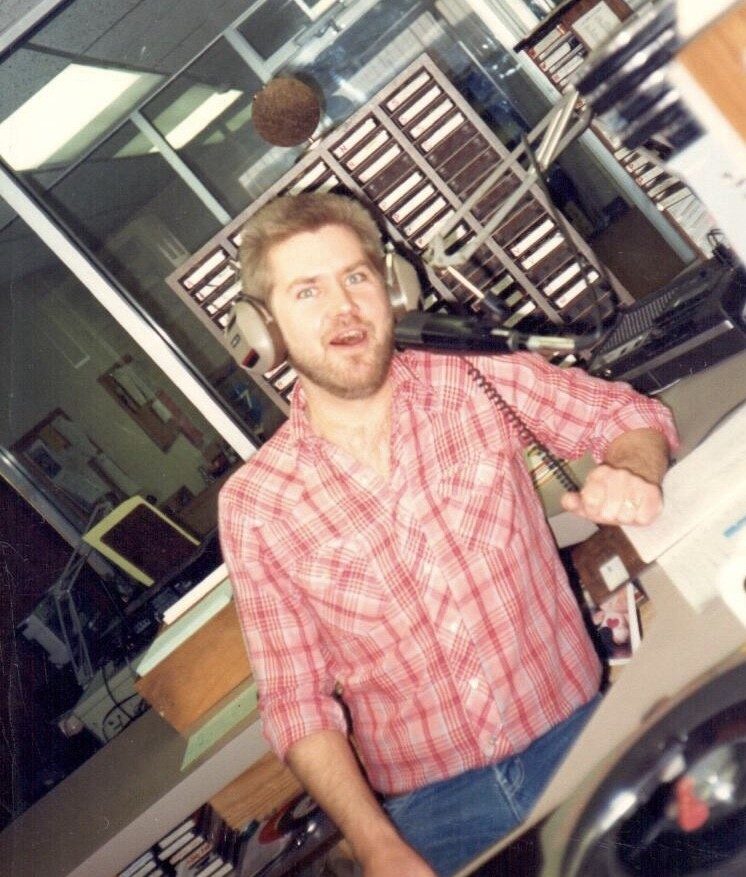
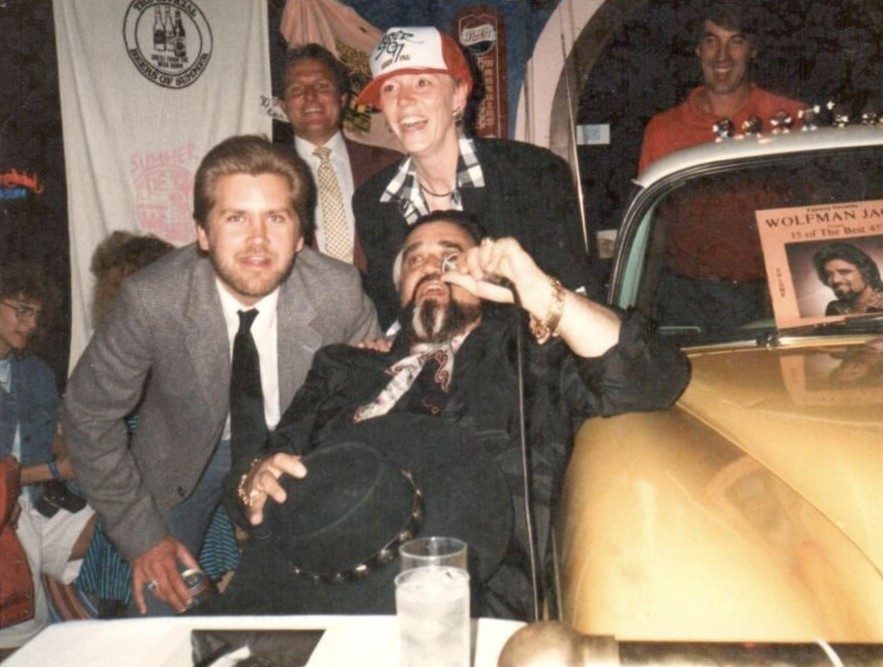
Super 97 promotions. In Fort Dodge, Super 97 built its audience with big promotions. "Come Alive at 5" was Parry's idea: a live remote and happy hour every Wednesday from 5 to 7 p.m. at the Rock 'N Roll Reunion in the Trolley Center downtown, set up with the club's owners, Bob and Bonnie Giles, and with Steve Pederson of Pabst Blue Ribbon Distributing, which provided free beer. Parry introduced Charlie Chase on the air, and Chase announced and played the oldies from behind the front end of a 1955 Chevy.
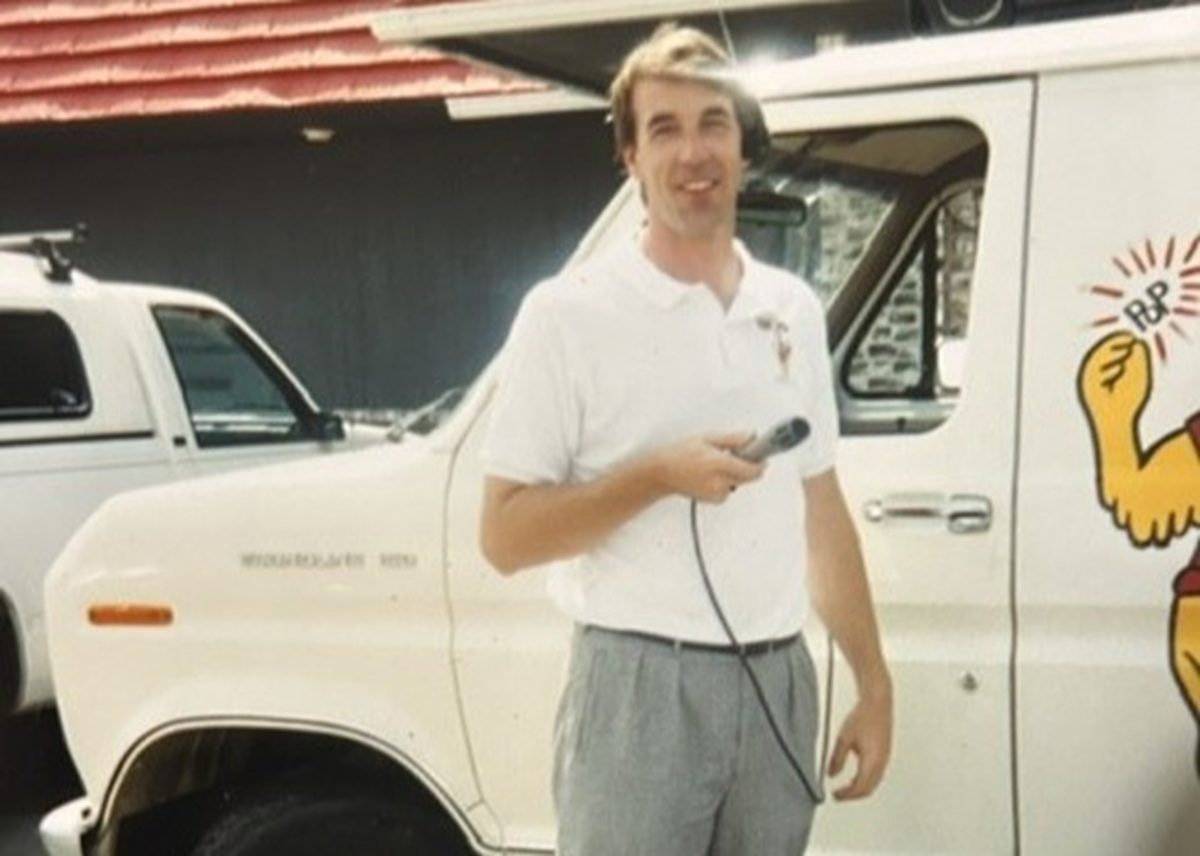
Chase had started at KRIT in Clarion, moved to KKEZ in 1980 and came back to KRIT in late 1988, after Parry took over; he had a huge record collection, knew the oldies and, Robbins says, "could really work a crowd." The promotion took off right away. The place filled every week, with listeners lined up for a block or more to get in, and it ran until the station switched to country in 1992. "This is absolutely the best promotion that we ever did," Robbins says.
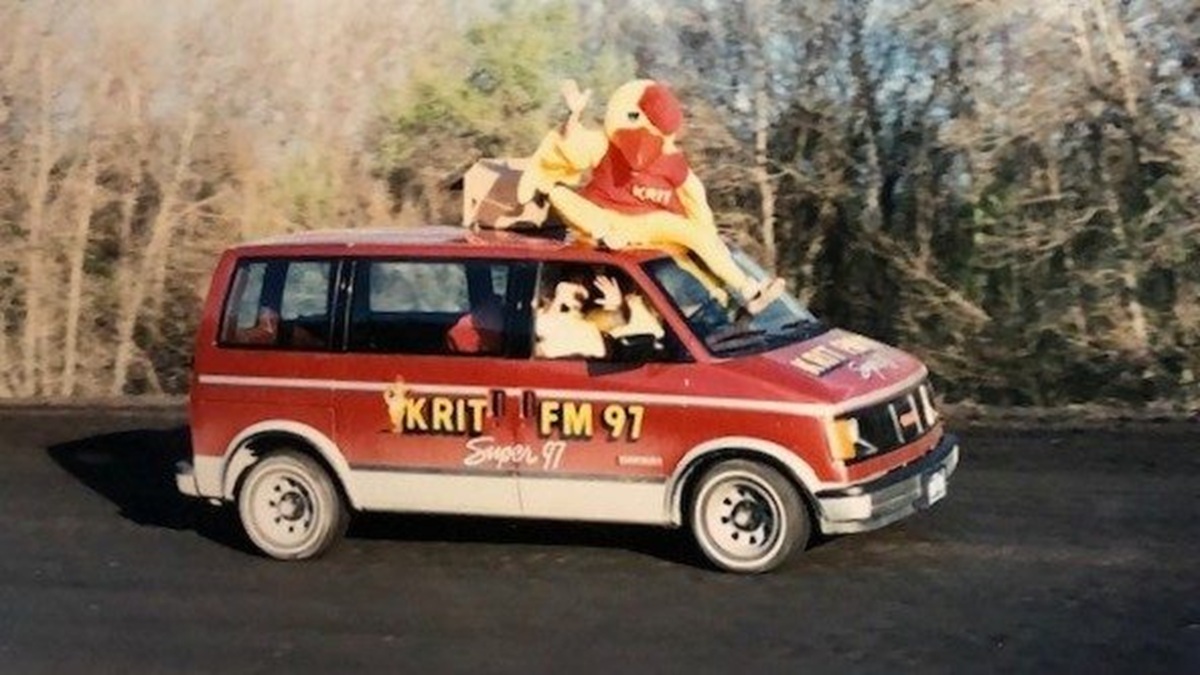
The station also ran bus trips to concerts and block parties, and its mascot, the Super Chicken, came to every event; Robbins calls Rusty McNeil "the best Super Chicken ever".
Around 1990 Wolfman Jack himself came to the Rock 'N Roll Reunion, drawing the biggest crowd the club ever had. Chase was ready to spin the records with him, Robbins remembers, but when he asked which ones to play, the Wolfman handed him a cassette: "put this in and let it roll and old 'Wolfie' will do his thing between the songs." "What a legendary night it was!" Robbins says.
The Last Lap Show. Racing had its own show. Every Thursday night during the racing season, Parry, Robbins and local racer Dave Doughty gave results from area tracks and interviewed drivers on the "Last Lap Show," which ran for many years. Robbins had announced at several race tracks around the area, and after moving to St. George, Utah, he was the PA announcer for NASCAR races at Las Vegas Motor Speedway from 2014 to 2016.
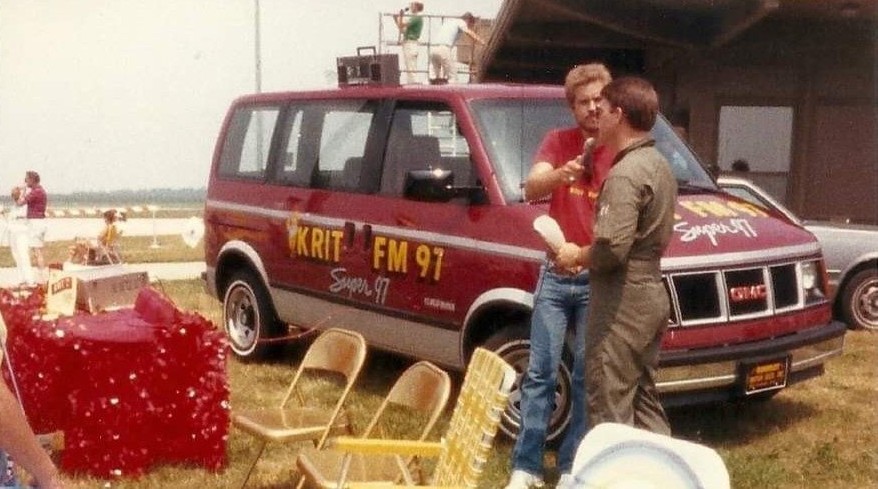
In the fall of 1988 the station had a hit of its own. Haldin and disc jockey Scott Dohrmann recorded "Kokotho," a parody of the Beach Boys' "Kokomo" that cast the little town of Otho as north-central Iowa's paradise, at Junior's Motel recording studio in Otho, where the Beach Boys' Brian Wilson had recorded in 1973.
The idea came from Parry, the station's new general manager, who had heard a similar song in Minnesota. "The phone calls are exploding," Haldin told The Messenger; hundreds of listeners called the first week, the station sold the song on tape for $4.97, with a Dohrmann original on the flip side, and a contest sent the grand-prize winner and a guest on an "Otho Getaway."
The biggest was "Woolstock" in August 1989, a tongue-in-cheek 20th-anniversary salute to Woodstock. It was Haldin's idea: driving down the road, he heard radio talk about Woodstock's coming anniversary and then passed a sign that read "Woolstock 7 miles." Parry, who later served in the Minnesota Senate (2010–2013), put the station behind it.
It was held at Woolstock, Iowa, a Wright County town of about 230 people. Some residents worried it would bring drugs and trouble to town. The town council kept the concert out of the city park, worried it would overwhelm the town, so it moved to the Grunwald farm just outside town.
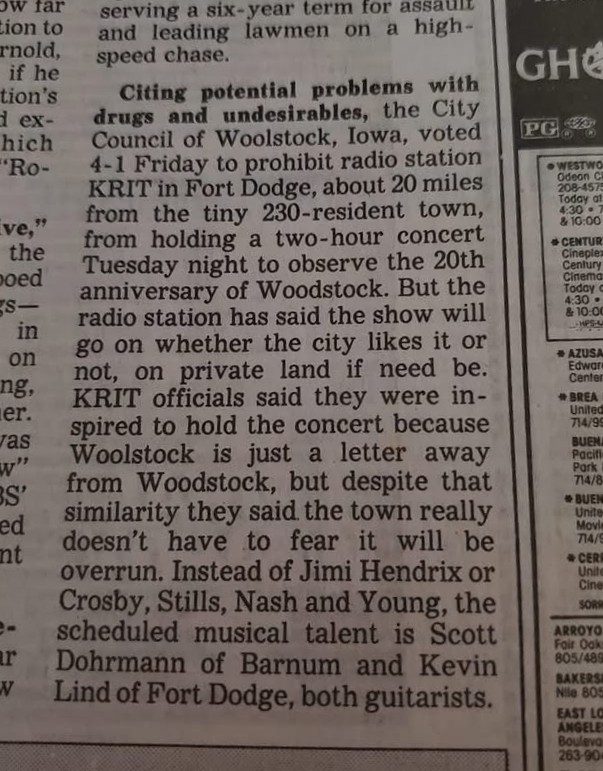
The dispute even made the Los Angeles Times, which reported the council's 4-1 vote and the station's plan to hold the show on private land. About 600 people came, in tie-dye and flashing peace signs; where the original was known for excess, Woolstock was known for its free hot dogs. "I saw the name Woolstock on a map and I said that works," Program Director Dave Haldin told KCCI, whose report carried the little Wright County festival to television viewers across central Iowa.
The stunt even reached Los Angeles, where KROQ's morning show had Haldin and Amy Alberts on to talk about it. "I consider August of 1989 the absolute peak of my radio career," Haldin says, "and one of the peaks of competitive Fort Dodge radio history."
Video
KCCI's 1989 report on Woolstock (YouTube)
On the air at Super 97. The Fort Dodge staff came together quickly after the move. Phil Fitzgerald, on the air as Phil Jaye, was an early hire, followed by Carol Vonn, Amy Alberts, Denny Lind, Staci Kelly, Drew Durigan ("the Minnesota Maniac"), Mike Tam, Mike Fellers and Charlie Chase. When Robbins moved to sales, Haldin became program director and did mornings with Amy Alberts; Chase had middays, Jaye afternoons, the Minnesota Maniac and later Kelly evenings, Mark Spangler late nights and Lind overnights.
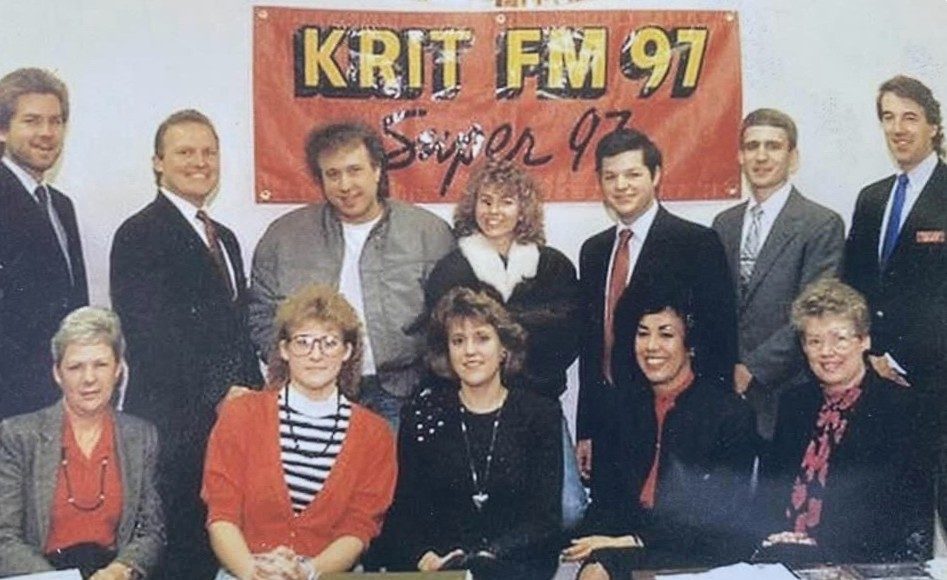
After Haldin and Alberts left, Chase became program director, a job Robbins believes he held from 1990 to 1992, and the husband-and-wife team of Mac and Dawn took over mornings. Robbins believes Chase left when he learned the station was switching to country in 1992: "There was no way Charlie was going to play country."
KIAQ. In July 1992 Linder sold the station for $785,000 to James Ingstad's Fargo-based group, and on September 1 the call letters changed to KIAQ. Mike Parry stayed on as general manager under the new owners until 1996. KIAQ remained a Top 40 station for two more years; by 1994 it had switched to country, the format it still plays today.
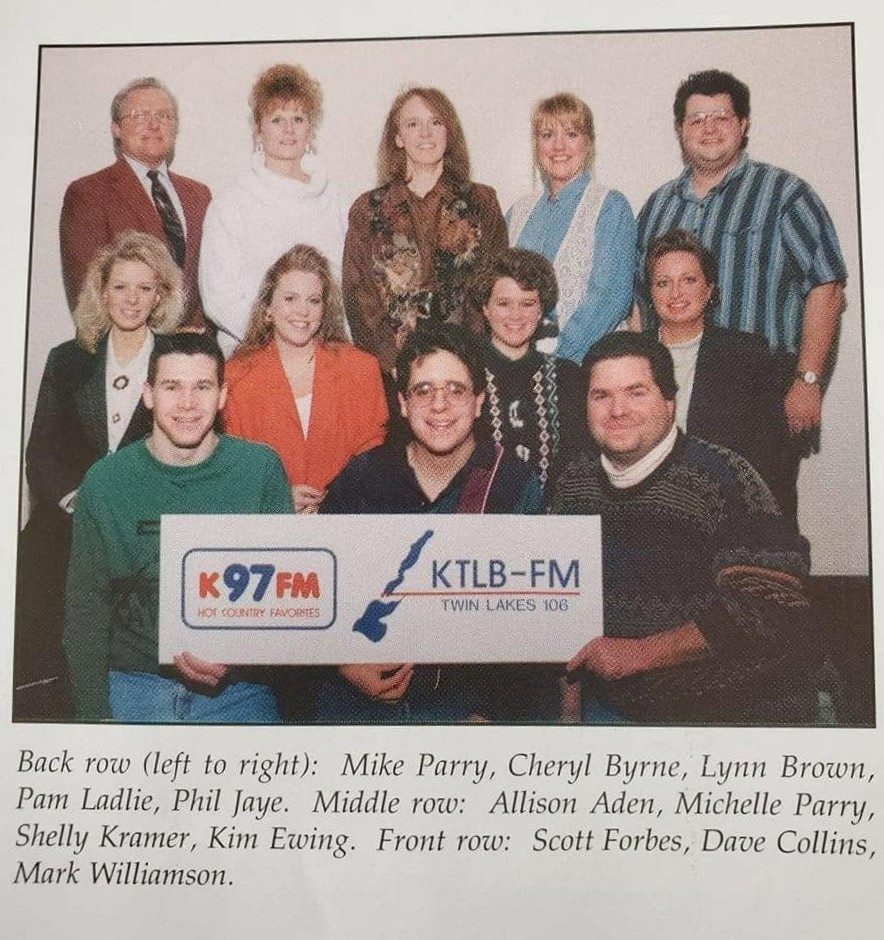
As a country station it ran bus trips to Mankato to see acts like Brooks & Dunn and John Michael Montgomery, and when Larry and Beverly Leiting opened the Silver Spur, a country bar, K97 gave it a Come Alive at 5–style promotion, with Phil Jaye playing music from behind a Peterbilt truck.
In 1995, Kim Ewing left to become sales manager of KVFD and KUEL, where she successfully led the sales department through their award years. In 1997, a year after Parry left, Ingstad sold both KIAQ and KTLB to Three Eagles Communications as a package deal.
Mike Parry's Thanksgiving call. The biggest "Come Alive at 5" of the year was the Wednesday before Thanksgiving, when, Chase's wife, Lynn Bohlke, remembers, the line to get into the Trolley Center wrapped around the building. Long after the promotion ended, Parry kept the night going: every year on the Wednesday before Thanksgiving he called Chase and did his "Come Alive at 5" introduction over the phone, and he never missed a year.
The last call, in 2023, reached the Bohlkes in New Zealand; Chase died that December. "He loved those Wednesday before Thanksgiving calls from Mike," Lynn Bohlke says; they "brought him so many wonderful memories." Parry now sends her a text each year on that Wednesday.
Since. Three Eagles kept the station until 2014. Once Three Eagles also owned KVFD and KUEL, from 2004, it moved K97 out of the 10th and Central storefront into the Dowd Building with them and left the old building empty. In 2014 the station passed to Digity, then to Alpha Media and, in 2025, Connoisseur Media. Today it is "K97," country.